Sony's U.S.-listed shares declined 4.3% to $23.50 during Tuesday afternoon trading, coinciding with the company's announcement of its new €1,700 fisheye lens. The product launch, however, is not substantial enough to justify such a significant share price movement, leaving investors to consider other factors behind the sell-off.
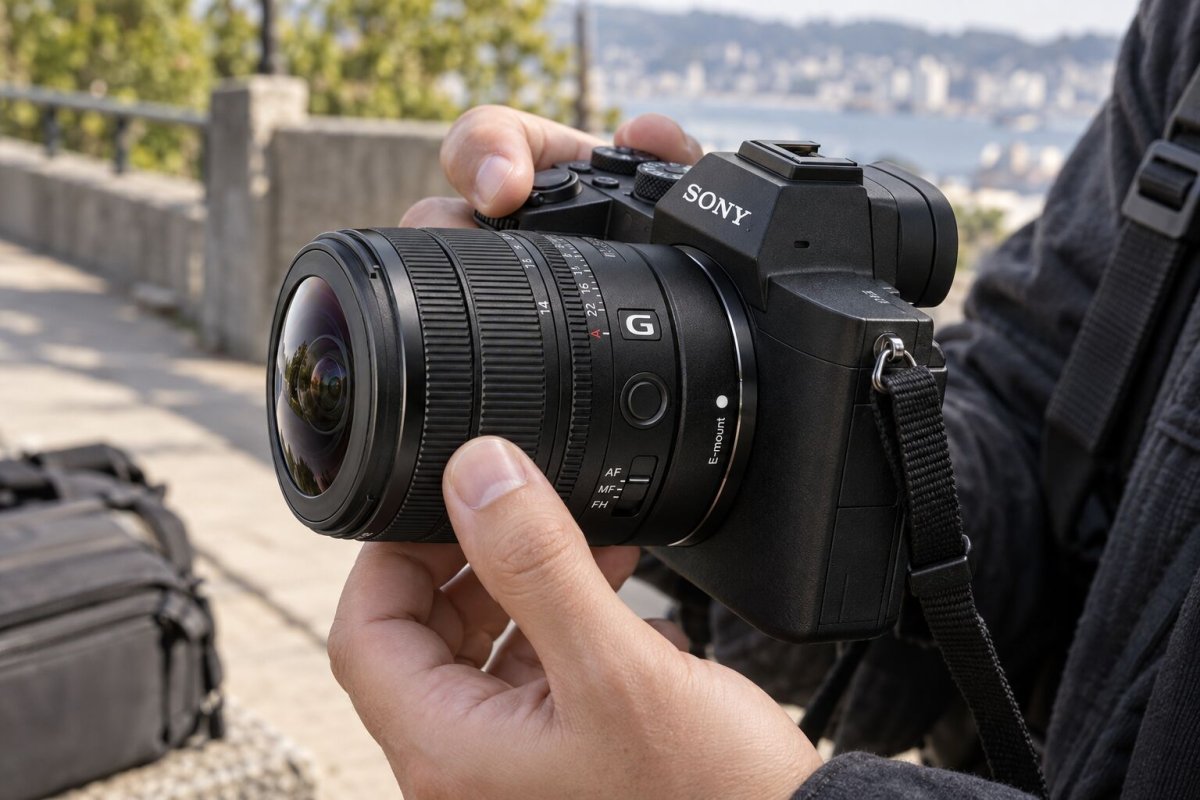
The new FE 8-14mm F3.5 Fisheye G lens marks Sony's first full-frame E-mount fisheye zoom. Priced at €1,700 in Europe and £1,500 in the UK, it will be available from the end of September, with a Japanese launch set for October 9 at an undetermined price. The lens is designed for professional photographers, cinematographers, and virtual reality content creators, offering a circular 180-degree image at 8mm and a frame-filling diagonal fisheye at 14mm, with a constant F3.5 aperture and a compact 314g design.
Beyond its optical capabilities, the lens supports spatial video when paired with two VENICE Extension System Mini units set 64mm apart, mimicking human eye spacing. This positions Sony as a bridge between its Alpha lens mount and professional immersive equipment, a niche but growing market. Sony will showcase the lens at the IBC broadcast technology show in Amsterdam starting September 11.
From an investor perspective, the lens is more about pricing strategy than immediate financial impact. Sony's Entertainment, Technology & Services (ET&S) segment generated ¥543.9 billion in sales during the June quarter, so a single specialist lens is unlikely to move the needle without exceptional volume or a broader surge in camera system demand. Sony did not provide unit targets, revenue forecasts, or margin expectations for the lens, reinforcing its limited near-term earnings significance.
The lens's true value lies in ecosystem economics. A broad native lens range increases the cost for photographers to switch systems, and a unique fisheye zoom adds another reason for high-end users to remain loyal to Sony. This is the genuine read-through for SONY stock, as it supports long-term customer retention and premium pricing power.
Premium pricing is particularly relevant given rising component costs. In its latest SEC filing, Sony reported a 2% year-over-year increase in ET&S sales to ¥543.9 billion, aided by favorable foreign exchange, while operating income remained flat at ¥42.6 billion. Higher memory costs in the Imaging and Displays segment were a drag, and management is responding with procurement savings, design changes, and pricing adjustments. The new lens fits this premium pricing response, but it does not alter the company's full-year ET&S forecast of ¥2.25 trillion in sales and ¥150 billion in operating income.
The 4.3% decline in Sony's ADR should be viewed with context. The company issued no new financial guidance alongside the lens announcement, so attributing the drop to the product's demand would be unsupported. Sony's broader earnings engine is performing well: group sales rose 8% to ¥2.84 trillion in the June quarter, and operating income surged 40% to ¥476.5 billion. The company raised its full-year group forecast to ¥12.5 trillion in sales and ¥1.72 trillion in operating income, driven by games and image sensors, not camera lenses.
Investors should monitor three key indicators post-launch: whether the lens ships on schedule without immediate discounting, whether Sony reports stronger average selling prices or market share in full-frame cameras, and whether ET&S margins hold despite memory inflation and currency effects. The bearish case is that fisheye photography is specialized and the high price narrows the audience, while the imaging market in China remains weak. The bullish case is that the lens's price signals ecosystem stickiness, as professionals may pay a premium for capabilities difficult to replicate with standard zooms. Until Sony provides sales data, the SEL814G remains a pricing test, not a standalone reason to buy or sell the stock.