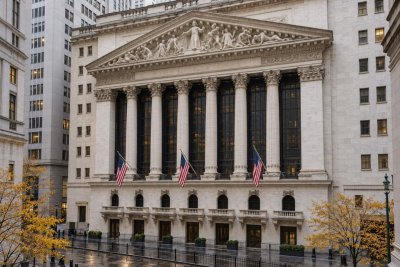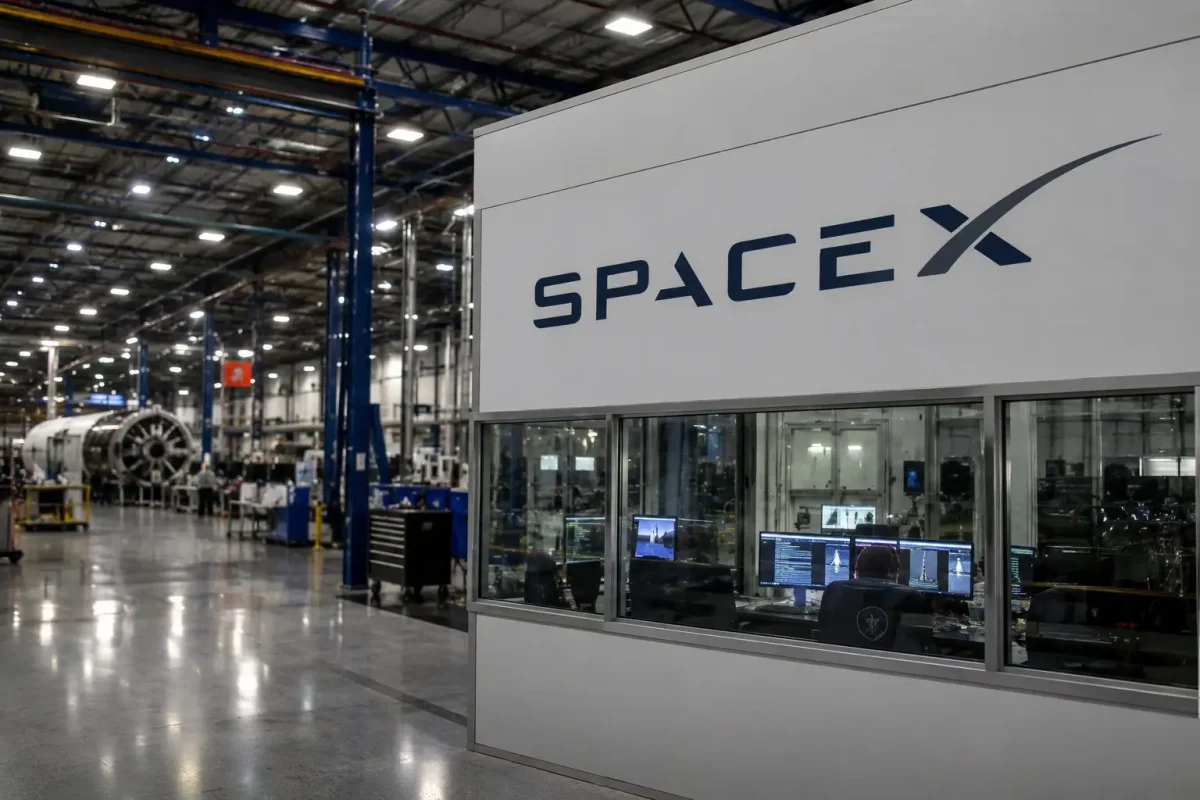
Investor appetite for SpaceX's initial public offering has surged past $250 billion, according to Reuters, far exceeding the $75 billion deal size. The offering, which includes 555,555,555 Class A shares priced at $135 each, is set to list on the Nasdaq Global Select Market and Nasdaq Texas under the ticker SPCX. Underwriters hold a 30-day option to purchase an additional 83,333,333 shares.
The order book has more than doubled from roughly $150 billion earlier in the marketing process, reflecting intense demand from both retail and institutional investors. Franklin Templeton, which already holds SpaceX shares in its growth equity funds, confirmed its participation in the IPO. CEO Jenny Johnson told CNBC that the firm will join the offering, underscoring the strong institutional interest in one of the year's most anticipated listings.
Starship and Orbital AI Compute: The Key Driver
SpaceX's pitch to investors hinges on more than its Starlink satellite internet business. The company is betting heavily on Starship, its reusable heavy-lift rocket, to enable orbital AI computing. Executives have told investors they aim to begin space-based AI computing demonstrations by late 2027, an acceleration from the 'as early as 2028' timeline in IPO documents. The plan involves placing data-center equipment in orbit to run AI workloads, potentially reducing reliance on ground-based facilities.
The company has sought regulatory approval to deploy up to one million satellites for orbital data centers, signaling that the valuation narrative depends on large-scale deployment rather than a limited pilot. However, SpaceX's S-1 filing acknowledges significant risks: orbital AI compute and related projects rely on unproven technologies, face high complexity, and may never achieve commercial viability. In-orbit refueling, a critical capability for Starship, has not yet been demonstrated.
Financial Performance and Valuation Concerns
SpaceX's current financials offer a mixed picture. The connectivity segment, which includes Starlink, reported adjusted EBITDA of $2.087 billion in the first quarter of 2026 and $7.168 billion for the full year 2025. Adjusted EBITDA, a non-GAAP measure, excludes certain expenses and is used to compare operating results. However, the company posted a net loss of $4.276 billion in Q1 2026, a sharp widening from the $528 million loss in the same period last year. The AI unit alone recorded negative adjusted EBITDA of $609 million in Q1 and $1.237 billion for 2025, illustrating significant cash burn before any meaningful revenue generation.
Morningstar has valued SpaceX at $63 per share, 53% below the IPO price, assigning low probability to its most bullish scenario where Starship and orbital data centers achieve rapid adoption. The valuation gap underscores the uncertainty surrounding the company's ambitious plans.
Regulatory and Market Dynamics
Political scrutiny has intensified ahead of pricing. Senator Elizabeth Warren called on the Securities and Exchange Commission to delay the IPO, citing the offering's massive size and raising concerns about disclosure, index-fund exposure, governance, and arbitration clauses. This regulatory noise adds another layer of uncertainty as the deal relies on speed and scarcity.
The IPO's impact has extended beyond equities. Reuters reported that dollar buying related to the offering, estimated at $1.5 billion, pressured the South Korean won. The currency rebounded after traders indicated that the large dollar orders were largely completed. Such pre-IPO currency moves are unusual and highlight the scale of the deal.
SpaceX is also a key near-term AI customer. A prospectus reveals that the company signed cloud services agreements with Anthropic in May, covering compute on the COLOSSUS and COLOSSUS II systems and involving approximately 325,000 Nvidia GPUs. The deal includes payments of $1.25 billion per month through May 2029, after a lower ramp period, with either party able to cancel after the first three months with 90 days' notice.
Pricing for the offering is scheduled for Thursday, with shares expected to begin trading Friday under the ticker SPCX. Investors will be watching closely to see whether early trades reflect the deal's scarcity or whether the market begins to discount the uncertain economics of launching AI infrastructure into space.