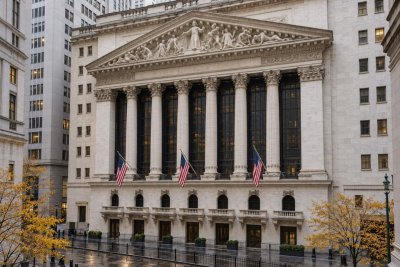
San Francisco, June 12, 2026 – SpaceX has priced its initial public offering at a historic $75 billion, catapulting its valuation to approximately $1.77 trillion. This milestone not only more than doubles the previous record set by Saudi Aramco in 2019 but also positions SpaceX among the most valuable U.S.-listed companies. The first trading sessions on Nasdaq will serve as a critical barometer for how public investors value next-generation infrastructure plays, with implications for the forthcoming IPOs of AI rivals OpenAI and Anthropic.
Market Context and Implications
The IPO's success is seen as a key indicator of market appetite for high-growth, technology-driven companies. By reserving 30% of its offering for retail investors, SpaceX has democratized access to a deal typically dominated by institutional players. However, as Adam Sarhan, CEO of 50 Park Investments, noted, “The real test will be how the market digests the IPO over the next several weeks, not just one day.”
AI IPO Rivalry Intensifies
OpenAI and Anthropic are both moving forward with their own IPO plans, having filed confidentially with the U.S. Securities and Exchange Commission. OpenAI filed last month, following Anthropic’s confidential submission on June 1. OpenAI is reportedly targeting a $1 trillion valuation, with a potential IPO as early as September. Anthropic recently raised $65 billion at a $965 billion post-money valuation and reported $47 billion in annualized run-rate revenue.
The competition between the two AI firms is becoming increasingly direct. Disputes have emerged over how revenue is recognized, particularly when cloud partners are involved. “It’s all-out war between these guys. Every time there’s a new release from Anthropic, the bet will be that OpenAI is soon to follow and vice versa,” said Anastasios Angelopoulos, CEO of Arena.
Pricing and Profitability Under Scrutiny
Pricing strategies are also under the microscope. Reports suggest OpenAI may cut its token prices to remain competitive with Anthropic, a move that would force investors to scrutinize gross margins, infrastructure costs, and the path to sustained profitability. The transition from private to public ownership brings heightened scrutiny. “Expectations that seem manageable in private markets can become relentless under the glare of public ownership,” warned Nigel Green, CEO of deVere Group.
Looking Ahead
As SpaceX begins trading, all eyes will be on its aftermarket performance and the subsequent IPO filings from OpenAI and Anthropic. Investors will be watching revenue recognition practices, compute partnership deals, customer acquisition trends, and timelines to profitability. The central question is whether public markets will continue to assign near-trillion-dollar valuations to AI frontier model companies, or if the shift to public ownership will introduce new pressures.