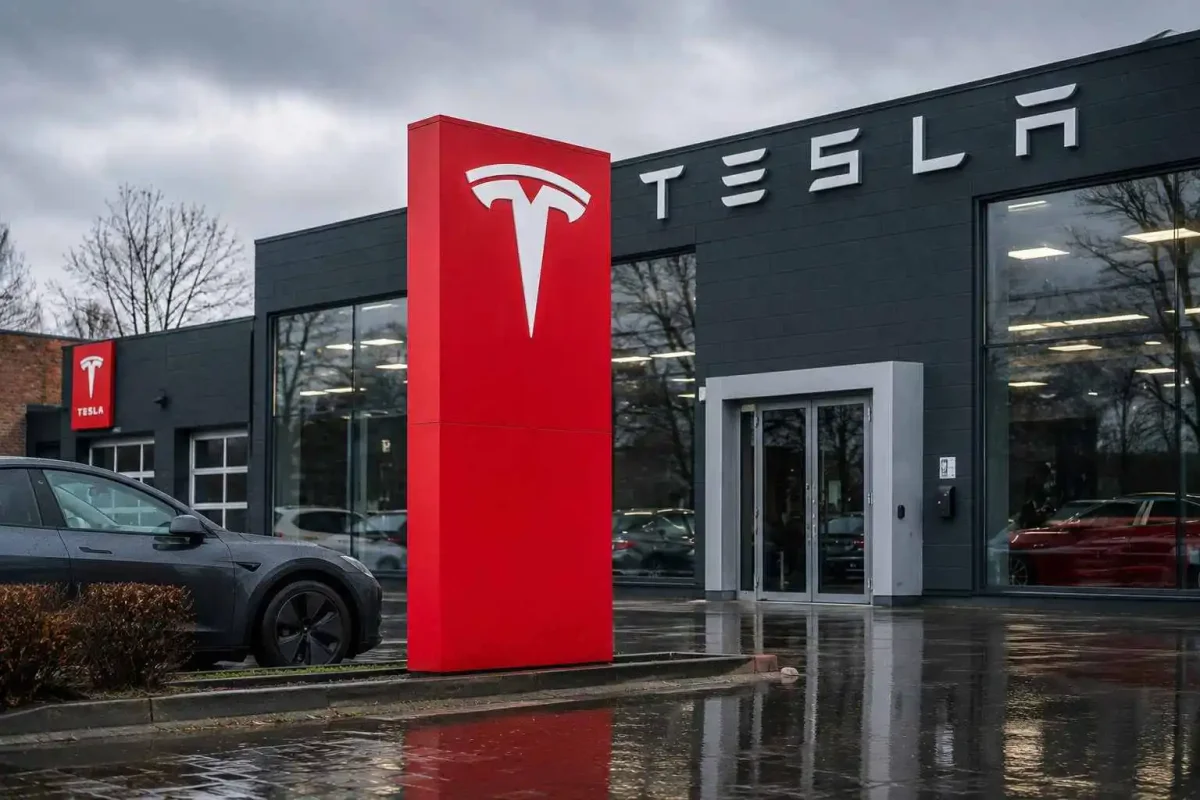
NEW YORK, July 27, 2026, 08:05 EDT — Tesla, Inc. (NASDAQ:TSLA) shares experienced a sharp weekly decline of 17.8%, closing Friday at $313.03, as the company's second-quarter earnings revealed significant pressure on profit margins despite record vehicle deliveries and robust revenue growth.
The electric vehicle maker reported second-quarter revenue of $28.24 billion, exceeding the company-compiled analyst consensus by 2.4% and marking a 26% increase year-over-year. Deliveries reached 480,126 vehicles, up 25% from the same period last year. However, operating income plummeted 57% to $398 million, falling 73.5% short of the $1.50 billion analyst average. The operating margin came in at just 1.4%, compared to the expected 5.4% and the 4.1% reported a year ago.
The profit shortfall was driven by a sharp rise in operating expenses, which increased 47% year-over-year, and research and development outlays that jumped 49% to $2.37 billion. Gross margin also disappointed, coming in at 16.8% versus the 19.5% consensus estimate. Capital expenditures surged to $5.79 billion, 14.5 times the company's quarterly operating income, compared to just 2.6 times in the same quarter last year. The capex-to-operating cash flow ratio rose to 123% from 94% a year earlier.
Despite the cash burn, Tesla reported negative free cash flow of $1.09 billion, which was $2.16 billion better than the consensus estimate of negative $3.25 billion, thanks to lower-than-expected capital spending and stronger operating cash flow. The company ended the quarter with $43.52 billion in cash and short-term investments and $9.08 billion in total debt, with $1.35 billion maturing within the next year.
CEO Elon Musk emphasized that the company is "investing a lot" for future growth, promising "incredible returns." CFO Vaibhav Taneja indicated that capital expenditures will exceed $25 billion and continue to rise for the next two to three years, potentially requiring additional financing beyond operating cash flow.
Software and services provided some offset, with active Full Self-Driving (FSD) subscriptions rising 56% to 1.48 million. Services gross profit reached $648 million at a 14% margin, and over 55% of North American deliveries included FSD subscriptions. However, the growth in services revenue was modest relative to the surge in spending.
The stock fell 14.5% on Thursday and an additional 2.1% on Friday, contributing to the weekly loss. A modest premarket recovery on Monday saw shares open 0.8% higher at $315.49, but the rebound barely dented the prior week's decline. Broader U.S. equity futures climbed as geopolitical tensions eased, with investors also awaiting the Federal Reserve's policy decision, inflation data, and key technology earnings.
Analysts caution that increased interest rates could further pressure future profit expectations. Key risks include delays in robotaxi, Cybercab, or Optimus rollouts, which could prolong low margins and high cash outflows. Conversely, improved FSD adoption or higher services margins could shorten the path to profitability. At this stage, deliveries alone are no longer the primary metric—investors need evidence that growth can restore operating margins before spending accelerates.