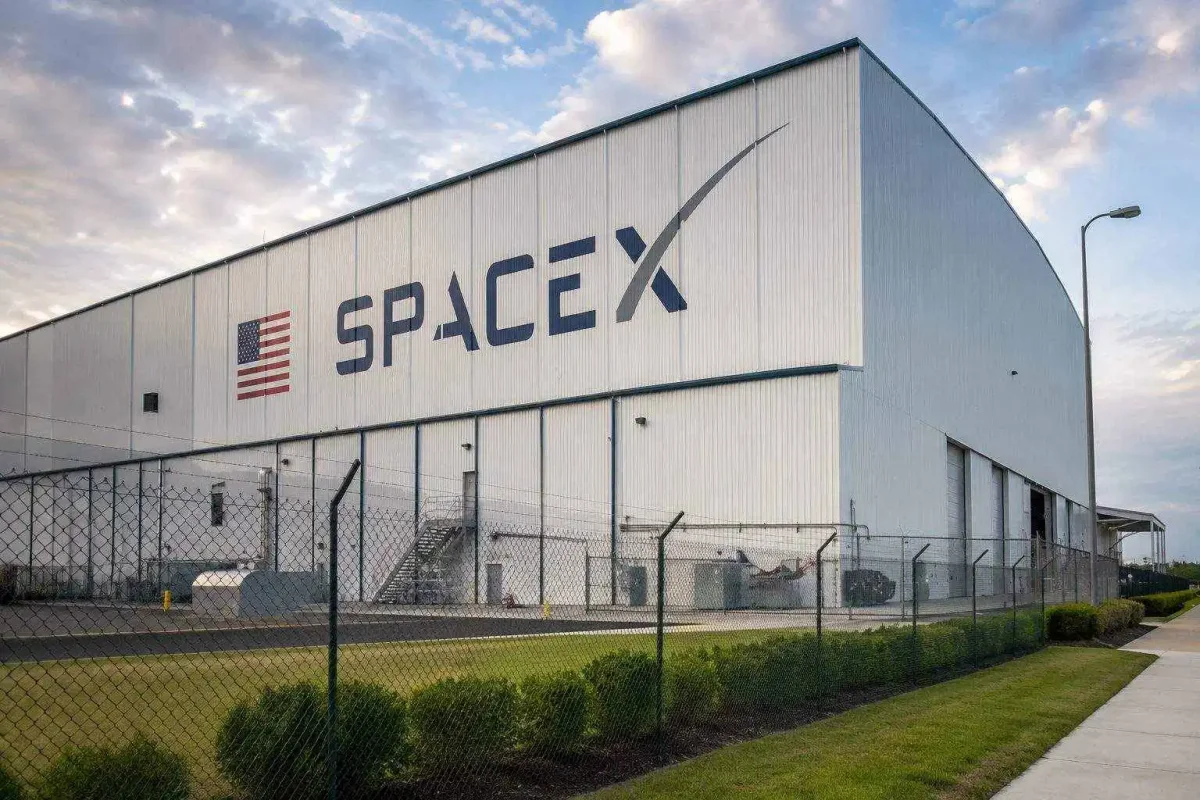
Space Exploration Technologies Corp. (NASDAQ:SPCX) saw its shares decline approximately 1.5% in premarket trading on Monday, hovering near $106.70. This follows a 3.4% drop in the previous session, leaving the stock well below its June IPO price of $135.00 and its intraday peak of $225.64.
The market's focus is squarely on the company's upcoming second-quarter earnings, scheduled for release after the bell on Tuesday. While top-line growth remains robust, a growing concern is whether Starlink, SpaceX's primary profit engine, can keep pace with the company's aggressive artificial intelligence (AI) capital expenditure plans.
Starlink Profit vs. AI Spending
Analysts project Starlink will post an operating profit of $1.42 billion for the quarter. In contrast, SpaceX's anticipated AI capital spending is set to reach $10.2 billion. This implies that Starlink's profit now covers only 13.9% of AI investments, a decline from 15.4% in the previous quarter. The ratio serves as a proxy for internal funding, indicating that AI expenditures are growing at a faster clip than Starlink's earnings.
This internal-funding measure is a key metric for investors, as it highlights the company's reliance on external capital or other revenue streams to fuel its AI ambitions. While Starlink's operating margin is expected to improve slightly to 37.2% from 36.5%, the coverage ratio continues to deteriorate, underscoring the scale of the AI push.
AI Revenue Growth and Contracts
AI revenue is projected to nearly triple from the first quarter, reaching $2.33 billion. SpaceX holds significant computing contracts with Anthropic, Reflection AI, and Alphabet's Google (NASDAQ:GOOGL). Once fully scaled, these agreements could surpass $25 billion in annualized value, providing a substantial long-term revenue stream.
However, the Space division also demands significant capital. Analysts forecast quarterly revenue of $871 million but an operating loss of $773 million, as Starship development costs weigh on profitability. The successful advancement of Starship is critical to reducing future deployment expenses.
Valuation and Share Supply
The market has already repriced SpaceX shares significantly since its IPO. The stock is trading 21% below its IPO price and 52.7% below its June intraday high. The upcoming earnings report may not be the only catalyst; on Thursday, up to 911.5 million restricted shares become eligible for sale, compared to approximately 640 million shares currently trading. While eligibility does not guarantee selling, it introduces potential supply overhang.
Analysts project a companywide loss before interest and taxes of $1.55 billion, highlighting that accelerating sales growth alone may not resolve valuation concerns. Revenue is expected to reach $6.9 billion, up 47.6% from the prior quarter, with connectivity revenue growing 17.3% and AI revenue surging 184.8%.
Market Sentiment and Risks
“Starlink is delivering excellent results, however, a $30 billion annualized AI capital expenditure initiative cannot be sustained by Starlink alone,” said Will Rhind, CEO of GraniteShares, in comments to Reuters. This sentiment reflects the broader challenge: while Starlink's subscriber base nearly doubled year-over-year to 10.3 million, average revenue per user declined by almost 25%.
Risks are two-sided. Quicker compute-contract income or reduced expenses could boost coverage, while softer Starlink pricing, higher AI spending, or increased share unlocks could worsen the downturn. Tuesday's earnings call, scheduled for 4:30 p.m. EDT, may offer the sharpest upside surprise if investors see confirmation that Starlink's profit coverage is no longer contracting.