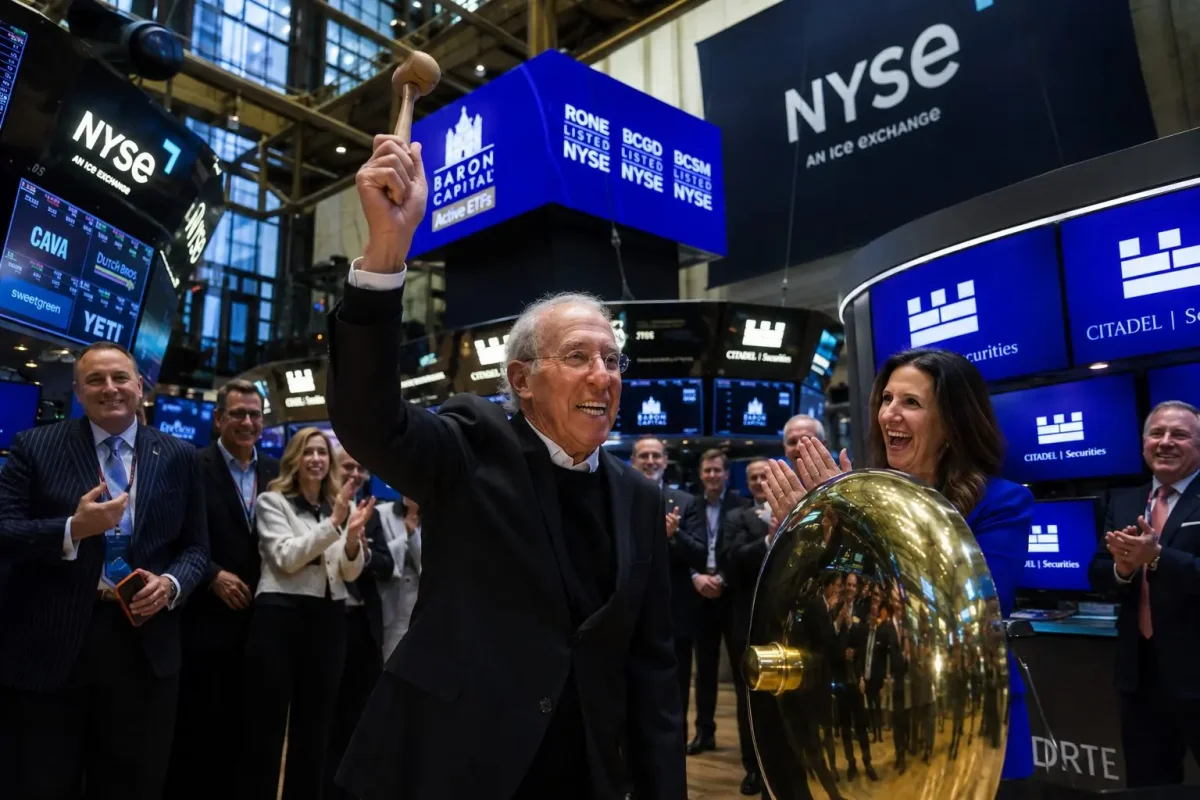
SpaceX shares continued their upward momentum on Monday, climbing more than 6% in premarket trading following a stellar Nasdaq debut on Friday. The stock surged 19% in its first day of trading, propelling the company's market capitalization past the $2 trillion mark, according to reports. The milestone has brought renewed attention to Ron Baron's significant stake in the aerospace and satellite communications giant.
Baron Capital, a long-time investor in SpaceX, now holds a position valued at approximately $15 billion as a private asset, with the firm estimating that the stake could appreciate to around $24 billion near the IPO price. Ron Baron, founder of Baron Capital, noted in an April investor letter that the firm has achieved a compound annual return of 54% since its initial investment in 2017. He further predicted that SpaceX shares could see gains of 10 to 30 times the IPO price over the next 15 years. The firm's original $1.75 billion investment has already grown to $13 billion, highlighting the extraordinary returns from the space company.
Elon Musk, SpaceX's CEO, took to social media on Sunday to express his bullish outlook, stating that he "would be surprised if revenue is not greater than $1 trillion in 2031." This projection far exceeds Wall Street estimates, with Goldman Sachs forecasting 2030 revenue at just over $470 billion and Morgan Stanley estimating nearly $330 billion. The ambitious target underscores Musk's confidence in SpaceX's expanding portfolio, which includes rockets, satellite internet via Starlink, and artificial intelligence applications.
Despite the optimistic revenue projections, SpaceX's financial performance in 2025 showed a mixed picture. The company generated $18.67 billion in revenue, up from $14.02 billion the prior year, but swung to a net loss of $4.94 billion compared to a $791 million profit in 2024. The loss reflects heavy investments in research, development, and capital expenditures for projects like Starship and Starlink's global expansion.
The IPO has attracted significant interest from high-profile investors. Gina Rinehart, Australia's wealthiest individual, invested more than $1 billion in the $75 billion offering through her company Hancock Prospecting, which described it as a "significant investment." Index-driven demand is also expected to be a major factor, with SpaceX set for fast-track inclusion in the Nasdaq 100, as well as FTSE Russell and MSCI indices later this month. Jefferies estimates that passive inflows from the FTSE Russell inclusion alone could total approximately $2.68 billion.
Retail traders face potential pitfalls in the aftermarket. Reports indicate that individuals buying shares through platforms like Fidelity, Robinhood, E*TRADE, or SoFi may be subject to lock-up periods of 15 to 30 days before they can sell, while large institutional funds can trade immediately. Additionally, SpaceX's public float is only 4.3%, with more than 95% of shares under lock-up agreements. This limited float could lead to heightened volatility and a potential rush to sell when early investors and employees are permitted to offload their shares.
The IPO's success underscores the market's appetite for high-growth companies in the space and technology sectors. SpaceX's ability to generate substantial revenue from its Starlink satellite internet service, combined with its leadership in reusable rocket technology and ambitions for Mars colonization, positions it as a unique investment opportunity. However, the company's valuation and Musk's aggressive revenue targets will be closely scrutinized by analysts and investors in the coming quarters.
