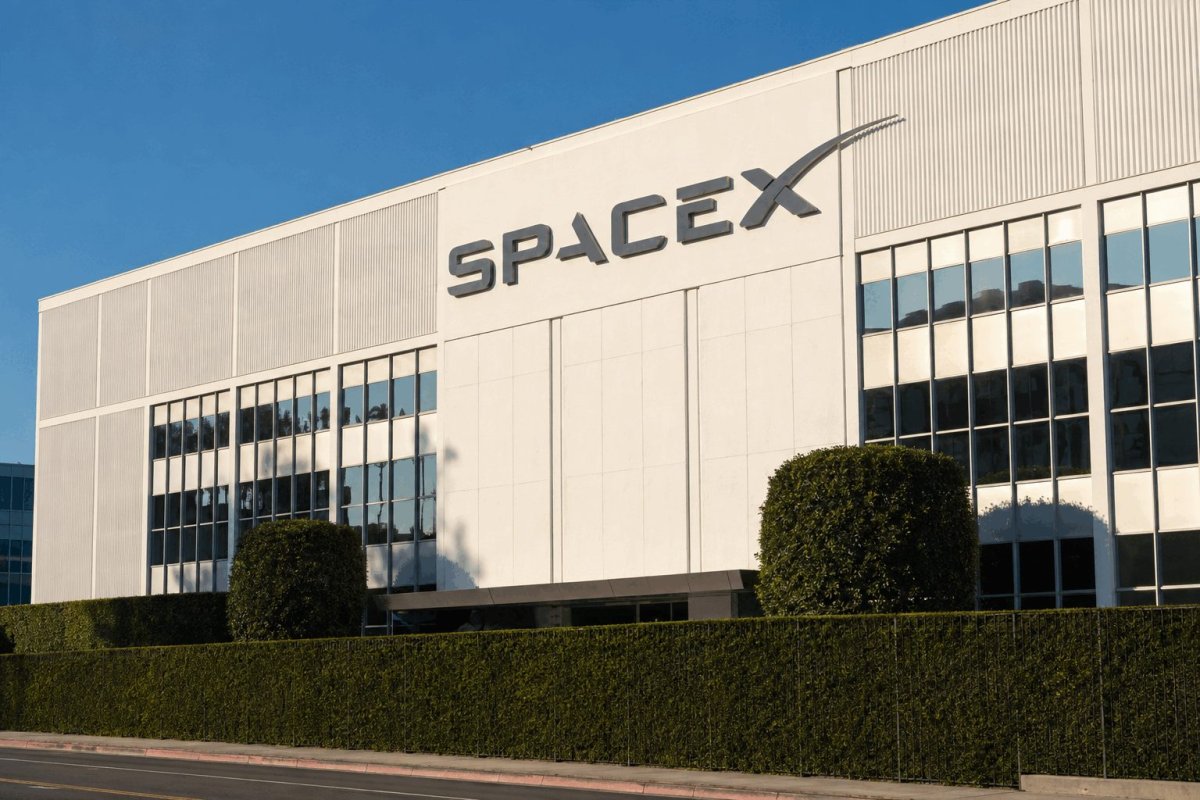
Space Exploration Technologies Corp. (NASDAQ:SPCX) experienced a notable decline on Tuesday, shedding 5.5% to trade at $131.04 by early afternoon. This puts the stock 2.9% below its $135 initial public offering price, reversing the gains seen on Monday when shares briefly traded above the offer level. With roughly 77.1 million shares changing hands, the market's attention is now firmly fixed on the upcoming expiration of a lock-up period on August 20, which will make approximately 320 million restricted shares held by insiders and early investors eligible for trading.
The upcoming unlock follows a similar event on August 6, when up to 911.5 million shares became eligible. Contrary to fears of a sell-off, SPCX surged 15.8% on August 7, as selling pressure failed to materialize. However, Tuesday's decline suggests that supply concerns remain a persistent overhang. It's important to note that eligibility does not equate to dilution, as holders are not obligated to sell their shares.
Retail investors, meanwhile, sold a net $4.5 million of SPCX on August 7, according to data from eToro. Sam North, a market analyst at eToro, characterized the flow as "more like investors using strength to take some money off the table than panic selling," indicating a measured approach rather than a mass exodus.
Strong Earnings, But Heavy Capital Spending
The company's fundamentals present a mixed picture. Second-quarter revenue nearly doubled year-over-year to $7.814 billion, up 91.9% from $4.071 billion, while the net loss narrowed to $541 million from $1.008 billion, a 46% improvement. Adjusted EBITDA surged 191% to $3.538 billion. However, capital spending ballooned to $18.369 billion, a staggering 550% increase from $2.825 billion in the prior-year quarter. This aggressive investment strategy is central to the company's growth narrative but raises questions about near-term profitability.
Segment Performance
Connectivity remains the economic anchor, generating $1.656 billion in operating income on $4.291 billion of revenue. The AI segment, while posting positive adjusted EBITDA of $1.146 billion, still recorded an operating loss of $1.257 billion and consumed a massive $15.828 billion in capital spending. The Space segment posted an operating loss of $542 million on $962 million in revenue.
Management's Ambitious Targets
Management is asking investors to look beyond these costs. SpaceX targets a $100 billion annualized revenue run-rate by December, a goal that would require a 3.2-fold step-up from the current annualized pace of $31.3 billion based on Q2 figures. The company reported $14.1 billion in contracted cloud-services sales during Q2, with an additional $6.7 billion contract cited by CFO Bret Johnsen. Deutsche Bank analysts called the target "likely very achievable," citing strength in cloud-compute and Cursor revenue.
Wall Street remains broadly positive, with 40 ratings and an Overweight consensus, according to MarketWatch. The average price target stands at $225.84, about 72% above Tuesday's intraday price. However, the range of targets, from $75 to $800, underscores deep disagreement over execution and valuation. Recent analyst actions include Arete Research's Andrew Beale with a Buy and $450 target, Morgan Stanley's Adam Jonas with an Overweight and $300 target, and Piper Sandler's Alexander Potter with a Neutral and $140 target.
Risks and the Road Ahead
Key risks include the uncertainty of whether unlocked shares will actually be sold, the nature of the $100 billion target as an annualized run-rate rather than GAAP revenue, and the possibility that certain cloud-services agreements can be terminated with 90 days' notice after ramp-up. The proposed Cursor acquisition has not yet closed, and Starship milestones and AI infrastructure carry significant execution costs.
In the near term, the market will closely watch price action and volume as the August 20 unlock approaches. Beyond that, the critical test will be whether contracted compute demand can outpace the heavy capital spending, ultimately determining if shares can hold above the $135 IPO price.