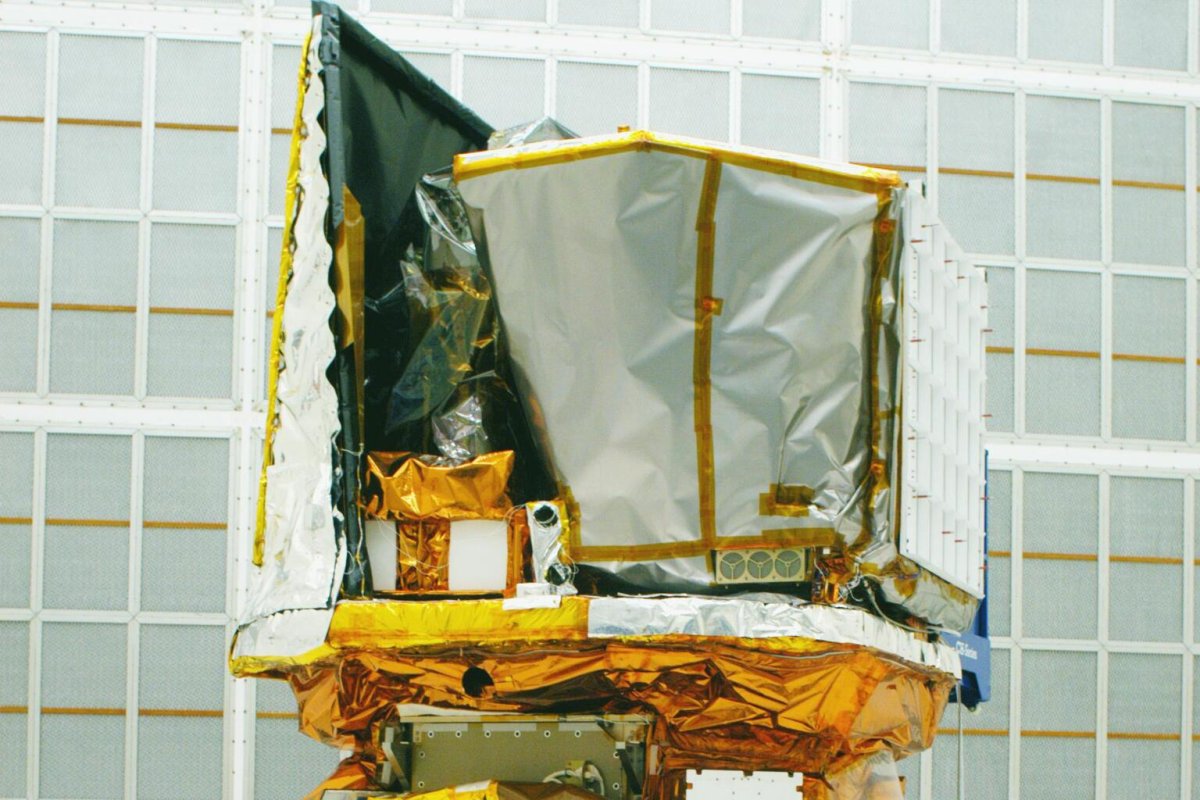
NASA has officially ended the science mission of the Neil Gehrels Swift Observatory, a space telescope renowned for its rapid response to cosmic explosions. The agency announced the shutdown on October 23, 2026, three days after the satellite's final observation, following a period of increasing atmospheric drag that overwhelmed its pointing control.
The loss of Swift creates a significant gap in the astronomical community's ability to quickly study transient events like gamma-ray bursts, which are among the most energetic explosions in the universe. Swift was uniquely capable of autonomously turning toward these bursts within 20 to 70 seconds, then using its onboard X-ray and ultraviolet/optical telescopes to capture the fading afterglow. This speed was critical, as it allowed other observatories to follow up with more detailed observations.
Orbital Decay and Failed Rescue
Swift's orbit had been decaying due to increased solar activity, which warmed and expanded Earth's atmosphere, creating more drag. The spacecraft reached an altitude of 275 kilometers on October 20, well below its planned threshold of about 300 kilometers, and entered safe mode. Controllers at Penn State University sent the final command to end operations, and the spacecraft is expected to re-enter Earth's atmosphere within weeks, though the exact date remains uncertain.
An attempted rescue mission by Katalyst Space's LINK spacecraft failed to capture or boost Swift due to attitude-control problems. LINK re-entered the atmosphere on September 25, closing a $30 million effort that demonstrated some robotic capabilities but did not achieve the goal of extending Swift's life.
Swift's Legacy and Impact
Swift's contributions to astronomy are substantial. It observed over 2,000 gamma-ray bursts and 1,400 supernovae, and its archive contains about 12 terabytes of data, including more than 1.5 million ultraviolet/optical images. This data will remain available for research, but the ability to record new transient events is gone.
The mission's rapid-response capability was a model for space-based observatories. Its alert chain could relay initial positions to the ground within 20 seconds, with a typical autonomous turn to the source within 20-70 seconds. The initial position uncertainty of about three arcminutes was refined to about three arcseconds using X-ray data, a roughly 60-fold improvement, enabling precise follow-up by other instruments.
Future of Rapid-Response Astronomy
NASA is exploring options to fill the gap, including using existing telescopes, commercial capabilities, and new missions. However, no funded replacement has been announced that can replicate Swift's full combination of fast alerts, precise localization, and immediate multiwavelength follow-up.
The end of Swift underscores the challenges of maintaining space-based observatories in an era of increased solar activity and limited on-orbit servicing capabilities. It also highlights the importance of rapid-response astronomy, as many cosmic phenomena are fleeting and require immediate attention.
For investors and space industry stakeholders, the failure of the LINK rescue mission and the loss of Swift may affect sentiment toward satellite servicing companies and space infrastructure investments. The event could also accelerate interest in smaller, more agile spacecraft designed for rapid response missions.