NASA's Dragonfly mission achieved a significant milestone on Friday with its most comprehensive simulated first flight to date, conducted at the Johns Hopkins Applied Physics Laboratory (APL). The Titan-bound rotorcraft executed a full landing sequence using flight-like computers and sensor hardware, marking a critical step in validating the autonomous systems that will be essential for its mission to Saturn's largest moon.
The simulation addressed a fundamental challenge of deep-space exploration: the immense communication delay between Earth and Titan. With a one-way signal travel time estimated at 70 to 90 minutes, a round-trip communication would take 140 to 180 minutes, making real-time human control impossible. Dragonfly must therefore rely on onboard intelligence to make split-second landing decisions, a capability that was put to the test in this rehearsal.
Testing the Autonomous Landing System
During the simulated flight, the rotorcraft scouted a virtual landing site and executed a touchdown, with cameras, inertial sensors, and lidar providing realistic input. The camera emulator rendered scenes in 20 to 70 milliseconds, matching the exposure times of the actual flight hardware. This tested the seamless handoff from perception to landing decision-making, a critical component of the mission's success.
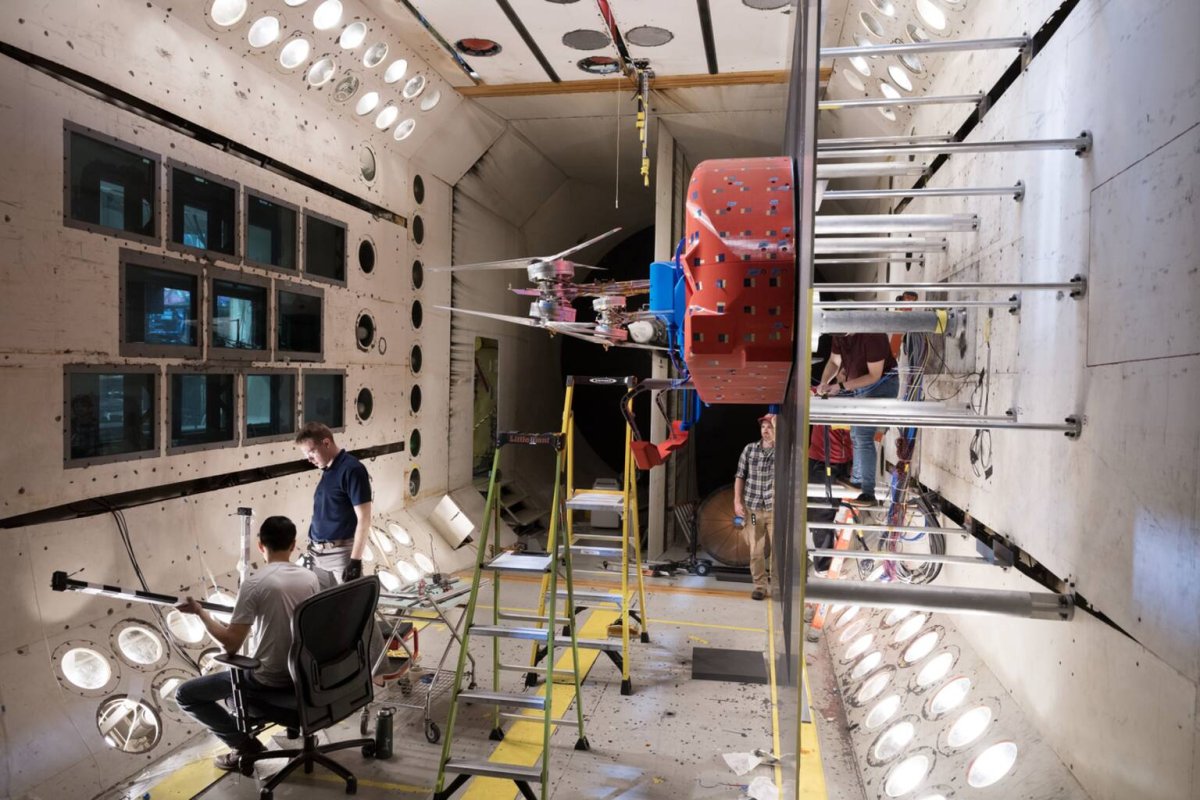
Zach Putnam, the mission's mobility lead, emphasized the importance of this test, stating, "It uses every piece of flight sensor hardware on the lander." The simulation is part of a broader testing regimen that includes rotor trials in Titan-like conditions, which were conducted earlier this year to measure structural stress and vibration.
Overcoming Titan's Unique Challenges
Titan presents both advantages and challenges for rotorcraft flight. Its atmosphere is about four times denser than Earth's, and its gravity is only about one-seventh as strong, providing substantial lift for the heavy rotorcraft. However, these conditions do not eliminate landing hazards, and the need for autonomous decision-making remains paramount.
The mission's communication system also requires careful design. APL's integration report describes an 87.4-centimeter high-gain antenna that is raised by a motorized arm while the rotorcraft is stationary and stowed before takeoff to protect it from vibration and damage.
Mission Goals and Timeline
Dragonfly is designed to be a mobile laboratory, capable of traveling up to 175 kilometers across Titan's surface. It will drill into the surface and analyze samples using a mass spectrometer, with French space agency CNES providing a gas chromatography instrument. The planned vehicle mass is 850 kilograms.
The mission's estimated cost is $3.35 billion, as reported by Space.com in March. NASA's current timeline targets a launch no earlier than July 2028, with arrival at Titan in late 2034. The mission will operate for 3.3 years on the surface, with flights scheduled every one or two Titan days, each lasting about 16 Earth days.
Looking Ahead
While the recent simulation was a major success, engineers emphasize that it used artificial terrain and sensor data. Future tests will involve flight avionics and deliberate fault injections to further validate the system's robustness. Neither the simulation nor earlier rotor trials establish operational readiness at Titan, but they are essential steps in a rigorous testing campaign.
The successful completion of this simulated flight brings Dragonfly one step closer to its historic journey, promising to unlock the secrets of Titan's organic-rich environment and potentially shed light on the origins of life in our solar system.