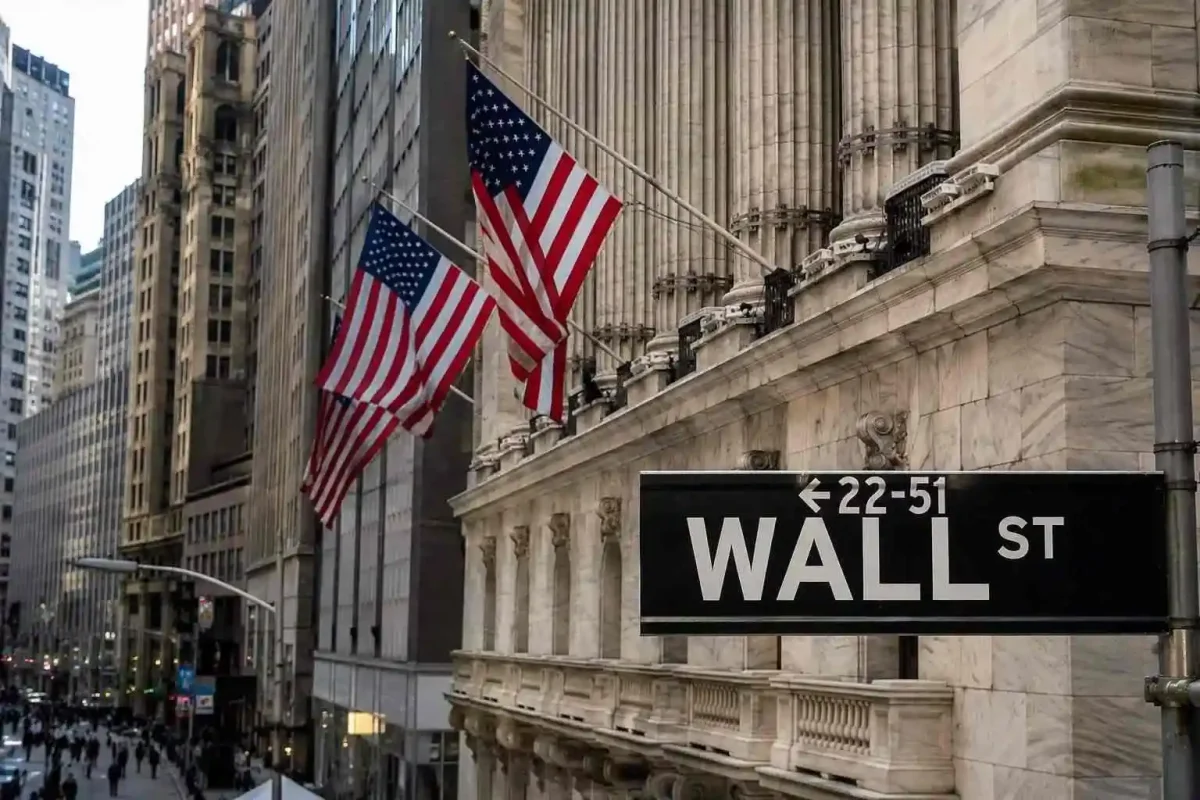
Wall Street staged a rally on Tuesday, with the S&P 500 and Nasdaq Composite climbing higher as renewed enthusiasm for artificial intelligence and semiconductor stocks offset headwinds from rising oil prices and declining consumer sentiment. The Dow Jones Industrial Average, however, slipped into negative territory.
Investors returned from the Memorial Day holiday to a mixed bag of news, including escalating tensions in the Middle East that pushed Brent crude above the $100 per barrel mark for the first time in recent weeks. Despite this, technology shares, particularly those tied to AI and chip manufacturing, attracted significant buying interest.
The S&P 500 rose 0.68% to 7,523.94, while the tech-heavy Nasdaq Composite added 1.13% to 26,642.91. In contrast, the Dow Jones Industrial Average edged down 0.17% to 50,492.69, according to LSEG data. The yield on the 10-year U.S. Treasury note stood at 4.487%.
Micron Breaks Trillion Barrier
Micron Technology (MU) became the latest chipmaker to surpass the $1 trillion market capitalization mark, a milestone that underscored the market's intense focus on artificial intelligence. The surge followed an upgrade from UBS, which raised its price target on Micron to $1,625 from $535, the highest among 46 brokerages tracked by LSEG. This puts Micron in the same league as Samsung Electronics (SSNLF) and close behind SK Hynix, both of which are also key players in the memory chip market.
The Philadelphia SE Semiconductor Index hit a record high, indicating broad-based buying across the chip supply chain. Marvell Technology (MRVL), Intel (INTC), and Qualcomm (QCOM) all traded higher in early action, reflecting a risk-on mentality among investors who continue to favor companies with strong earnings growth, according to Peter Tuz, president of Chase Investment Counsel.
Oil and Consumer Confidence Weigh
Brent crude surged 4.17% to $100.15 a barrel, driven by geopolitical risks in the Middle East. U.S. Secretary of State Marco Rubio indicated that a deal with Tehran could be reached within days, but Iran’s Tasnim news agency reported that Tehran is demanding the release of $24 billion in frozen funds. The uncertainty kept energy markets on edge.
Consumer confidence also took a hit. The Conference Board reported its index slipped to 93.1 in May from a revised 93.8 in April. Chief Economist Dana M. Peterson attributed the decline to the inflationary impacts of the war in the Middle East. The data raised concerns about future spending and kept the Federal Reserve’s rate path in focus.
Lilly Expands into Infectious Diseases
Outside of tech, Eli Lilly (LLY) announced plans to acquire Curevo, LimmaTech Biologics, and Vaccine Company for a combined nearly $4 billion, as the pharmaceutical giant pushes into infectious disease prevention. Daniel Skovronsky, Lilly’s chief scientific and product officer, said the company aims to “prevent disease at its source.” Citi analyst Geoffrey Meacham described the move as a “well-balanced foray into a new area.”
Market breadth was positive, with advancers outnumbering decliners on both the NYSE and Nasdaq. The Russell 2000 small-cap index hit an intraday record, signaling that the rally was not limited to mega-cap names. However, analysts cautioned that if Iran talks collapse or oil prices remain elevated, inflation fears could resurface and pressure high-flying AI stocks.