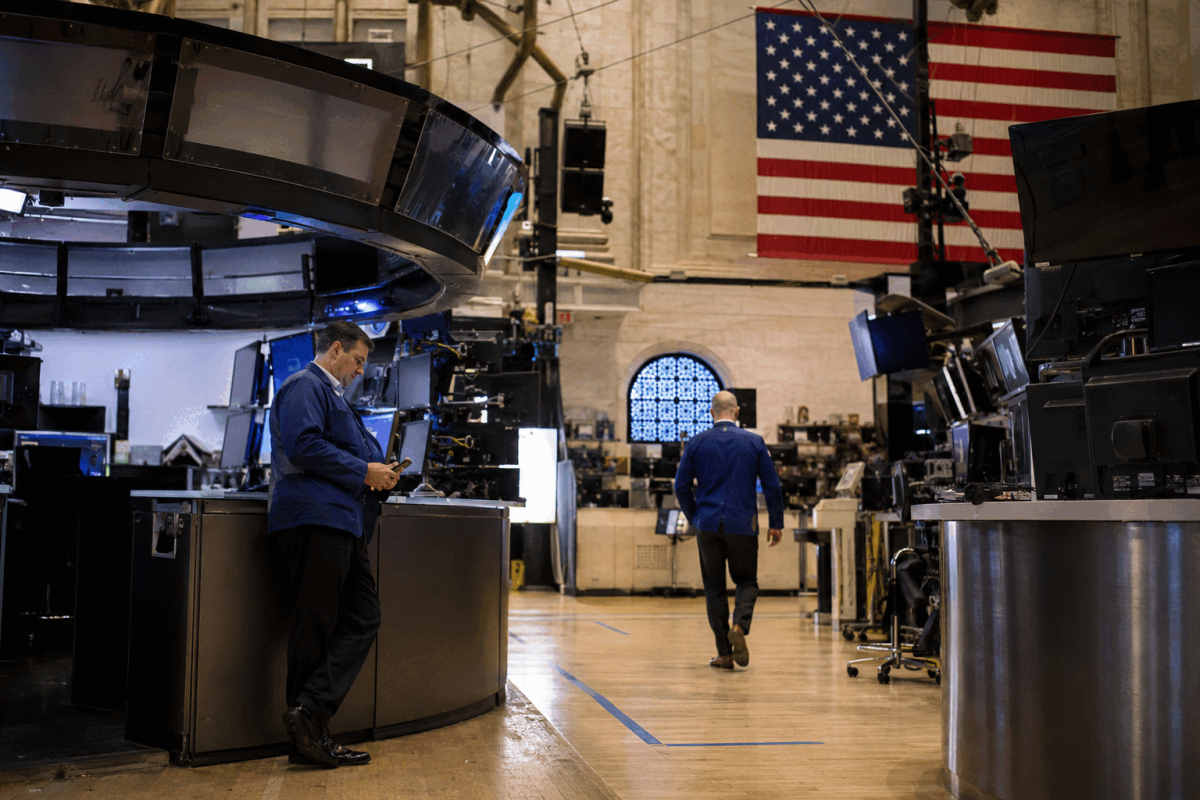
U.S. equity markets ended the session on a downbeat note on August 28, 2026, with technology shares bearing the brunt of the selling pressure. However, after-hours trading remained remarkably subdued, with major index ETFs holding within a hair of their closing values, suggesting that investors were not inclined to extend the day's losses.
At 18:00 EDT, the SPDR S&P 500 ETF (SPY) was down just 0.03% from its regular close, while the Invesco QQQ Trust (QQQ) slipped 0.02%. The SPDR Dow Jones Industrial Average ETF (DIA) actually edged up 0.01%, and the iShares Russell 2000 ETF (IWM) gained 0.03%. This stability came after a session that saw the S&P 500 fall 0.25% to 7,711.76, the Nasdaq Composite shed 0.52% to 26,402.42, and the Dow Jones Industrial Average slipped a marginal 0.02% to 53,559.99.
Small Caps Hit Hardest
The most pronounced weakness was in small-cap stocks. The Russell 2000 tumbled 1.4% to 2,972.37, weighed down by rising Treasury yields, which tightened financial conditions and disproportionately impact smaller, more leveraged companies. The yield on the 10-year Treasury note moved higher following comments from Federal Reserve Chair Kevin Warsh, who delivered a stark warning on inflation. According to market reports, the implied probability of a September rate increase jumped to around 58%, a significant shift in market expectations.
Tech Sector Under Pressure
Technology was the clear laggard among major sectors. The Technology Select Sector SPDR Fund (XLK) lost 1.55%, as semiconductor stocks led the decline. Marvell Technology (MRVL) plunged 10.3% after its forward guidance failed to meet the market's elevated expectations, particularly regarding AI-related revenue growth. Nvidia (NVDA) dropped 4.6%, and Intel (INTC) fell 2.8%, as investors trimmed their exposure to chipmakers amid concerns about valuations and the sustainability of the AI-driven rally.
In contrast, communication services and energy provided some support. The Communication Services Select Sector SPDR Fund (XLC) gained 1.41%, while the Energy Select Sector SPDR Fund (XLE) advanced 0.60%, helped by firmer oil prices.
Corporate Movers
Beyond the tech sector, several individual stocks made notable moves. PayPal (PYPL) slid 12.7% after reports indicated that a potential takeover bid had fallen through. The stock had been buoyed by acquisition speculation, and the news dashed hopes for a quick premium. On the upside, Gap (GPS) surged nearly 13% following a strong operational update, and Workday (WDAY) rose 5.8% after reporting better-than-expected results.
Market Breadth and Volume
Market breadth underscored the defensive tone. On the New York Stock Exchange, decliners outnumbered advancers by a ratio of 1.77-to-1. On the Nasdaq, the disparity was even more pronounced, with 3,272 decliners against 1,494 advancers. Total U.S. exchange volume reached 15.68 billion shares, close to the 20-day average of 15.8 billion, indicating that the selloff was orderly and not accompanied by panic selling.
Outlook
Looking ahead, all eyes will be on Monday's premarket trading to see if the stability in index ETFs can contain the ongoing chip selloff. The key transmission channels remain Treasury yields and expectations for further rate hikes. If the Fed's hawkish stance continues to push yields higher, small caps and high-valuation tech stocks could face additional pressure. Conversely, any dovish surprise could trigger a rebound.
Investors are also likely to parse upcoming economic data for clues on the Fed's next move. With inflation still a concern, and the labor market showing resilience, the path of monetary policy remains the dominant driver for equity markets. For now, the after-hours calm offers a temporary respite, but the underlying tensions are far from resolved.