Tesla (NASDAQ: TSLA) shares closed at $357.01 on Tuesday, up 0.26%, before easing in after-hours trading. The stock slipped 0.22% to $356.22 after the bell, as investors positioned for Thursday's Cybercab launch event in Austin, Texas. With the company's market capitalization hovering around $1.41 trillion, the event marks a shift from design spectacle to the more pragmatic question of commercial fleet deployment.
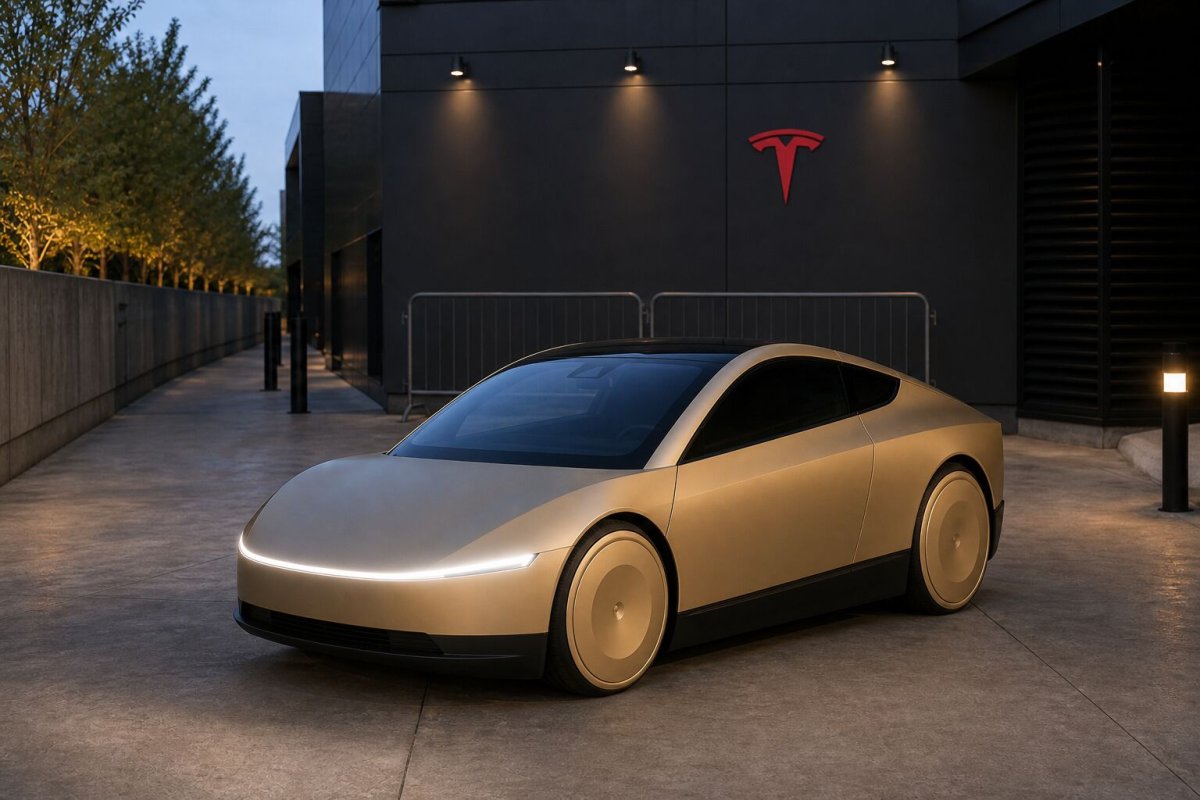
The Cybercab, a two-seat autonomous vehicle with butterfly doors and no steering wheel or pedals, has been in development for years. Tesla has tested versions with manual controls on public roads, and the company confirmed that production has begun at Gigafactory Texas. However, the official event page does not promise a broad public rollout, and that distinction is critical for investors. The market is looking for tangible evidence that Tesla can scale its robotaxi operations beyond pilot programs.
Financial Pressures Mount
Tesla's second-quarter results, released earlier this year, underscore the urgency. Revenue rose 26% year-over-year to $28.24 billion, while vehicle deliveries increased 25% to 480,126 units. However, operating margin narrowed to 1.4% from 4.1% a year earlier, reflecting higher costs and increased spending on AI infrastructure and manufacturing expansion. Capital expenditures surged 142% to $5.79 billion, and free cash flow turned negative at $1.09 billion, compared with a positive $146 million in the prior-year period.
The company expects 2026 capital spending to exceed $25 billion, with funds allocated to AI data centers, new factories, and company-operated vehicles. This spending pressure makes the Cybercab's success crucial, as it must eventually improve vehicle utilization without adding proportionate labor costs. Active FSD subscriptions reached 1.48 million, up 56%, and robotaxi service is now operating in seven major U.S. metros, but the economics of these services remain unproven.
Morgan Stanley's Take
Morgan Stanley (NYSE: MS) analyst Andrew Percoco maintained an Equalweight rating on Tesla with a $400 price target, which sits 12.3% above the latest after-hours trade. In a note to clients, Percoco emphasized that "tangible evidence of commercial deployment" tends to distinguish market reactions. He pointed to about 40 additional Cybercab registrations in Texas as a positive sign, but warned that a small launch could prompt selling, while material fleet growth could support outperformance.
Percoco's cautious stance reflects the broader market's uncertainty. Tesla has not disclosed the unit cost or ride economics for the Cybercab, and CEO Elon Musk's previously stated goal of a vehicle price below $30,000 remains a target, not a reported commercial price. Without clear cost data, investors are left to speculate on whether the robotaxi business can generate meaningful cash flow.
Risks and Catalysts
Several risks could derail the Cybercab's rollout. Federal safety compliance and state permits could slow deployment, and weak utilization would delay payback on the substantial capital invested. Conversely, faster fleet growth could lift near-term capital spending further, pressuring margins. The stock's valuation leaves little room for error; at $356, it trades at roughly 50 times forward earnings, according to data from Nasdaq.
Thursday's event will be the next major catalyst. Investors will watch for usable vehicle numbers, paid-service timing, and monitoring requirements. Cost and regulatory details may matter more than the car's design. The market has seen concept events before, and this time, it wants substance.
As Tesla navigates this critical juncture, the broader EV market is also evolving. Competitors are ramping up autonomous offerings, and regulatory scrutiny is intensifying. Tesla's ability to execute on the Cybercab could define its next phase of growth, or expose the limits of its ambitious vision.