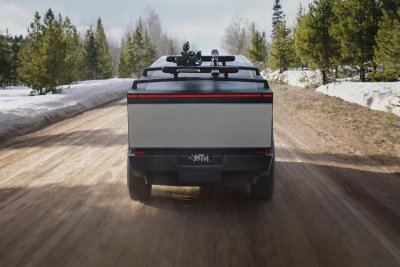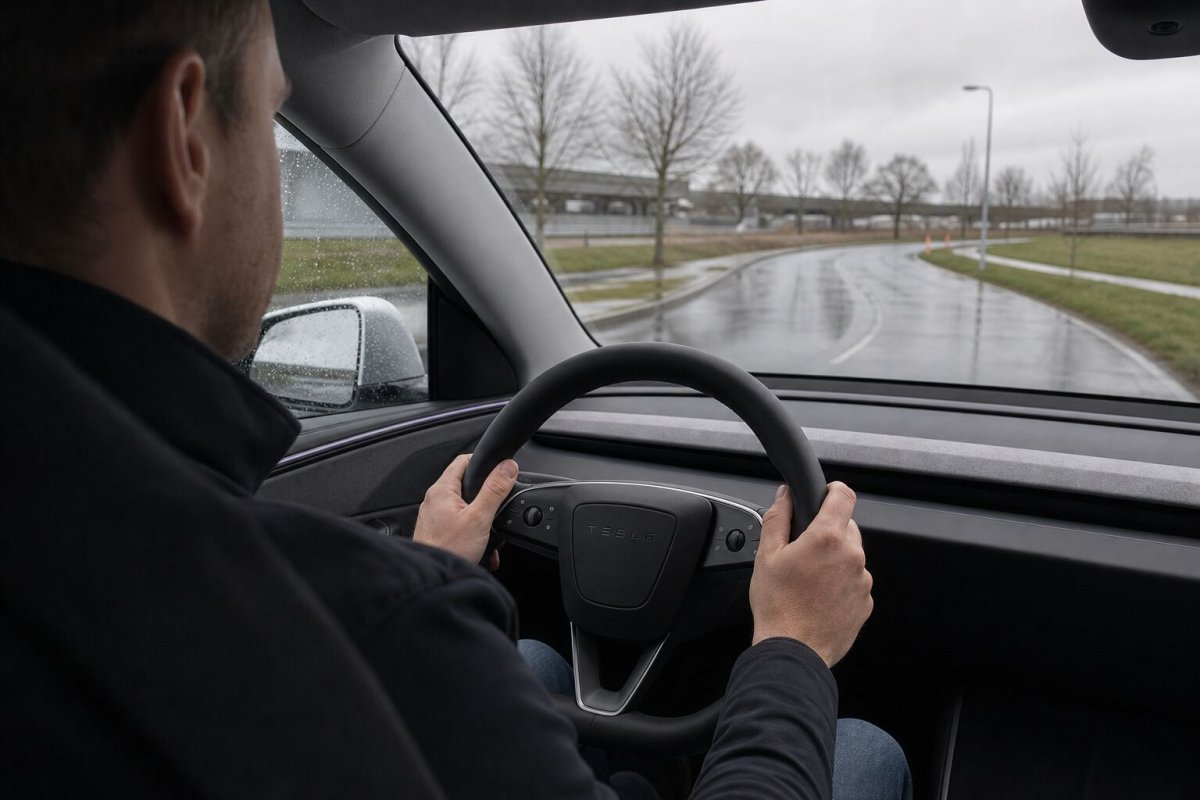
Tesla Inc. (NASDAQ: TSLA) experienced a 3.2% decline in its stock price on Tuesday, closing at $356.09, as market participants braced for a pivotal European regulatory decision regarding the company's Full Self-Driving (FSD) system. The vote, scheduled for October 6, carries significant weight for the automaker's $1.4 trillion market capitalization, which has become increasingly tied to the success of its autonomous driving technology.
The session saw Tesla shares fall $11.86 from Monday's close, with the stock trading at $355.75 in after-hours activity. Trading volume reached 35.7 million shares, according to data from Yahoo Finance. The decline reflects investor caution ahead of the European Union's potential authorization of FSD across member states, a move that could unlock substantial revenue streams from software sales and boost vehicle demand.
FSD Safety Data and Regulatory Context
Tesla has presented data to European regulators indicating that vehicles using supervised FSD were involved in crashes 4.1 times less frequently per 100 million kilometers driven compared to manual driving. This statistic, drawn from the company's own evidence dashboard, covers over 100 million kilometers of public-road driving in Europe and represents more than 70,000 customers in five approved EU countries: the Netherlands, Denmark, Belgium, Estonia, and Lithuania.
The company has made its Article 39 documentation from the Dutch regulatory process publicly available, highlighting its transparency efforts. However, these safety ratios are based on company-reported data and have not been independently verified, a point that regulators and analysts may scrutinize as the vote approaches.
European Demand Shows Mixed Signals
August vehicle registration data across Europe revealed a stark contrast in regional performance. France saw a remarkable 279% surge in Tesla registrations, while Denmark recorded a 104% increase. Conversely, Norway and Spain experienced steep declines of 79% each, with Sweden down 41%. Rico Luman, senior economist at ING Research, described the French and Danish advances as "still a remarkable surge," attributing the growth to a broader model lineup and the entry of new Chinese competitors.
These mixed trends underscore the uneven adoption of electric vehicles across the continent and the competitive pressures Tesla faces. The upcoming FSD decision could serve as a catalyst to harmonize demand, as regulatory approval would likely enhance the appeal of Tesla vehicles in markets where consumers value advanced driver-assistance features.
Financial Implications and Valuation Metrics
Tesla's second-quarter financial results, filed with the SEC, showed revenue of $28.24 billion, with the automotive segment contributing $20.52 billion. Operating income for the quarter was a modest $398 million, reflecting tight margins. At the current market value of $1.406 trillion, based on 3.950 billion shares outstanding, the stock trades at approximately 12.5 times annualized second-quarter revenue.
The automotive segment accounts for 72.7% of total revenue, with energy and services contributing 11.1% and 16.2%, respectively. For the current earnings multiple to be maintained, the successful launch of supervised FSD in Europe would need to either generate significant software revenue or drive an increase in vehicle sales, or both.
Market Outlook and Risks
Investors are also awaiting August registration figures from Britain and Germany, which are due this week. These data points will provide further insight into European demand trends. The October 6 regulatory assessment represents a critical juncture for Tesla's European expansion strategy.
However, risks remain. Approval could be delayed, member states might impose restrictions on FSD functionality, and regulators may continue to raise concerns if the company's safety data fails to meet rigorous standards. Given Tesla's elevated valuation, the market's reaction to both positive and negative scenarios is likely to be amplified, making the upcoming vote a focal point for shareholders.