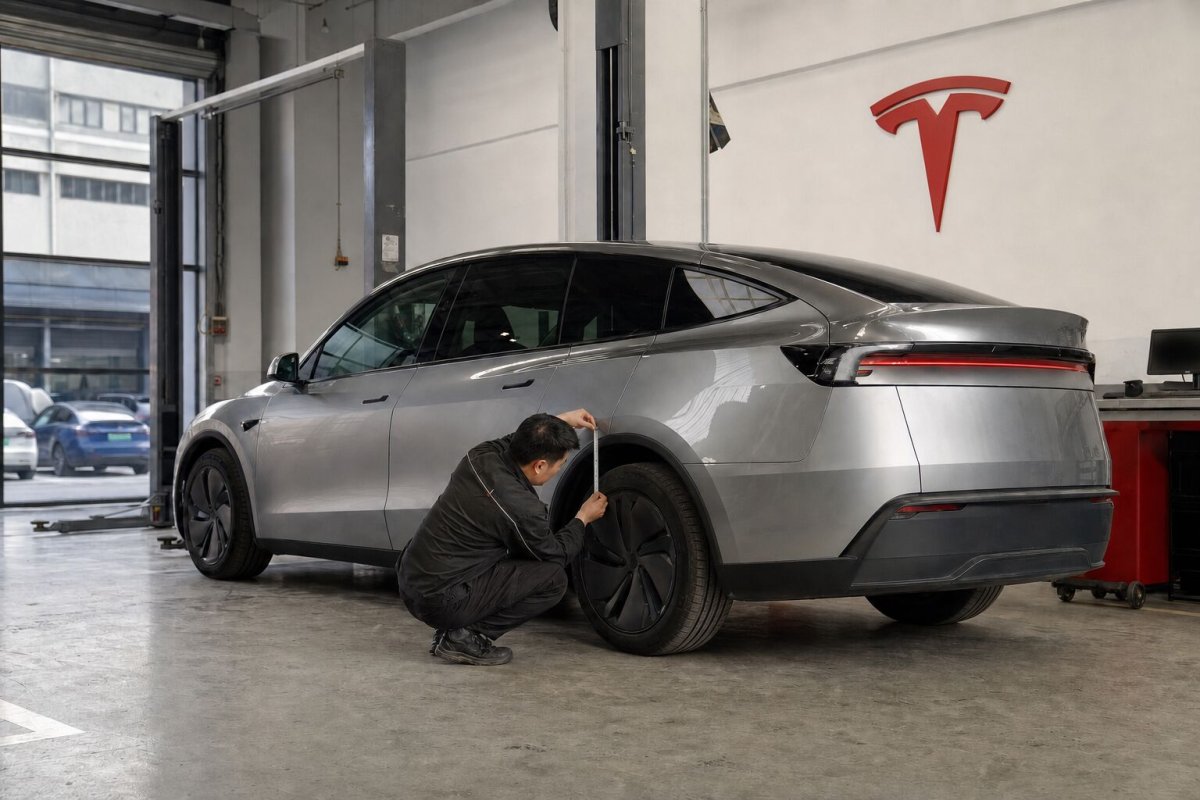
Tesla (NASDAQ:TSLA) shares saw a modest uptick in premarket trading on Wednesday, rising 0.26% to $357.00 as of 04:35 EDT. The move comes amid growing reports from Chinese owners about rear-suspension sag on the Model Y L, a six-seat SUV variant. While no official recall has been confirmed, the anecdotal evidence adds a fresh layer of service-risk scrutiny to the company's China operations, which remain a critical growth driver.
According to CarNewsChina, several owners have reported rear-suspension issues after extended use or heavy loads. One case surfaced after approximately 9,000 kilometers, while another appeared near 30,000 kilometers. Some service centers have replaced springs under warranty, but Tesla China has not issued a public response. The number of affected vehicles remains unknown, leaving investors to weigh the potential financial and reputational impact.
The timing is particularly sensitive. Tesla's China revenue reached $4.675 billion in the second quarter, representing 16.6% of the company's total $28.236 billion in sales. That figure was up 8.6% year over year. However, domestic deliveries in July fell 32.91% from a year earlier to 27,249 vehicles, even as Shanghai exports surged 143.24% to a record 66,330 units, according to CPCA data compiled by CnEVPost.
The Model Y L's official specifications show a curb mass of 2,088 kilograms and a maximum laden mass of 2,651 kilograms, implying a payload capacity of 563 kilograms. The rear axle maximum is rated at 1,518 kilograms. These figures provide context for owner complaints but do not establish a cause or incidence rate for the reported sagging.
Separately, Tesla faces a broader regulatory action in China. The market regulator announced that 2.98 million Tesla vehicles will require door-safety remedies starting September 25, according to a SAMR notice. That recall, which covers a much larger vehicle population than reported suspension cases, adds to the operational overhang. The suspension issue is not part of that recall.
Financially, Tesla's automotive gross margin slipped to 16.9% in the second quarter from 17.2% in the prior quarter. An extensive physical repair campaign for the suspension issue would add costs, while a limited spring replacement program would be more manageable. The company's ability to manage these costs will be closely watched by analysts.
Wall Street remains divided on Tesla's prospects. The average analyst price target stands at $390.09, about 9.3% above the premarket price, with a range of $125 to $600. Of 46 tracked analysts, 22 rate the stock a Buy (16 Strong Buy, 6 Buy), 19 rate it Hold, and 5 rate it Sell (2 Sell, 3 Strong Sell).
The key regulatory checkpoint comes on September 25, when the door-safety recall begins. If Tesla issues a bulletin or regulator filing on the Model Y L suspension, it would turn anecdotal reports into a measurable cost event. Until then, investors are left to assess the severity of the situation and its potential effect on China demand, which is already under pressure from intensifying competition and a slowing domestic EV market.