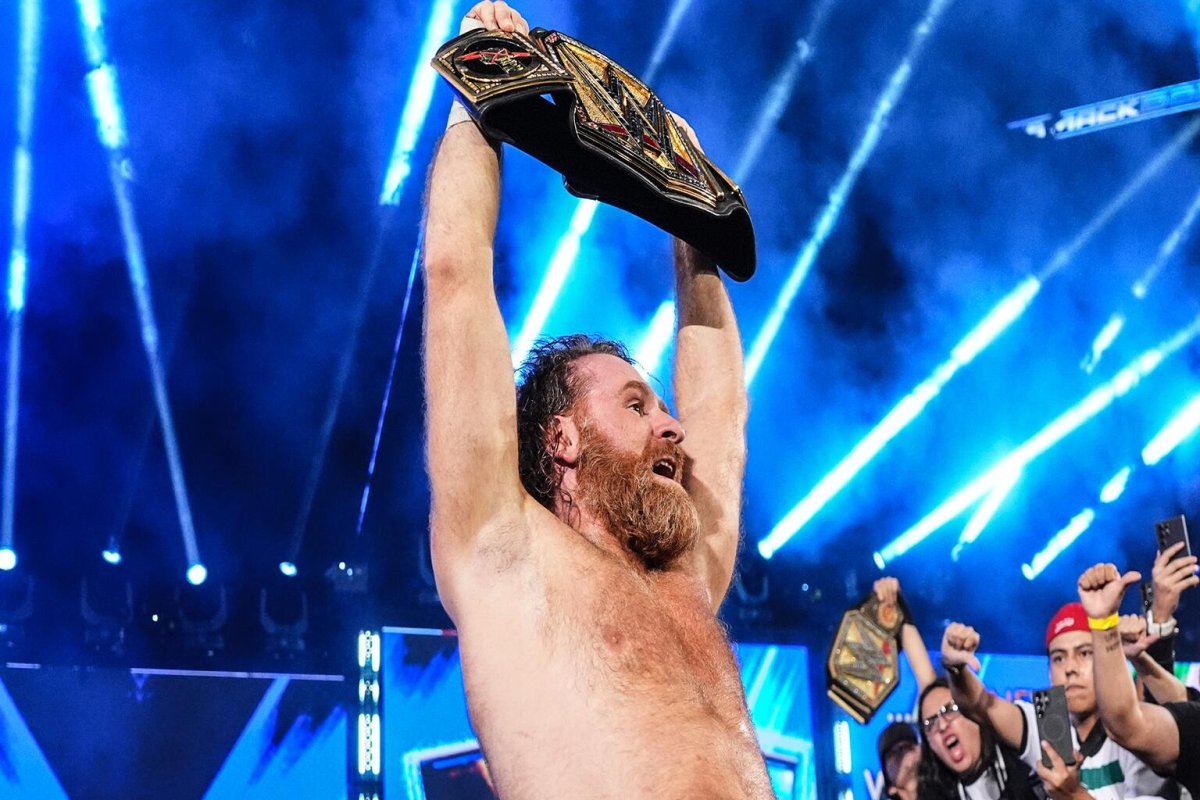
TKO Group Holdings (NYSE: TKO) shareholders are still waiting for the financial scorecard from WWE's return to Mexico City. While the in-ring action delivered a new champion—Sami Zayn defeated CM Punk for the Undisputed WWE Championship—the company has not yet disclosed attendance figures, ticket revenue, or a site fee for the event. That lack of transparency leaves investors without the hard numbers needed to evaluate the profitability of WWE's aggressive international expansion.
The timing is critical for TKO stock. Shares closed Friday at $190.31, up 0.35% on volume of 833,700 shares, before SmackDown aired at 8 p.m. ET. The stock's 2.3% gain from the previous Friday cannot be directly tied to the title change or the crowd's reaction, as the market had not yet processed the event. Investors will get their first chance to react on Monday, when WWE is also scheduled to hold Raw at the same venue.
Mexico as a Test Case for International Growth
This was not just a one-off television event. WWE billed it as SmackDown's first appearance in Mexico City in 15 years, part of a broader push that includes live events in Guadalajara and Monterrey, SmackDown in Mexico City, Triplemanía 34, and Monday Night Raw. This cluster of events gives TKO multiple revenue streams from a single market—tickets, media rights, sponsorships, merchandise, and premium experiences.
The company's latest filing highlights the scale of this international push. In the first half of the year, WWE held 43 international events, up from just 16 a year earlier. Total events jumped to 160 from 121. Yet the economics have not scaled at the same pace. First-half live-event and hospitality revenue rose only 5.2% to $275.5 million, compared with $262.0 million in the prior-year period. WWE's adjusted EBITDA, however, climbed 19.2% to $624.4 million, with margins improving to 57% from 55%.
That divergence does not necessarily signal failure. Event mix, venue size, ticket pricing, and financial incentives can make one show far more valuable than another. But it does mean that raw event counts are a weak proxy for financial performance. Mexico's contribution will only strengthen the valuation case if TKO discloses meaningful revenue data.
Costs Rise with Expansion
International expansion also brings higher costs. In the filing, TKO noted that increased international activity led to a $10.3 million rise in travel expenses. Despite that, WWE's adjusted EBITDA still grew 19.2% in the first half, and the segment margin improved to 57% from 55%, showing the broader business absorbed the spending. But for Mexico to become a meaningful part of the investment thesis, TKO will need to show that fan demand translates into strong ticket sales, local partnerships, or incentive payments—not just additional dates on the calendar.
A Strong Show Isn't the Same as Strong Economics
WWE produced a show designed to keep fans engaged: Zayn's victory over Punk, two other championship defenses, and a post-match angle that extends another storyline. That can support repeat viewing and drive interest in Monday's Raw. But it cannot establish ticket yield, sponsor revenue, or incremental profit.
Some might argue investors are expecting too much from a weekly television episode. Media rights remain the primary engine for WWE. In the second quarter, media-rights, production, and content revenue rose by $80.8 million year over year to $359.7 million. Total WWE revenue increased 12% to $620.9 million, with adjusted EBITDA of $368.3 million and a margin of 59%, according to TKO's latest results. A single Mexico gate is unlikely to move consolidated guidance on its own.
That same report underscores why discipline matters. WWE's second-quarter live-event and hospitality revenue fell 18.1% to $152.0 million, which TKO attributed almost entirely to a weaker WrestleMania ticket-sales comparison. Still, the company raised its 2026 guidance to revenue of $5.775 billion to $5.825 billion and adjusted EBITDA of $2.275 billion to $2.305 billion. At Friday's closing price, shareholders are buying an execution story with little room for international expansion to become volume without yield.
The next useful evidence will be concrete: verified attendance, a gate or sellout disclosure, sponsor economics, and whether the Mexico run contributes to another quarter of WWE margin expansion. Until TKO supplies at least one of those numbers, Mexico City is a promising operating signal—and a compelling piece of programming—but not a fresh earnings estimate.