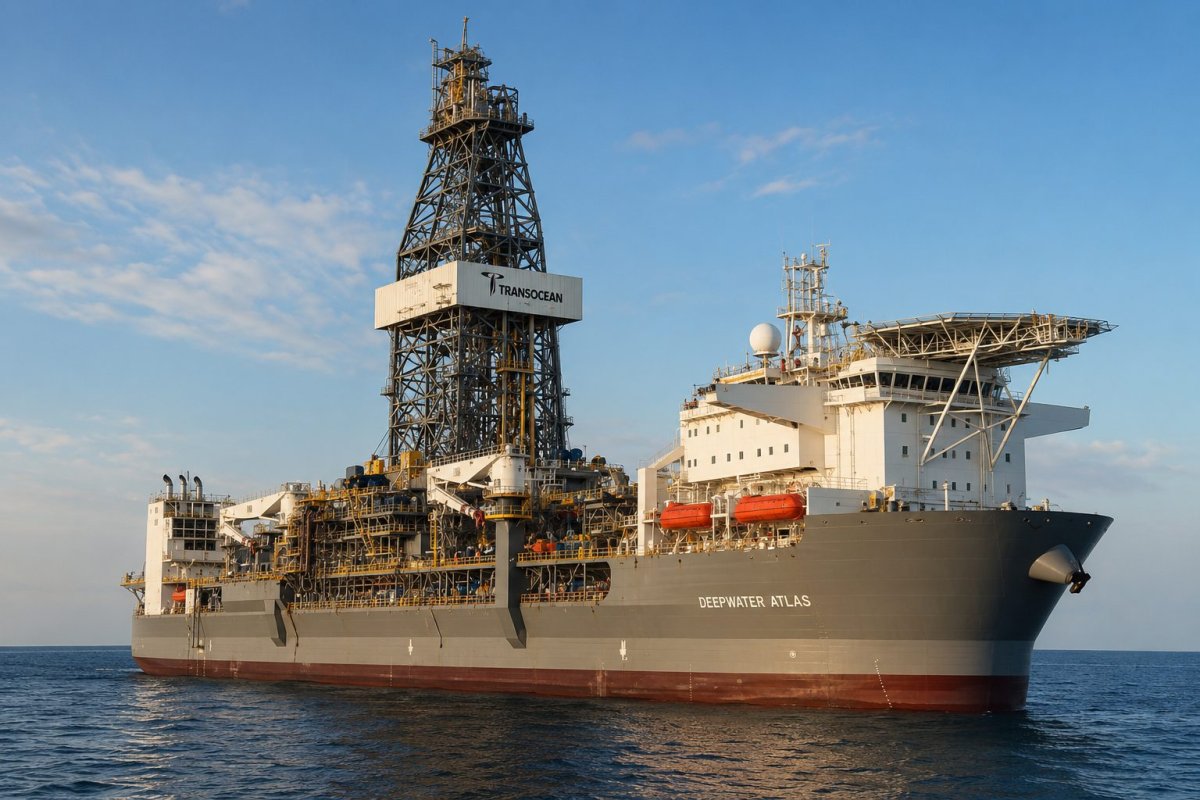
Offshore drilling contractor Transocean Ltd. (NYSE: RIG) saw its shares underperform on Tuesday, closing at $5.82—a decline of 0.85%—despite a rally in global oil prices that pushed Brent crude to a three-week high. The stock's slide came as trading volume reached 38.7 million shares, making it one of the most actively traded equities on U.S. exchanges.
Brent crude rose 54 cents to $91.56 per barrel in early European trading on Wednesday, while West Texas Intermediate (WTI) gained 59 cents to $85.53. Both benchmarks touched their strongest levels since late July, driven by ongoing concerns about shipping disruptions in the Strait of Hormuz. However, Transocean's shares failed to benefit from the oil price uptick, highlighting the disconnect between crude prices and offshore drilling economics.
Unlike oil producers, offshore rig operators generate revenue through contracted dayrates rather than spot prices. While higher oil prices may encourage future investment in deepwater projects, Transocean's near-term cash flow is tied to fleet utilization, contract commencement dates, and periods of idle time. This structural difference explains why the company's stock performance can diverge from crude oil movements.
Financial Performance and Backlog
Transocean's second-quarter results, reported earlier this month, underscored the challenges. Contract drilling revenue fell 10.6% sequentially to $966 million, while adjusted EBITDA dropped 29.1% to $312 million. However, free cash flow improved significantly, rising 55.9% to $212 million—more than double the same period last year. This cash generation allowed the company to reduce its debt principal by $30 million during the quarter.
As of August 5, Transocean's backlog stood at approximately $6.7 billion, representing nearly seven quarters of recent drilling revenue. The backlog includes contracts extending over multiple years, providing some visibility into future cash flows. However, the company's total debt principal of $5.1 billion remains substantial, equating to roughly 76% of the disclosed backlog. This leverage ratio means that even minor operational shortfalls could significantly impact equity value.
Merger with Valaris and Strategic Outlook
Transocean is in the process of acquiring rival Valaris Limited (NYSE: VAL) in an all-share deal valued at $5.8 billion. The combined entity would be worth approximately $17 billion. Management projects $200 million in annual synergies and aims to reduce leverage to 1.5 times within two years of closing. However, the transaction remains subject to shareholder and regulatory approvals, adding an element of uncertainty.
Chief Executive Keelan Adamson acknowledged the debt burden in a candid statement: "We know that our debt level negatively impacts our equity value." He expressed confidence that the merger would help address this issue, while also forecasting that high-specification deepwater and harsh-environment utilization rates would climb well into the 90% range during 2027.
Analyst Sentiment and Market Outlook
Wall Street analysts have mixed views on Transocean. Among the 11 covering firms, the consensus rating is Hold, with three Buy ratings, five Holds, and three Sells. The average price target stands at $6.82, representing a potential upside of about 17% from Tuesday's closing price. Recent analyst actions include Susquehanna's Charles Minervino reaffirming a Positive rating with a $7 target, while Barclays raised its target to $8 with an Overweight rating. At the other end, TD Cowen maintains a Hold with a $6 target.
Investors are now watching whether the crude rally persists long enough to spur increased offshore spending and support higher dayrates. The key question remains how much of the eventual cash flow will flow to shareholders versus being used for debt reduction. Risks include a potential easing of tensions in the Strait of Hormuz, which could unwind the oil price premium, as well as delays in contract commencements, operational downtime, softer dayrates, or setbacks in the merger and licensing processes.
For now, Transocean's stock remains a high-beta play on offshore drilling fundamentals, with its valuation heavily influenced by the company's ability to convert its substantial backlog into cash while managing its debt load.