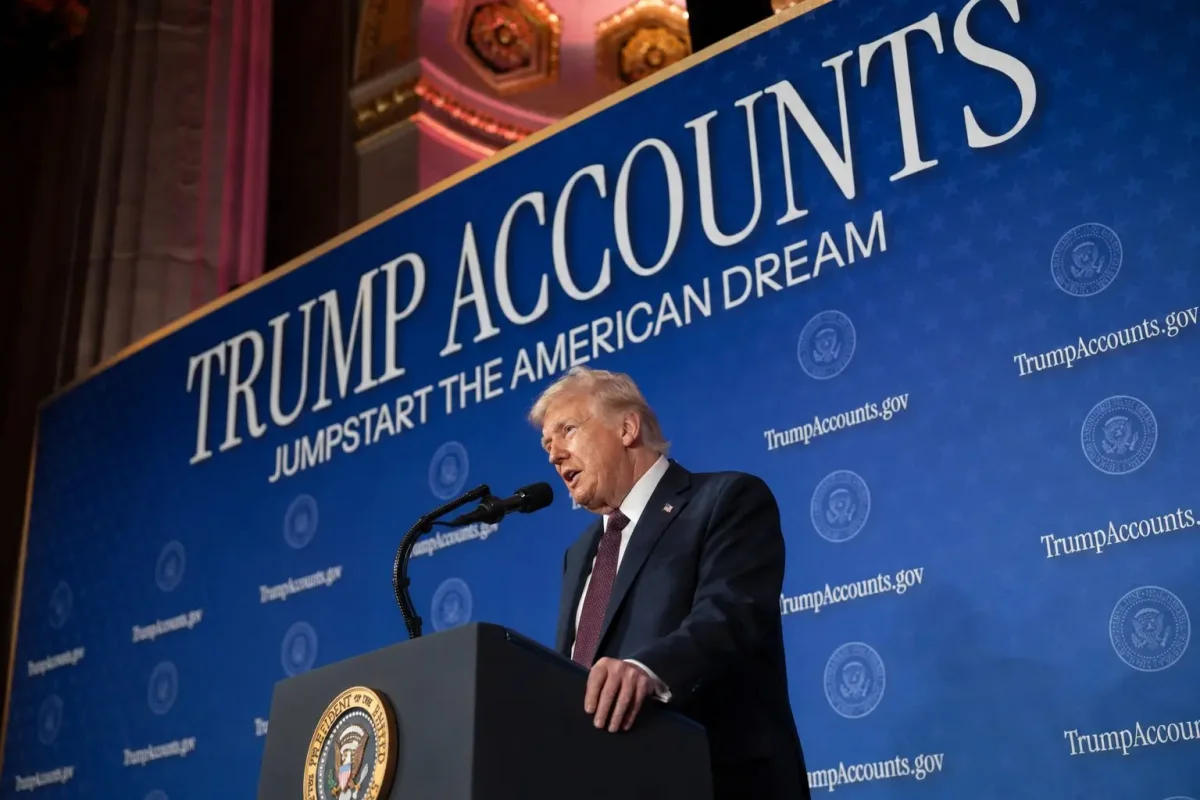
WASHINGTON, July 6, 2026 – The U.S. Treasury officially launched the Trump Accounts app on July 4, allowing parents to fund accounts immediately and children to view performance starting July 6. This federally backed child savings plan channels contributions directly into U.S. equity funds, beginning with State Street's SPDR Portfolio S&P 500 ETF (NYSEARCA:SPYM).
Initial Impact on ETF Market
The first waves of capital are flowing into State Street's low-cost ETF, creating a dual narrative of ETF inflows and account growth. With disclosed federal eligibility and public commitments from Michael and Susan Dell, Gwynne Shotwell, and Micron Technology, the program holds a potential seed value exceeding $8.2 billion, excluding parent deposits. This marks a significant test for Wall Street's ETF infrastructure.
Program Details and Rollout
The Treasury confirmed that the full app version rolled out on July 4, offering families mobile access to balances, contribution tools, and financial education. Over 50 companies have pledged to provide Trump Account contributions for employees' children. All contributions initially go into SPYM, with plans to add options like BlackRock's iShares Core S&P 500 ETF (NYSEARCA:IVV), Vanguard Total Stock Market ETF (NYSEARCA:VTI), and others once allocation tools become available.
Key Contributors and Seed Funding
The seed value sources include the U.S. Treasury providing $1,000 per eligible child, with over 6 million families signed up and 1.4 million qualifying for federal funds, totaling an estimated $1.4 billion. Michael and Susan Dell have committed $250 each for up to 25 million eligible kids, potentially worth $6.25 billion. Gwynne Shotwell donated over 2 million shares valued at about $320 million, targeting children 11 to 17 in lower-income regions. Micron Technology pledged $250 million in corporate support.
Market Context and Implications
While the $8.2 billion is modest relative to the S&P 500's size, the funds have long holding periods and are directed into low-fee index ETFs. The Treasury selected funds with expense ratios under the legal cap, minimizing fee concerns. The distribution strategy—account setup, employer matches, app experience, and fund custody—is the critical factor for success. Bank of New York Mellon (NYSE:BNY) serves as the financial agent, while Robinhood Markets (NASDAQ:HOOD) developed the app interface.
Wealth Inequality and Future Outlook
Federal Reserve data shows the richest 1% owned 50% of U.S. corporate equities in Q1 2026, while the bottom half held only 1.1%. Trump Accounts aim to help eligible children invest, but their future impact relies on sustained contributions from parents, employers, and donors. Andy Blocker of Edward Jones noted that the $1,000 grant removes the barrier of having no starting capital, though critics like Adam Michel of the Cato Institute argue government handouts are ineffective against poverty.
Comparison with 529 Plans
Trump Accounts differ from 529 plans in tax treatment: they offer a $1,000 federal seed for eligible children born after 2024 and before 2029, with contributions capped at $5,000 yearly. Withdrawals are locked until age 18, then follow traditional IRA rules with potential penalties. In contrast, 529 plans have no federal seed, contributions are not tax-deductible, but earnings grow tax-free for education expenses.
Investor and Market Read-Through
This program creates a new default equity option for ETFs, custodians, and brokerages, potentially reshaping the child savings landscape. Asset managers and administrators are closely watching the scale and adoption, as the initial numbers signal a transformative shift in how retail investors access equity markets through government-backed initiatives.