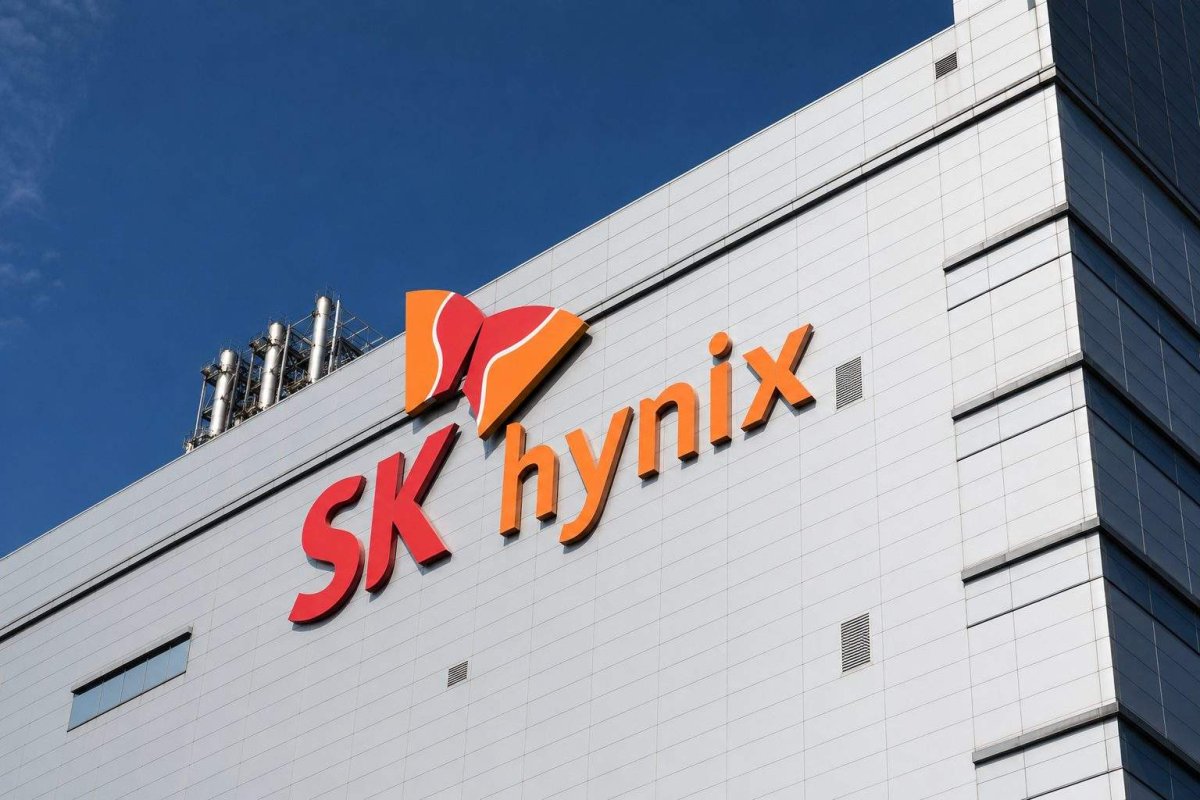
SK Hynix (KRX:000660) has officially launched a substantial American depositary receipt (ADR) offering on the Nasdaq, aiming to raise 43.1 trillion won ($28.1 billion) to finance its aggressive expansion into AI memory production. The pricing is set to conclude Thursday, with trading expected to begin Friday. This move is primarily designed to cover approximately 77% of the company's 55.92 trillion won capital expenditure plan, which focuses heavily on high-bandwidth memory (HBM), new fabrication facilities, and advanced packaging technologies.
The offering represents a strategic pivot for the South Korean chipmaker, which is betting big on the AI-driven demand for memory chips. According to reports from Reuters and The Elec, the company will issue 17.79 million new shares through the ADR program. The move comes after SK Hynix trimmed its initial target from 45.453 trillion won, following a 3.4% decline in its Seoul-listed shares on Monday, which closed at 2,343,000 won. Despite this dip, the stock remains up roughly 260% year-to-date.
Investor interest has been robust, with Baillie Gifford Overseas, funds managed by Coatue Management, and Situational Awareness Partners indicating demand of up to $7 billion, or about 24.9% of the total target. The ADR listing is seen as a way to broaden the shareholder base and reduce what analysts call an "accessibility discount" for U.S. investors who previously found it difficult to invest in SK Hynix directly. Dave Mazza, CEO of Roundhill Investments, described the listing as more than a liquidity event, while Steve Sosnick of Interactive Brokers noted it would benefit both smaller investors and institutions by tapping into momentum-driven capital.
The bulk of the proceeds—about 89% of the disclosed spending—will be directed toward projects in South Korea, not the U.S. The largest allocations include 21.61 trillion won for Yongin fab phases two through six, 19 trillion won for the Cheongju P&T7 advanced packaging facility, and 9.41 trillion won for the Yongin phase one fab. Additionally, SK Hynix has plans for a 5.9 trillion won advanced packaging plant in Indiana, though this represents a smaller share of the total. The company will also use funds to acquire ASML's extreme ultraviolet (EUV) lithography scanners, critical for producing advanced chips.
SK Hynix is a key supplier of HBM chips used in AI hardware by Nvidia (NASDAQ:NVDA) and Google (NASDAQ:GOOGL). Di Zhou, a portfolio manager at Thornburg Investment Management, characterized the current environment as a "memory super cycle," suggesting the ADR could help close the valuation gap with U.S. rival Micron Technology (NASDAQ:MU). However, Sundeep Gantori, Standard Chartered's chief investment officer of equities, cautioned that investors should be mindful of the memory cycle's mid-cycle stage, warning that rising memory prices could potentially dampen spending on AI infrastructure, mobile phones, and PCs.
The fee structure for the deal is relatively modest in percentage terms but significant in absolute value. Reuters reported that SK Hynix is considering a 0.5% base payout of the listing proceeds to its deal banks, with the possibility of additional discretionary fees. On the current $28.07 billion target, that would amount to approximately $140 million. SK Hynix declined to comment on the fee arrangement. Policy risks also loom, as South Korea recently unveiled a $576 billion chip and AI investment push led by SK Hynix and Samsung Electronics (KRX:005930). President Lee Jae Myung has urged officials to expedite permits, land deals, and infrastructure access for these projects.
With the final price set for Thursday and trading to commence Friday, market participants are closely watching whether the U.S. book can absorb the new supply. The company's key cleanroom targets are scheduled from 2027 to 2030, indicating a long-term commitment to expanding production capacity. The success of this offering will likely provide a bellwether for investor appetite in the AI memory sector and could influence future capital-raising efforts by other semiconductor firms.