President Donald Trump has escalated his political confrontation with the nation's largest oil producers, publicly demanding that Exxon Mobil (NYSE: XOM) and Chevron (NYSE: CVX) lower retail fuel prices. The call comes on the heels of a blockbuster second quarter that saw the two energy giants post a combined $26.6 billion in earnings, a 178% year-over-year increase.
Speaking from the Oval Office and later reiterating his stance on Truth Social, Trump asserted that both companies had reaped excessive profits during the Iran conflict. "They better cut the retail price, the consumer price," he told reporters, though he stopped short of outlining any specific policy measures. Exxon and Chevron did not immediately respond to requests for comment.
The financial figures underscore the political sensitivity. Exxon reported Q2 net income of $14.53 billion, up 105% from $7.08 billion a year earlier. Chevron's profit surged 385% to $12.07 billion, compared with $2.49 billion in the prior-year quarter. The combined total of $26.60 billion represents a 2.78-fold increase over the $9.57 billion earned in Q2 2025.
An analysis of the profit breakdown reveals that upstream operations—oil and gas production—contributed the lion's share, accounting for approximately 61% of total earnings. Refining and fuel marketing, the segment most directly affected by retail price adjustments, contributed nearly 39%. Exxon's Energy Products division generated $5.47 billion, while Chevron's Downstream segment added $4.87 billion, for a combined $10.33 billion.
Industry observers note that Trump's focus on pump prices may have limited direct impact on the bulk of these profits. "Cutting retail prices would primarily squeeze refining and marketing margins, whereas upstream profits are driven by crude prices and production volumes," said a market analyst. The American Petroleum Institute pushed back against the president's characterization, emphasizing that fuel prices are determined by global supply and demand dynamics, "not driven by any one company."
Crude markets have reacted sharply to the geopolitical backdrop. Brent crude fell 7% to $83.77 per barrel on Monday following Trump's halt of fresh strikes and a return to negotiations, while West Texas Intermediate declined 5.1% to $80.34. However, prices recovered some ground early Tuesday, with Brent up 1.2% to $84.79 and WTI gaining 0.6% to $80.80, as Iran denied that talks were underway, sustaining supply concerns.
The market's response was evident in equity trading. On Monday, Exxon shares slipped 0.25% to $155.06, Chevron dropped 1.83% to $193.18, and other refiners such as Valero Energy (NYSE: VLO) and Marathon Petroleum (NYSE: MPC) fell 1.75% and 2.93%, respectively. The S&P 500, meanwhile, advanced 1.48%, as investors rotated into sectors that benefit from lower oil prices.
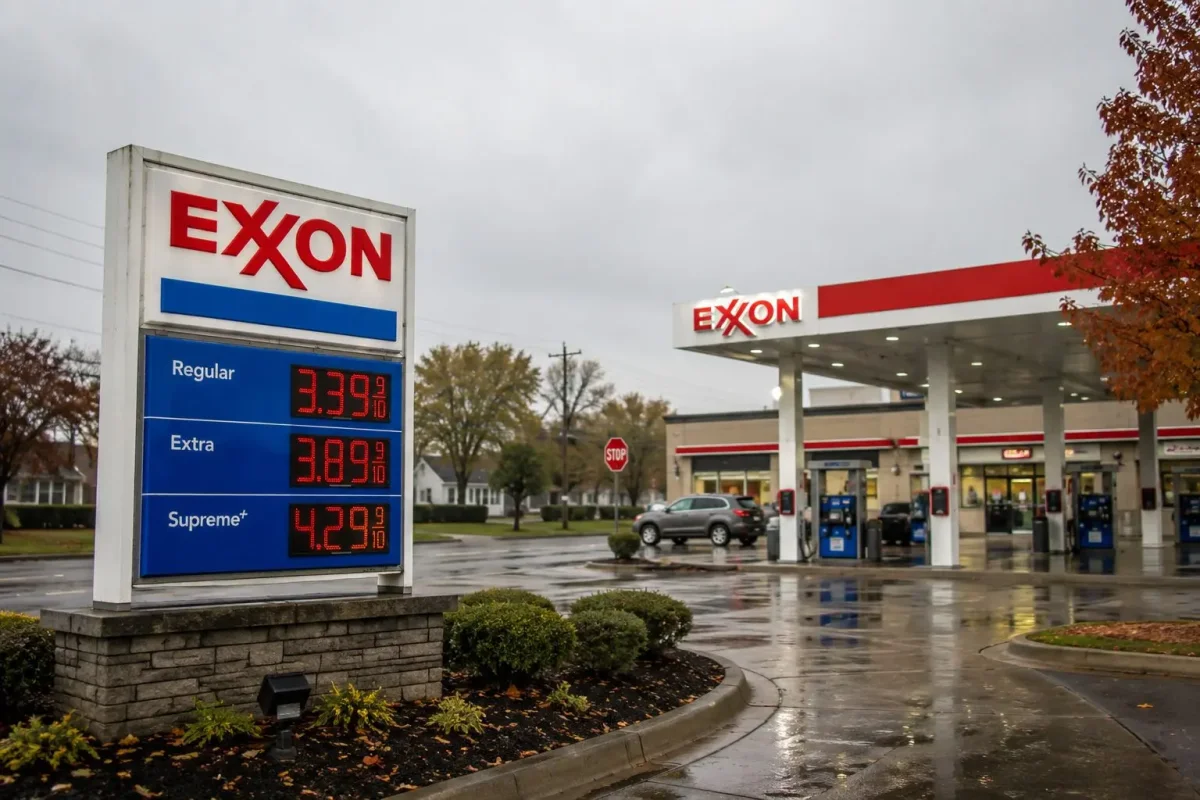
Retail gasoline prices have yet to reflect these moves. The national average for regular gasoline stood at $4.10 per gallon on July 31, with changes typically lagging shifts in crude and wholesale markets.
The political pressure is compounded by the scale of capital returns. Exxon distributed $9.4 billion through dividends and share buybacks, while Chevron returned $3.50 billion in dividends and allocated $3.12 billion to repurchases. Combined, these outlays totaled nearly $16.0 billion, representing approximately 60% of quarterly earnings. Such figures are likely to attract further scrutiny from policymakers and consumer advocates.
Company executives defended their performance. Exxon CEO Darren Woods highlighted operational execution "even in the face of challenges," while Chevron's Mike Wirth acknowledged that supply difficulties intensified during the quarter. Both leaders framed the results as a testament to operational strength.
Looking ahead, investors are closely monitoring diplomatic developments with Iran, tanker movements in the Strait of Hormuz, and whether pump prices begin to reflect lower crude costs. The broader market will also focus on Friday's July employment report, due at 08:30 EDT, as a key indicator of economic health.
The risks are balanced. A reliable reopening of the Strait of Hormuz could push crude prices and refining margins lower, easing consumer costs. Conversely, further attacks or shipping disruptions could reignite the war premium, prolonging elevated fuel prices. For now, markets appear to be pricing in de-escalation, but Trump's involvement adds a new layer of uncertainty. What was once a stellar quarter for cash generation has become a test of pricing power, buyback persistence, and resilience to political pressure.