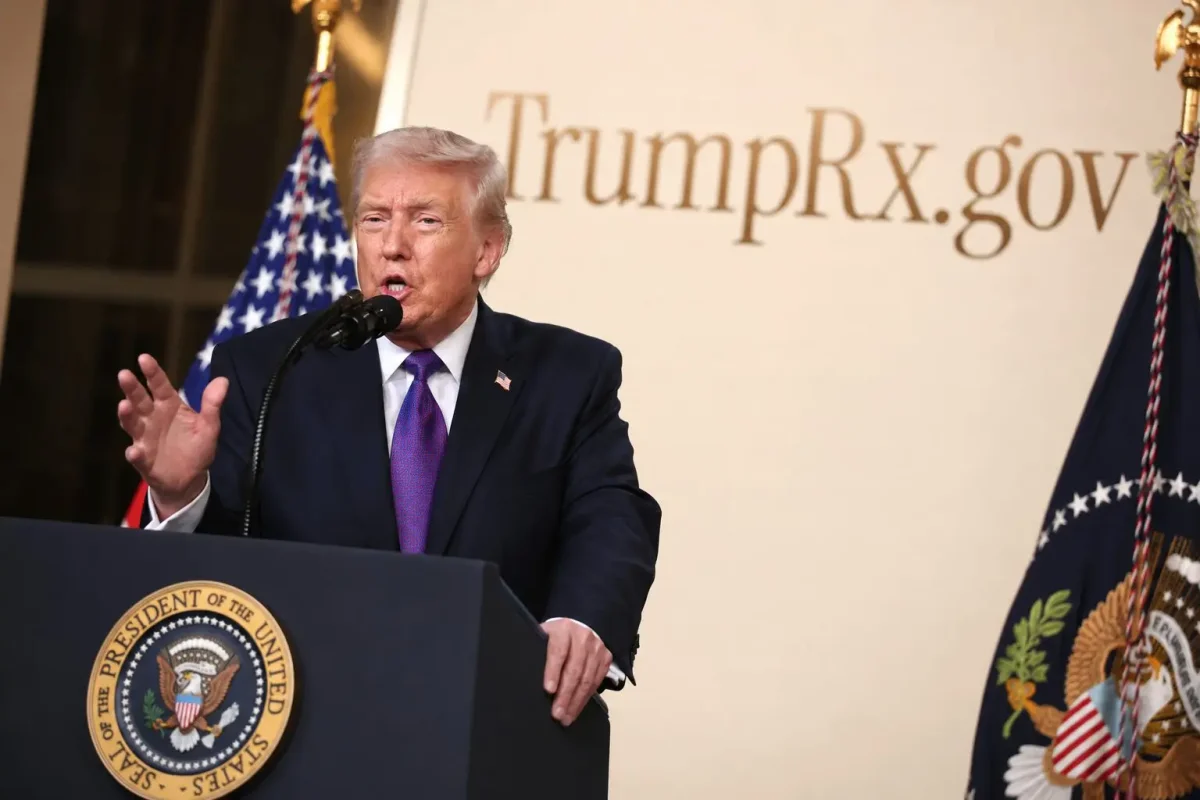
Generic drug manufacturers faced renewed headwinds Wednesday after President Donald Trump outlined a tariff schedule that could see duties on imported generics reach 200% by August 2029. The announcement came as the administration reported that its TrumpRx prescription drug platform now covers more than 800 medications, with only 79 brand-name drugs included under negotiated “presidential deals.”
Market Reaction
Shares of Teva Pharmaceutical Industries (NYSE:TEVA) fell 3.9% to close at $30.15, while Viatris (NASDAQ:VTRS) declined 3.3% to $17.01. Sandoz (SWX:SDZ) dropped approximately 3% in Zurich trading. In contrast, Pfizer (NYSE:PFE) slipped just 0.4% to $24.82, and Gilead Sciences (NASDAQ:GILD) ended flat at $130.34. The S&P 500 edged down 0.14% to 7,498.96.
Tariff Timeline
Trump said generic imports would be exempt from duties for two years starting August 1, 2026. Tariffs will then increase to 100% in August 2028 and climb to 200% the following year. Branded drug imports remain unaffected, as major pharmaceutical companies have secured exemptions through pricing agreements with the government. Over 90% of medications sold in the U.S. are generics.
TrumpRx Details
The TrumpRx platform, launched in February with 40 branded drugs, surpassed 600 generics in May and now lists over 800 total medicines. The official website displays 79 brand-name drugs under “presidential deals,” representing less than 9.9% of the total. The remaining 90.1% consists largely of generics. Many deals are not covered by insurance and do not apply to deductibles.
NPR reported 92 brand-name drug discounts as of July 14, but the current official count is 79. The group of 17 manufacturers collectively makes over 800 branded medicines, though Pfizer did not include upwards of 100 of its brands in TrumpRx, and Gilead had no drugs available on the site at the time of NPR’s review.
Industry Concerns
John Murphy III, CEO of the Association for Accessible Medicines, said “structural problems in both purchasing and reimbursement” continue to hinder U.S. growth. The industry is pursuing changes through legislation and regulation. Analyst Stefan Schneider noted that bringing manufacturing back to the U.S. would likely raise generic drug prices, given that roughly 22% of Sandoz’s sales come from North America despite minimal local production.
Earnings and Outlook
Teva is set to report earnings on July 29 at 7 a.m. EDT, with investors scrutinizing whether branded drug growth can offset generic segment declines. In the first quarter, Teva’s profit was supported by branded products amid weaker generics. Over the past five sessions, Viatris gained 2.0% from its July 15 close, while Teva dropped 4.5%. Pfizer was unchanged, and Gilead fell 1.0%.
The tariff timeline begins in 2028 and may be revised. Costs could be reduced through exemptions or added U.S. capacity. TrumpRx figures also shift depending on category and timing. For now, generic import exposure offers a clearer signal for investors, as the divide was evident by Wednesday’s close.