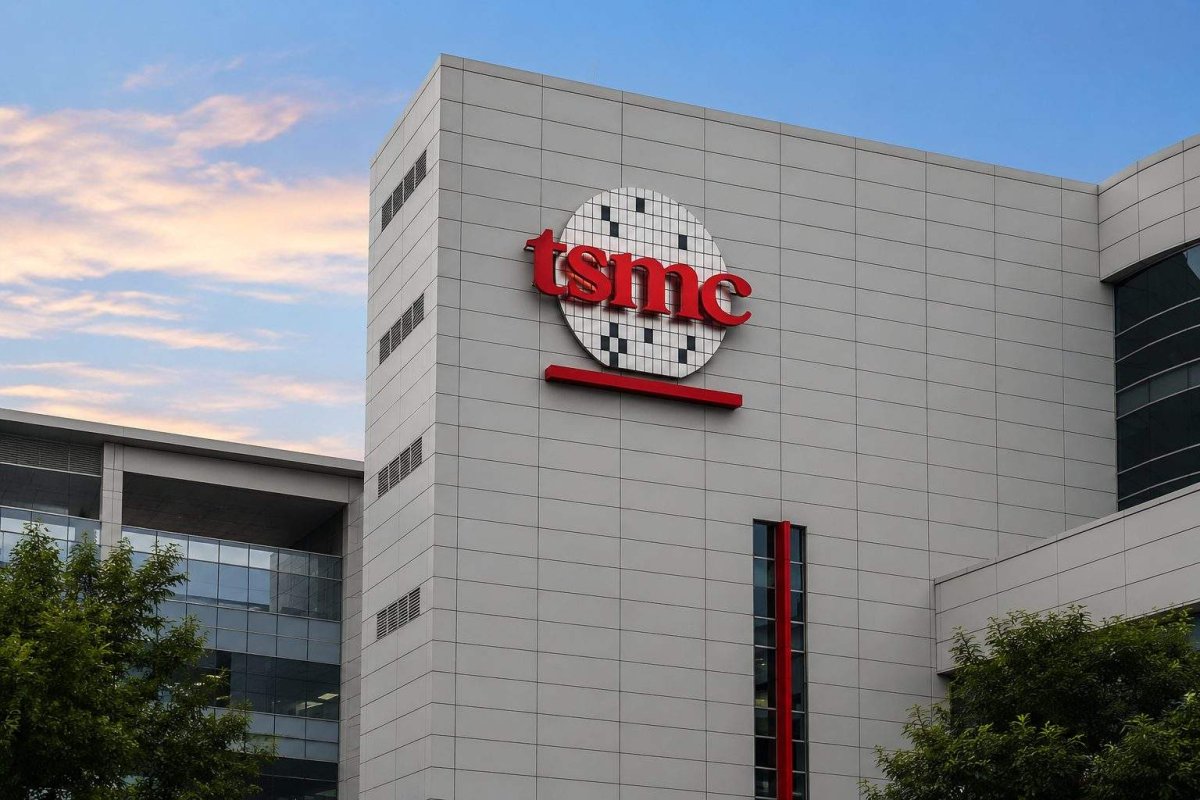
Taiwan Semiconductor Manufacturing Co. (TSMC) is once again in the spotlight after Nvidia CEO Jensen Huang announced plans to increase annual spending in Taiwan to as much as $150 billion, up from the current $100 billion. This marks a significant escalation from just $10-15 billion five years ago, underscoring the deepening reliance of the U.S. chip giant on Taiwanese manufacturing partners.
Market Impact
Taiwan's stock market capitalization has now overtaken India's, reaching $4.95 trillion, driven largely by TSMC, which accounts for a staggering 42% of the main index. According to Bloomberg data, India's market cap stood at $4.92 trillion. This concentration highlights the outsized influence of the AI hardware cycle on Taiwan's equity markets.
Franklin Templeton fund manager Yi Ping Liao noted, "Taiwan's rising market capitalization is fundamentally a reflection of its heavy concentration in tech hardware, which is currently at the center of the AI investment cycle."
TSMC's Financial Performance
TSMC reported April revenue of NT$410.73 billion, a 17.5% increase year-over-year. For the first four months of 2026, cumulative revenue reached NT$1.54 trillion, up 29.9%. The company posted first-quarter revenue of $35.9 billion with a gross margin of 66.2%, exceeding its own guidance. For the second quarter, TSMC expects revenue between $39.0 billion and $40.2 billion, with gross margins in the 65.5% to 67.5% range.
Dominance in AI Chip Manufacturing
TSMC holds 72% of the pure-play foundry market and manufactures nearly 99% of AI-specific ASICs for major hyperscalers, according to Seeking Alpha contributor Juxtaposed Ideas. While maintaining a Buy rating, the analyst flagged potential margin pressure from TSMC's overseas expansion efforts.
Investors view TSMC as a toll road for the AI boom, with the key question being whether this toll road will remain scarce and sustain its pricing power and margins.
Nvidia's Taiwan Expansion
Nvidia is moving forward with plans for a Taiwan headquarters, with construction starting this year and operations targeted for 2030. The facility will house approximately 4,000 employees, giving Nvidia a physical presence near key suppliers including TSMC, Foxconn, Wistron, and Quanta, all critical to AI server and infrastructure production.
AMD's Investments
AMD is also deepening its ties with Taiwan, announcing plans to invest over $10 billion in the island's AI sector. CEO Lisa Su stated, "By combining AMD leadership in high-performance computing with the Taiwan ecosystem and our strategic global partners, we are enabling integrated, rack-scale AI infrastructure."
Risks and Competitive Landscape
Despite the bullish outlook, risks remain. Huawei announced a target to produce chips with transistor density at the 1.4-nanometer level by 2031, though independent performance data is lacking. Omdia's He Hui described this as "a shift from traditional node-driven scaling to system-level efficiency scaling." Counterpoint Research analyst Brady Wang added that "cost, power, heat, and system integration remain major challenges."
Simply Wall St highlighted concentration risk, noting that much of Taiwan's $4.95 trillion market value is tied to TSMC, meaning index exposure in Taiwan essentially amplifies TSMC risk. Huawei's efforts to move away from TSMC-like manufacturing also pose a potential check on TSMC's lead.
For now, TSMC remains the linchpin of the AI supply chain, with Nvidia's massive spending pledge reinforcing its central role. The market is betting that TSMC's manufacturing edge will continue to command premium pricing, sustaining its financial momentum.