Shares of China Spacesat (SHA:600118) and China Satellite Communications (SHA:601698) both surged to their 10% daily trading limits on Friday, following China's first successful controlled recovery of an orbital-class rocket first stage. The rally added approximately 22.3 billion yuan ($3.3 billion) to the combined market capitalization of the two companies in a single session.
The landmark recovery was achieved by the China Academy of Launch Vehicle Technology (CALT), a subsidiary of state-owned CASC, not by the two listed firms. However, investors are betting that lower-cost, more frequent launches will drive satellite orders and boost demand for leased communications capacity. The market is pricing in future growth rather than current earnings.
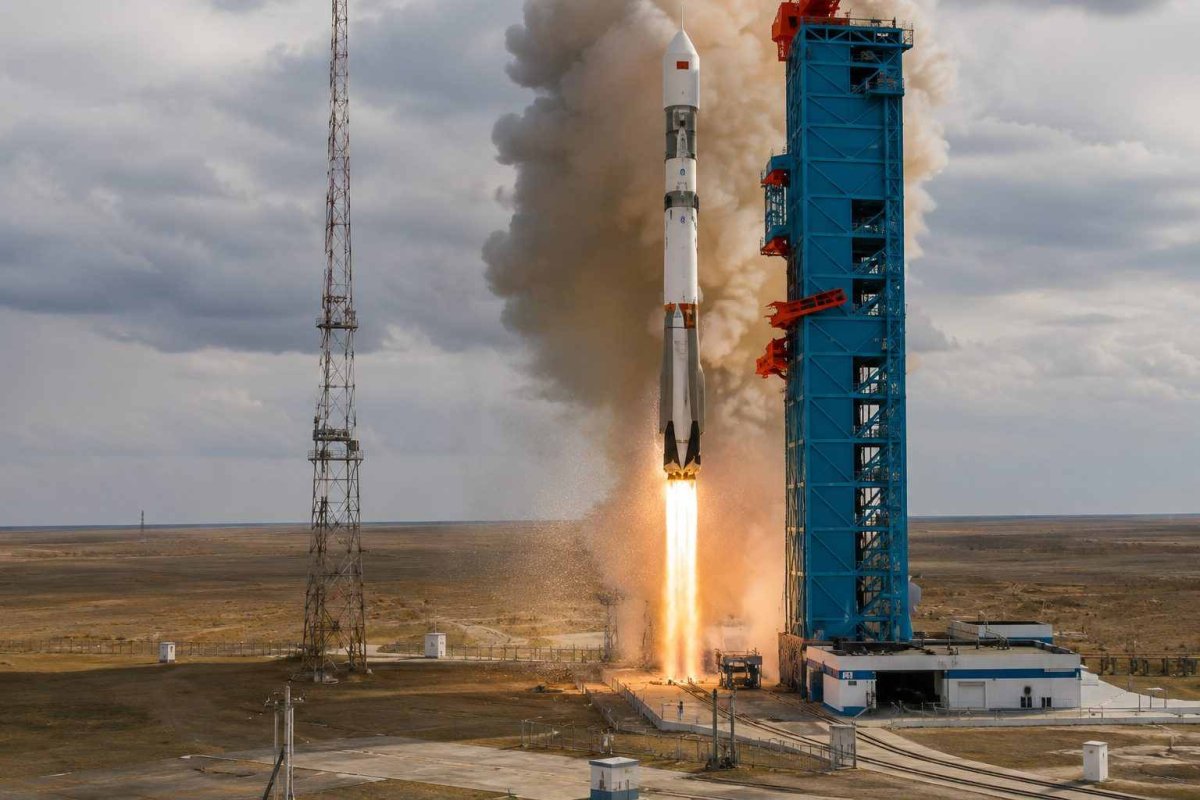
The Long March-10B rocket launched from Wenchang at 12:15 p.m. Friday, carrying an undisclosed satellite to its planned orbit. About six minutes after stage separation, the first stage executed a controlled descent, using LiDAR laser ranging to track its trajectory, and landed on a 144-by-50-meter ship equipped with a cross-shaped net and four hooks. In its reusable configuration, the rocket can deliver 16 tonnes to low Earth orbit, suitable for broadband constellations.
Despite the excitement, the financials tell a different story. China Spacesat reported first-quarter revenue of 609.14 million yuan but posted a net loss of 42.69 million yuan. China Satellite Communications earned 26.84 million yuan on revenue of 542.41 million yuan. The combined one-day increase in market value was nearly 19 times their total quarterly revenue. At Friday's close, China Spacesat traded at a price-to-earnings ratio of roughly 6,273 times, while China Satellite Communications traded at about 350 times trailing 12-month earnings.
The gap with SpaceX remains vast. The Falcon 9 has completed over 600 booster landings, with one booster flown 36 times, while the Long March-10B has achieved only one orbital recovery. SpaceX deployed 1,589 Starlink satellites in the first half of 2026, with nearly 11,000 operational. China's networks have not matched that pace. CALT rocket specialist Kan Lei noted that the technological maturity and industrialization level of reusable rockets determine the cost of access to space.
Competition is emerging domestically. LandSpace's Zhuque-3 and the government-backed Long March-12A both made orbital test flights but did not recover their first stages, leaving the Long March-10B as the only Chinese rocket to achieve both launch and recovery. However, this is a technical edge, not a commercial win. Investors lack data on inspection costs, refurbishment timelines, flight intervals, and payload penalties from fuel reserved for landing.
If the second flight is delayed or fails, the case for launch savings weakens. The listed proxies are vulnerable, as their upside depends on external bets on rapid growth that is already priced in. Mainland markets resume trading Monday, with investors watching for updates on the recovered stage's status. CASC plans to refly the same first stage before year-end. For now, recovery worked on Friday, but a repeatable launch service remains unproven.