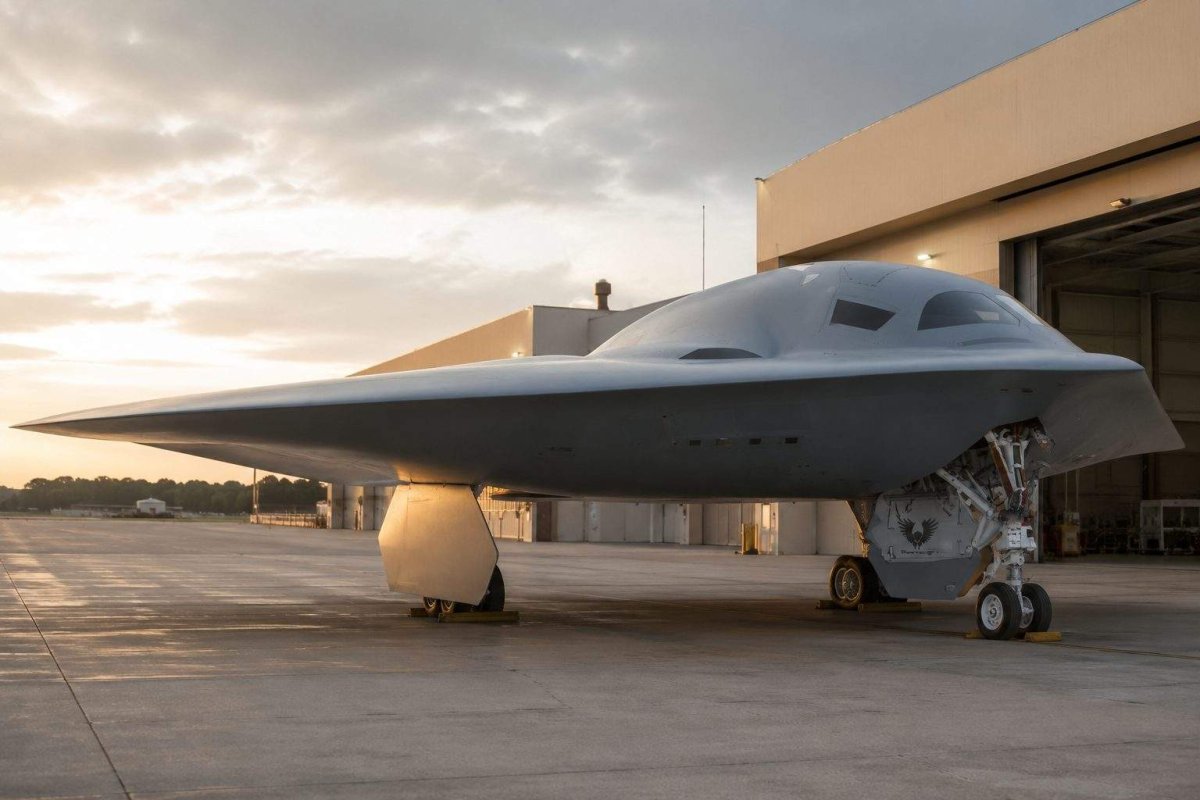
Washington, D.C. – The U.S. Air Force’s recent decision to assign two pilots to each B-21 Raider bomber presents a significant workforce challenge for Northrop Grumman (NYSE: NOC) and the service itself. The core issue is whether the Air Force can train and assign crews as quickly as Northrop can deliver the new stealth bombers.
As of the end of 2025, the Air Force had 497 bomber pilots for 141 aircraft, a ratio of about 3.52 pilots per bomber. If the fleet expands to 145 B-21s and 76 B-52s, the service would require roughly 779 bomber pilots—a 57% increase from the 2025 baseline. This projection is not an official requirement but serves as a critical benchmark for planning.
The calculation comes as the Air Force and Northrop Grumman utilize $4.5 billion in government funding to boost B-21 production capacity by 25%. The first B-21s are expected to arrive at Ellsworth Air Force Base in 2027. General Dale White, the program's director, stated that the ramp-up demonstrates "confidence in the program's performance."
Workforce Transition and Training
To address the pilot gap, the Air Force announced Thursday a transition program for some weapons system officers (WSOs) and combat systems officers (CSOs). These officers currently operate weapons and mission systems rather than flying the aircraft. Selected individuals will undergo pilot training before moving into B-21 roles.
The projected pilot pool under different fleet scenarios includes:
- End-2025 baseline: 141 bombers, 497 pilots
- 100 B-21s and 76 B-52s: 176 bombers, ~620 pilots (+25%)
- 145 B-21s and 76 B-52s: 221 bombers, ~779 pilots (+57%)
These figures are not hiring targets; they include pilots in training, staff roles, and non-flying positions. Some B-1 and B-2 pilots may also transition to B-21 squadrons as older bombers are phased out. The most challenging period will be the overlap, when legacy squadrons still require crews while new B-21 units become operational.
Why Two Pilots?
The decision to assign two pilots per B-21 is driven by mission requirements. Long-duration flights can last several days, requiring a second pilot to rest and take over if needed. General Stephen Davis, head of Air Force Global Strike Command, noted that the B-21 has "enough room for crew members to go on rest status."
Comparing crew configurations across bomber types highlights potential sources for conversions:
- B-21: Two pilots
- B-2: Two pilots
- B-1: Four crew (two pilots, two systems officers)
- B-52: Five crew (including two pilot seats)
The B-1 is expected to be phased out, while the B-52 will remain in service alongside the B-21 through at least 2050.
Financial Implications for Northrop Grumman
While staffing at Northrop does not directly impact booked revenue, it could slow the Air Force's ability to field a larger fleet. Northrop's Aeronautics Systems segment reported first-quarter sales of $3.283 billion, up 17% year-over-year, driven by increased B-21 work and other classified programs. The unit posted a 9.3% operating margin.
Northrop has invested $2.5 billion of its own capital to boost production capacity. CEO Kathy Warden stated that accelerating output "opens up the opportunity" for the Air Force to purchase more aircraft, though the 145-plane plan has not yet been formally approved by the service.
The B-21 is not a direct replacement for all legacy bombers. Boeing (NYSE: BA), which leads the B-52J upgrade, is already procuring parts for the first two B-52H modifications. Because the B-52 and B-21 fleets will overlap, the Air Force will need more pilots overall, meaning the numbers do not represent a simple one-for-one replacement of B-1 and B-2 aircraft.
For Northrop, the larger financial risk remains on fixed-price production contracts, where most cost overruns fall on the contractor. The company booked an expected $1.56 billion loss for the first five low-rate initial production lots in 2023, plus an additional $477 million in 2025.
U.S. cash equities did not trade on Saturday. Northrop closed Friday at $539.63, up 1.39%, while the S&P 500 rose 0.42%. It is unclear whether investors responded directly to the crew announcement.
Senators may take a procedural vote on the fiscal 2027 defense authorization bill after July 14. Investors are watching for any bomber procurement or workforce-related provisions. Northrop's next major event is its Q2 earnings call on July 21, where capacity spending and B-21 margins are expected to be key topics.