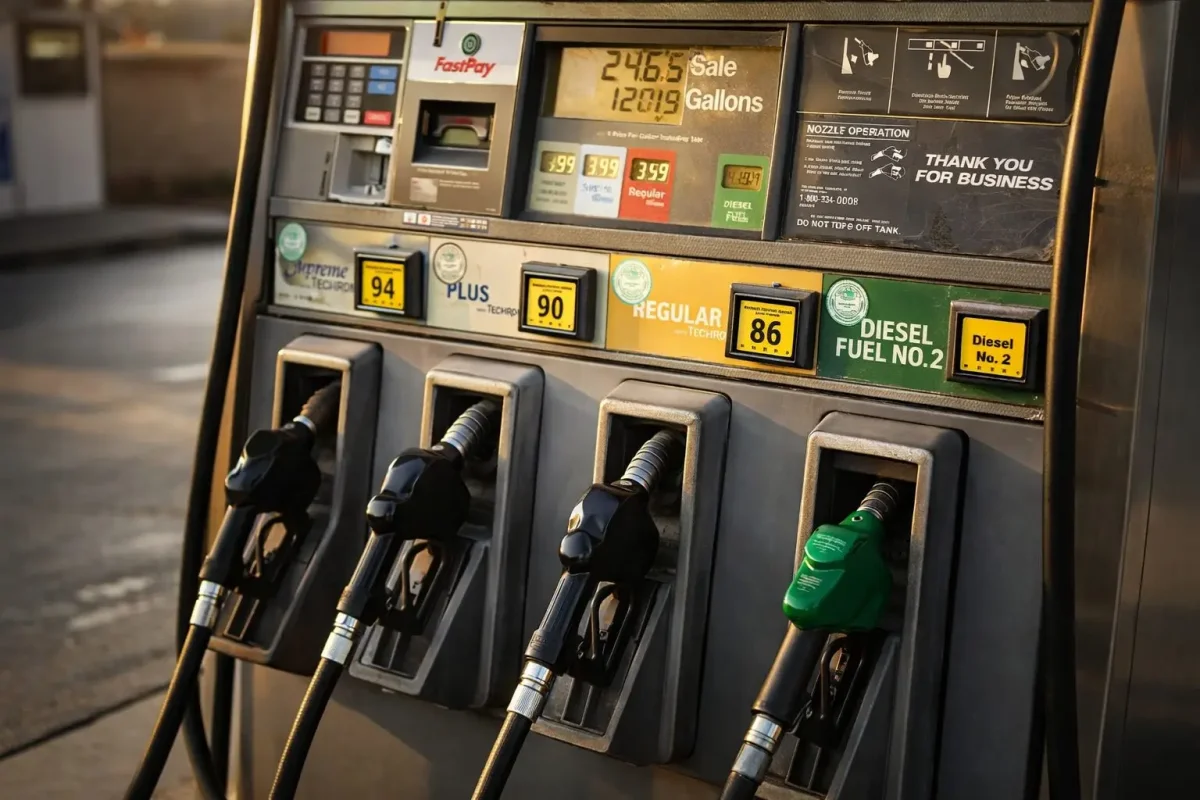
U.S. gasoline prices moved closer to the $4 per gallon threshold on Thursday as geopolitical tensions in the Middle East sent crude oil prices sharply higher. The national average for regular unleaded fuel reached $3.884, according to data from AAA, representing an increase from $3.842 recorded on Wednesday. This upward movement comes as Brent crude oil, the international benchmark, briefly surged above $119 per barrel following military actions by Iran against energy infrastructure in the Gulf region.
Diesel Prices Hit Critical Level
The price pressure extends beyond gasoline, with diesel fuel exceeding $5 per gallon this week for only the second time in recorded history. This development places significant additional cost burdens on the trucking industry and broader commercial transportation sectors. Analysts warn that sustained high diesel prices could translate into increased shipping and logistics expenses, potentially feeding into broader consumer price inflation across the economy.
Regional Disparities Remain Pronounced
While prices are rising nationally, substantial regional variations persist. California continues to lead the nation with an average price of $5.616 per gallon, followed by Washington at $5.145 and Hawaii at $5.070. In contrast, drivers in Oklahoma and Kansas are paying significantly less, with averages hovering around $3.24 per gallon. This wide gap underscores how local factors including taxes, supply logistics, and regulatory environments continue to create dramatic differences in fuel costs across the United States.
Oil Market Volatility Intensifies
The crude oil market experienced extreme volatility this week. Brent crude, which traded at $108.41 early Wednesday, spiked to $119.13 by Thursday. This sharp increase followed reports of strikes affecting multiple critical energy facilities in the Gulf, including QatarEnergy's Ras Laffan liquefied natural gas site, Shell's Pearl gas-to-liquids plant, the SAMREF refinery in Saudi Arabia (partially owned by Exxon Mobil), and Kuwait's Mina al-Ahmadi refinery. These disruptions raised immediate concerns about potential supply shocks in global energy markets.
Seasonal Factors Compound Geopolitical Pressure
The timing of this price surge presents particular challenges for consumers and refiners alike. Patrick De Haan, head of petroleum analysis at GasBuddy, noted that this geopolitical-driven spike coincides with the annual refinery transition to summer-grade gasoline blends. These warmer-weather fuel formulations, mandated by environmental regulations, are more expensive to produce. De Haan indicated that this seasonal shift alone has added approximately 15 cents per gallon to prices in markets like Michigan, amplifying the impact of the geopolitical premium.
Administration Response and Analyst Outlook
The White House has characterized the price surge as temporary, with spokeswoman Taylor Rogers stating that "prices would drop rapidly" once military objectives are achieved. The administration has implemented several measures aimed at easing supply constraints, including granting a 60-day waiver of the Jones Act to allow foreign-flagged vessels to transport fuel between U.S. ports and authorizing releases from strategic petroleum reserves.
Market analysts express less optimism about the timeline for price relief. Matt Smith of Kpler told Reuters that "it's going to take time for those prices to come back down," with others echoing that weeks or possibly months could pass before meaningful relief materializes, even if regional hostilities begin to de-escalate. The situation remains fluid, with potential for rapid changes depending on developments in the Strait of Hormuz, the critical waterway through which approximately 20% of global oil shipments pass. Should traffic resume normally through this corridor and emergency supplies enter the market faster than anticipated, pump prices could moderate. Conversely, additional damage to Gulf energy infrastructure would likely maintain upward pressure on fuel costs.
Psychological Thresholds and Consumer Behavior
For American consumers, the $4 per gallon mark represents a significant psychological threshold. Kevin Roberts, director of economic and market intelligence at CarGurus, noted that "the $4 per gallon threshold may be the one to watch," observing that driver behavior and consumption patterns often shift noticeably when prices reach such round-number milestones. With the national average currently sitting approximately 12 cents below this level, market watchers are closely monitoring whether this barrier will be breached in the coming days.