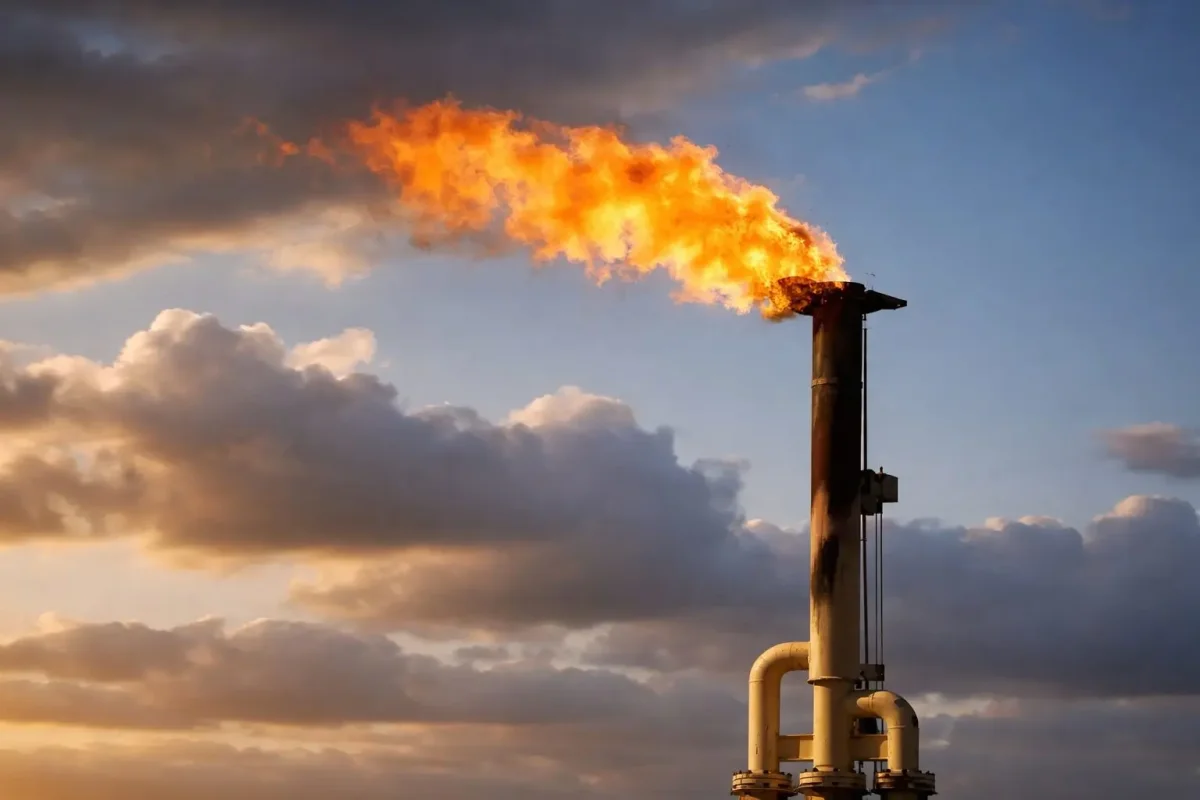
U.S. natural gas futures commenced the week trading in proximity to the $3.10 per million British thermal units (mmBtu) level. The front-month April contract for Henry Hub, the national benchmark, concluded the previous Friday's session at $3.095. Market participants are assessing a complex landscape where escalating geopolitical tensions in the Persian Gulf threaten global liquefied natural gas (LNG) supplies, while concurrently, forecasts for unseasonably warm weather across the United States are expected to suppress domestic heating demand.
Domestic Fundamentals Present a Bearish Backdrop
The immediate price outlook is being pressured by meteorological conditions. According to the latest projections from the National Oceanic and Atmospheric Administration (NOAA), the majority of the lower 48 states are anticipated to experience above-average temperatures over the next six to fourteen days, with the Northeast being a primary exception. This trend suggests a significant reduction in residential and commercial gas consumption for space heating as the nation transitions into the spring shoulder season.
This weather-driven demand slump is already reflected in storage data. The U.S. Energy Information Administration (EIA) reported an injection of 35 billion cubic feet (Bcf) into underground storage for the week ending March 13. This build lifted total working gas inventories to 1.883 trillion cubic feet (Tcf), a level that sits 2.6% above the five-year average for this time of year. The next weekly storage report is scheduled for March 26.
Geopolitical Shockwaves from the Gulf
Counteracting the domestic bearishness is a significant supply shock emanating from the Middle East. Reports confirmed that recent Iranian military strikes have disabled infrastructure accounting for approximately 17% of Qatar's total LNG export capacity, equivalent to 12.8 million tonnes per annum. QatarEnergy's Chief Executive, Saad al-Kaabi, indicated that repair operations could extend from three to five years, prompting the state-owned company to consider declaring force majeure on certain long-term supply contracts to customers in Europe and Asia. Such a declaration would legally permit the suspension of deliveries due to circumstances beyond its control.
Analysts have characterized the situation with grave concern. Saul Kavonic of MST Financial labeled it a "doomsday gas-crisis scenario," while Tom Marzec-Manser of Wood Mackenzie noted that the event would likely keep benchmark gas prices in Europe and Asia "elevated for longer," forcing power generators and industrial users to seek alternative fuels where feasible.
Political Rhetoric Adds to Market Uncertainty
The geopolitical landscape intensified over the weekend, adding a layer of uncertainty for energy traders. A report indicated that former President Donald Trump issued a warning, demanding the clearance of the Strait of Hormuz—a critical chokepoint for global oil and gas shipments—within 48 hours, threatening Iran's power infrastructure otherwise. Iran responded with threats against energy and desalination facilities across the Gulf region. IG market analyst Tony Sycamore described the standoff as a "48-hour ticking time bomb" for financial markets.
U.S. Production and Equity Market Response
On the supply side, data from Baker Hughes showed the U.S. natural gas rig count declined by two this week to 131, marking the lowest level since early February. Despite this near-term pullback, the EIA's longer-term outlook remains bullish for output, projecting that U.S. dry gas production will increase to 109.5 billion cubic feet per day (Bcf/d) in 2026, up from an estimated 107.7 Bcf/d in 2025.
The equity market response highlighted the divergence between physical commodity prices and company valuations. Shares of major U.S. LNG exporters like Cheniere Energy surged following the news of damage to Qatari export capacity. Market observers noted that buyers are increasingly scrutinizing supply sources outside the Middle East, potentially benefiting other developers such as NextDecade and Sempra Energy, which are seen as key players in the longer-term supply mix.
Forward Curve and Key Market Drivers
The futures curve, or "strip," indicates market expectations for higher prices later in the year. CME Group quotes show the May contract trading around $3.07/mmBtu, with June at approximately $3.20, July at $3.47, and August at $3.56. Each of these forward months remains above the current April contract price near $3.10.
The week ahead sets up a clear battle between opposing forces. In the absence of new disruptions in the Gulf, traders may refocus on the mild U.S. weather forecast and the ongoing pace of storage injections. However, should the weekend's threats materialize into tangible supply outages, the Henry Hub benchmark could begin to track international price movements more closely than it has in recent months. Traders are pinpointing three critical factors to watch: Thursday's EIA storage report, updated weather model guidance, and any sudden headlines from the Persian Gulf region.