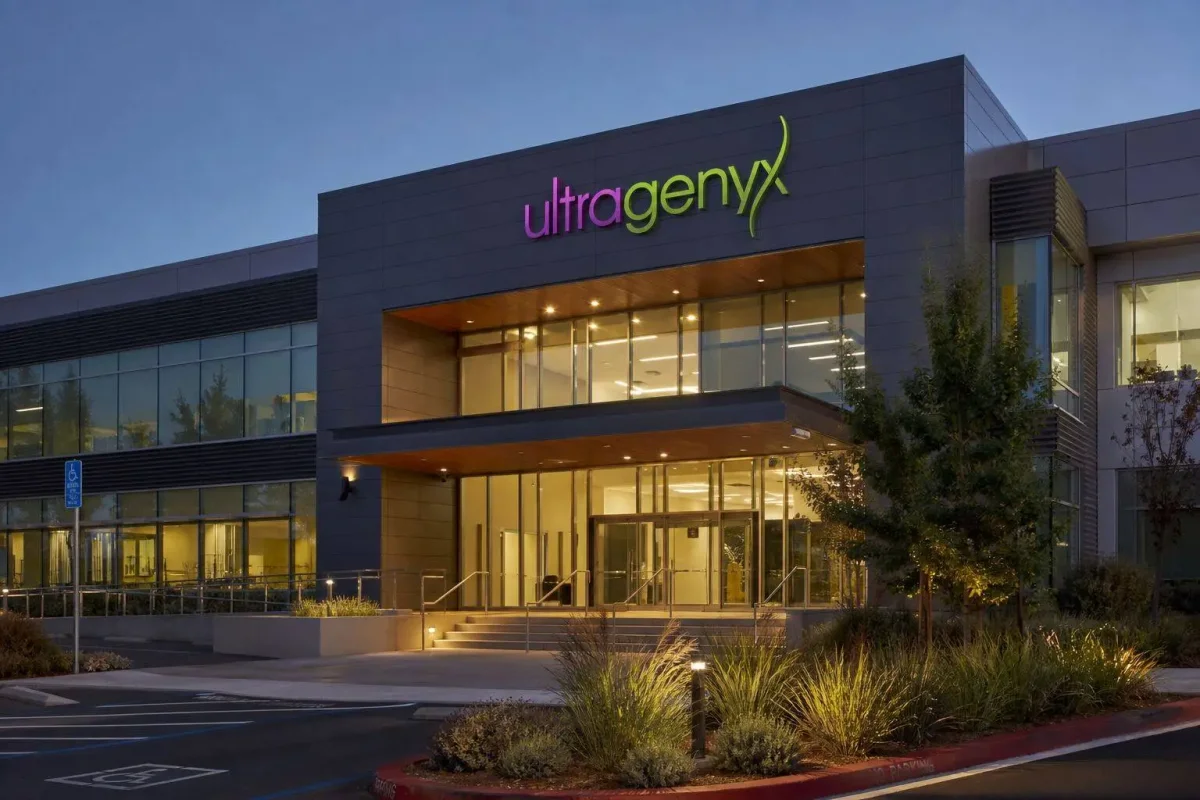
Ultragenyx Pharmaceutical (NASDAQ: RARE) suffered a devastating blow on Wednesday as shares tumbled 44% in after-hours trading following the failure of its Phase 3 clinical trial for apazunersen, a potential treatment for Angelman syndrome. The setback erased approximately $1.14 billion from the company's market capitalization, leaving investors questioning the future of its pipeline.
The stock, which closed the regular session at $26.53, plummeted to $14.95 by 19:48 EDT, a decline of 43.7%. The sharp selloff came after the company announced that the Phase 3 Aspire study failed to meet its primary endpoint, the Bayley-4 cognition measure, as well as the key secondary endpoint, the MDRI (Master Domains Response Index).
The Aspire trial enrolled 129 participants, all with a complete maternal UBE3A gene deletion. Patients were randomly assigned to receive either apazunersen or a sham procedure. Despite the high hopes surrounding the therapy, the data showed no statistically significant improvement in cognition or overall response, with no difference observed across all five MDRI components. Safety findings were consistent with earlier Phase 1/2 results, offering little consolation to investors.
CEO Emil Kakkis expressed disappointment in the outcome, stating, "We are disappointed by the Aspire result." He emphasized that the company's commercial base would continue to support its pipeline, but the immediate focus has shifted to cost reduction. The company has not yet specified the extent of the planned cuts, but analysts expect significant restructuring to preserve cash.
The financial impact is substantial. Ultragenyx reported second-quarter revenue of $214 million, a 28% increase year-over-year, driven largely by its lead product Crysvita, which contributed $156 million, or 73% of total revenue. Other products, including Dojolvi, Evkeeza, and Mepsevii, accounted for the remainder. As of June 30, the company held $436 million in cash and marketable securities, but it burned $97 million in operating cash during the quarter. The current cash position now represents only about 30% of the company's reduced equity value.
William Blair analyst Sami Corwin highlighted spillover risks for Ultragenyx's separate Aurora study, which evaluates a similar therapy. Even if Aurora succeeds, commercialization may face hurdles given the recent setback. The company's near-term catalysts include an FDA decision on UX111 for Sanfilippo syndrome type A, scheduled for September 19, and data from the UX701 trial for Wilson disease expected in the fourth quarter.
The market's reaction underscores the high-risk nature of biotech investments. Ultragenyx's share price drop implies an equity value of roughly $1.47 billion, nearly double the midpoint of its 2026 revenue guidance of $730 million to $760 million. However, the loss of a key pipeline asset raises questions about long-term growth prospects.
Investors are now closely watching two key metrics: the size of the planned cost savings and early demand for GENGLYCOS, which received FDA accelerated approval for GSDIa on August 19. These factors will be critical in determining whether Ultragenyx can stabilize its valuation and regain investor confidence.
In the broader context, this failure highlights the challenges of developing therapies for rare genetic disorders. While the company has a strong commercial portfolio, the setback in Angelman syndrome serves as a stark reminder of the inherent risks in drug development. As Ultragenyx navigates this turbulent period, its ability to execute on cost reductions and advance its remaining pipeline will be pivotal.