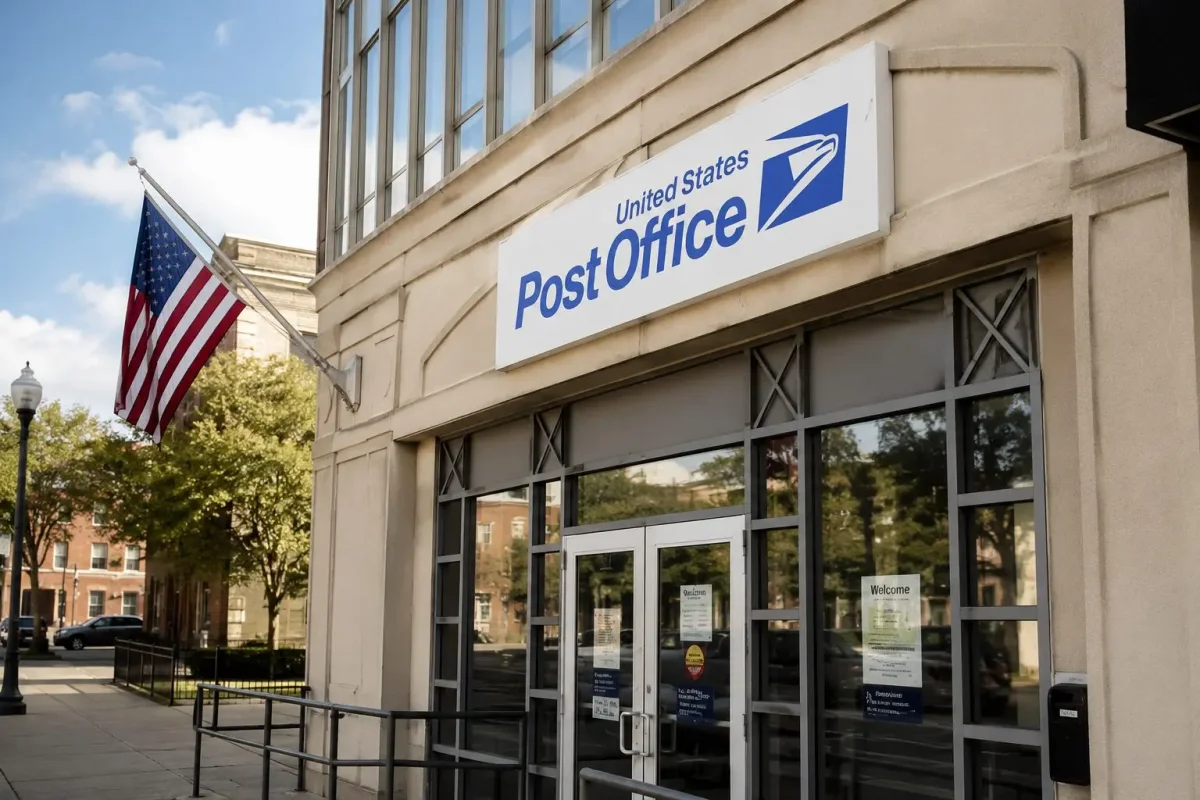
The U.S. Postal Service (USPS) increased the price of its Forever stamp to 82 cents from 78 cents, effective Sunday, July 12, 2026. The move, part of a broader mailing-services rate adjustment averaging 4.8%, carries implications for investors and the broader delivery market.
Rate Formula and Volume Decline
The rate increase is driven by a 4.803% ceiling set by regulators, but a significant portion—2.190 percentage points, or 45.6%—stems from declining mail density rather than inflation. Mail density, which measures pieces delivered per delivery point, weakens as mail volume shrinks faster than the network. This density adjustment could sustain rate increases even if consumer inflation moderates.
In the fiscal second quarter ended March 2026, First-Class mail volume fell 6.3% year-over-year to 10.253 billion pieces, while revenue slipped just 0.5% to $6.615 billion. Average revenue per piece rose 6.2% to 64.5 cents, but the volume drop still pulled total revenue down.
Financial Strain and Management Commentary
Postmaster General David Steiner described the agency's position as “a cash crisis,” and Chief Financial Officer Luke Grossmann said “management actions alone are not enough to solve our financial predicament.” USPS reported a net loss of $1.950 billion for the quarter, narrower than the $3.292 billion loss a year earlier, but still significant.
Steiner has signaled that further increases are likely, telling senators on June 24 that a stamp price of 90 to 95 cents would “largely solve our controllable loss.” He noted that the then-78-cent U.S. stamp was the cheapest among industrialized nations in the agency’s comparison.
Rate Details and Parcel Rule Changes
The July 12 adjustments vary by product: metered mail rose 5.4% to 78 cents, domestic postcards increased 6.6% to 65 cents, and international postcards or one-ounce letters rose 2.9% to $1.75. The additional-ounce charge remains at 29 cents, and Certified Mail increased 4.7% to $5.55.
Existing Forever stamps remain valid without additional postage, limiting the immediate impact on households to newly purchased stamps.
Less visible are changes to parcel pricing that could affect online sellers. USPS reduced the dimensional-weight divisor to 139 from 166 and now rounds each box dimension up to the next whole inch. In a Stamps.com example, a two-pound sneaker box is billed at six pounds under the new rule, up from four pounds—a 50% increase in billed weight.
Priority Mail Express also adds a $7.50 hazardous-materials handling fee, and improperly declared shipments can incur a $50 noncompliance charge. These rules layer onto a temporary 8% price increase for several package products running from April 26 through January 17, 2027.
Market and Competitive Implications
For competitors like United Parcel Service (NYSE: UPS) and FedEx (NYSE: FDX), the stamp price is peripheral. The more relevant competitive change is USPS’s new parcel rules, which could shift some shipping volume toward private carriers.
The broader challenge is scale. Steiner told lawmakers in March that annual mail volume had fallen to 109 billion pieces from 213 billion in 2006, a 49% decline, and said: “No company could weather that much revenue loss.” At 78 cents per piece, he estimated the missing volume at about $81 billion.
USPS’s fiscal 2026 budget assumes total volume will fall 6.6%, revenue will rise by $2.4 billion, and the agency will still post an $8.1 billion net loss. Faster digital substitution, tighter packaging, or a shift toward private carriers could erode more of the price benefit than the plan allows.
Outlook for Investors
In the week ahead, U.S. equities resume regular trading at 9:30 a.m. EDT on Monday after the Sunday market closure. Investors in delivery and mailing companies will get no clean one-day signal from stamp demand; faster evidence is likely to come from parcel invoices, merchant shipping notices, and any early routing changes caused by the new size formula.