Vale S.A. (VALE) has not sanctioned any new debt issuance, despite its chief financial officer recently floating the idea of tapping China's domestic bond market for the first time. The clarification came after the company's U.S.-listed shares saw elevated trading volume, with 56.6 million ADRs changing hands on Wednesday. The stock closed at $15.44, down 0.8%, as investors weighed the potential implications of the news.
In an interview with Bloomberg, CFO Marcelo Bacci indicated that Vale was preparing to access Chinese investors and that a transaction could potentially occur in 2026. However, Vale subsequently issued a statement clarifying that no decision has been made regarding any issuance, as reported by Reuters. This distinction is crucial: the company is exploring funding optionality, not launching a bond sale.
Why China? The Panda Bond Rationale
The instrument under consideration is commonly known as a panda bond—a renminbi-denominated debt sold in mainland China by a non-Chinese issuer. China accounts for roughly half of Vale's revenue, according to the Bloomberg interview, so establishing a local investor base would deepen the miner's relationship with its most critical market for iron-ore demand.
Two potential benefits stand out. First, a Chinese debt deal could diversify Vale's funding sources away from traditional dollar-denominated channels. Second, it might offer attractive pricing if domestic demand for a high-grade global miner is robust. However, neither benefit can be assumed until specific terms are disclosed. Additionally, renminbi debt would introduce currency exposure unless Vale swaps the proceeds or has matching uses for the currency.
Financial Health: Not an Emergency
Vale's latest operating numbers suggest that the discussion is not a liquidity warning. In the second quarter, the company reported $4.1 billion of pro forma EBITDA, a 19% increase year-over-year, and $1.505 billion of recurring free cash flow. Expanded net debt ended June at $16.7 billion, down $1.1 billion during the quarter, according to Vale's official results summary.
The same quarter included $1.1 billion of capital spending and $140 million of share repurchases. Vale also approved $1.7 billion of dividends and interest on capital payable in September and authorized a new buyback covering up to 100 million shares. This simultaneous reduction of net debt and return of capital indicates the company has flexibility over when and where to borrow.
What Would Change the Stock Calculus?
Should Vale eventually proceed with a bond sale, the decisive factors would be the coupon, tenor, issue size, swap cost, and use of proceeds. A well-priced refinancing that extends maturities could be positive. Conversely, debt that pushes expanded net debt toward the top of Vale's target range while funding lower-return growth would compete more directly with dividends and buybacks.
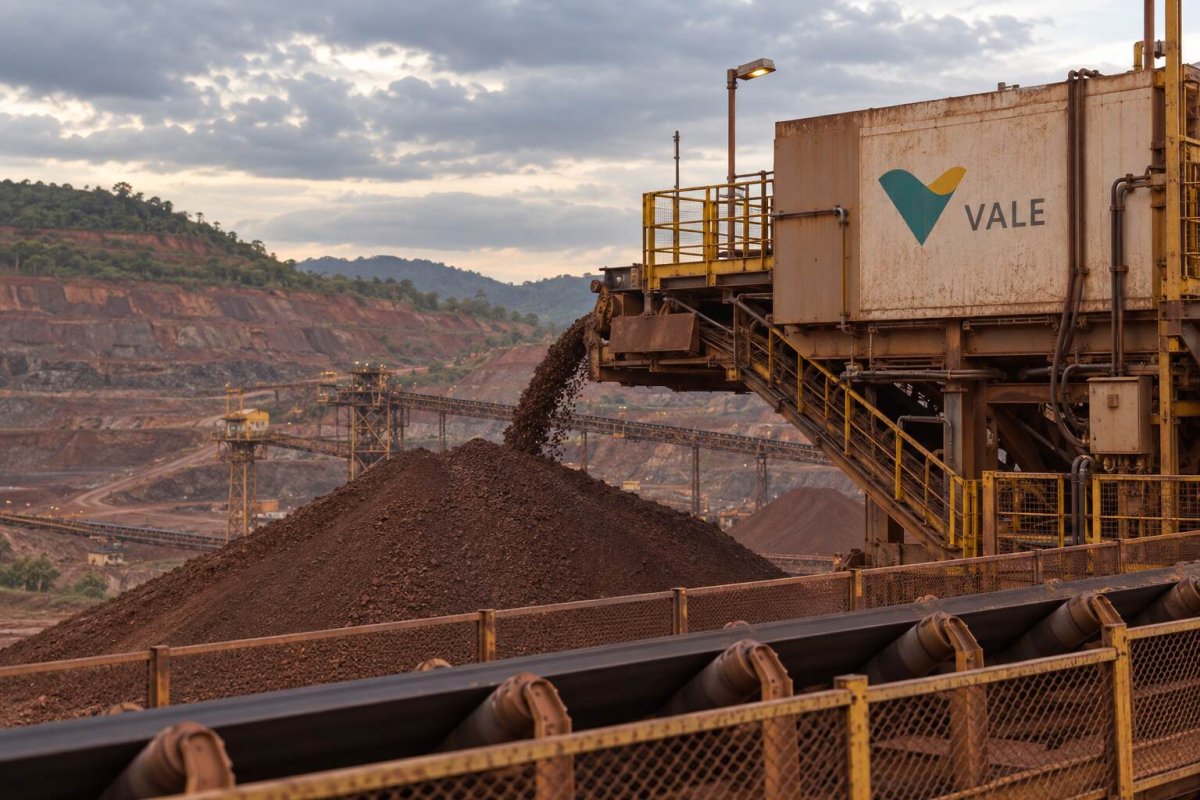
For now, iron-ore and base-metal prices remain larger earnings variables than an unapproved financing option. Vale's second-quarter iron-ore realized price was $95 per tonne, while copper and nickel prices improved sharply. These commodity outcomes drive EBITDA, cash generation, and the capacity to distribute capital; the venue of the next bond merely changes the financing layer beneath them.
Wednesday's close and above-average volume show that investors are paying attention. The company's clarification removes any basis for treating a deal as done. The next actionable signal is not another headline about “considering” China, but filed terms that show whether Vale is refinancing cheaply, adding leverage, or simply widening its funding toolkit.