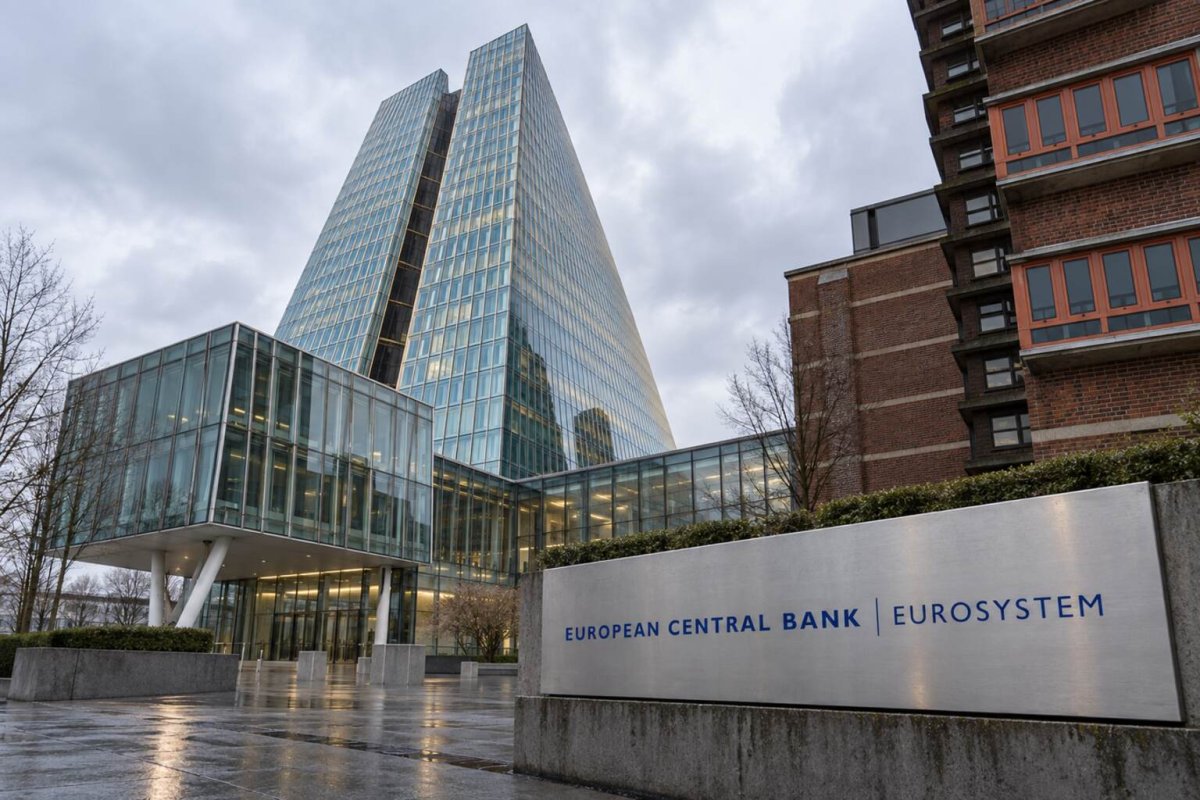
The European Central Bank is poised to deliver a widely anticipated quarter-point interest rate increase on Thursday, lifting its deposit rate to 2.50%. Yet market reaction may be muted, as the currency and regional equities have remained largely unchanged in the run-up to the decision. The real market drivers are expected to be the central bank's updated inflation forecasts and President Christine Lagarde's comments on the future path of policy.
The policy announcement is scheduled for 14:15 Frankfurt time on September 10, followed by a press conference at 14:45 and the release of fresh staff projections. A 25-basis-point move would mark the second hike this year, reversing half of the easing that took place between June 2024 and June 2025. Ahead of the decision, EUR/USD hovered near $1.1643, up less than 0.1% from the previous session, while the Euro Stoxx 50 index traded around 6,317.5, also little changed. Brent crude was near $100.75 a barrel after settling at $101.21, underscoring the persistent energy shock that has shaped the policy debate.
The Expected Rate Is Not the Whole Story
In July, the ECB held its deposit rate at 2.25% following a June increase, while leaving the main refinancing and marginal lending rates at 2.40% and 2.65% respectively. The July statement highlighted that the full inflationary impact of the energy shock had yet to materialize, and reiterated a meeting-by-meeting approach. Economists now overwhelmingly expect another quarter-point increase, a consensus that explains the subdued pre-decision market. A fully anticipated hike alters near-term cash rates but does not necessarily change the trajectory already priced into currencies, bonds, or bank shares.
The first potential surprise lies in the composition of inflation. Euro-area headline inflation accelerated to 3.3% in August from 2.9% in July, driven by energy prices, which jumped to 14.3% from 10.3%. Core inflation, excluding energy, held steady at 2.2%, while services inflation eased to 3.0% from 3.3%, according to Eurostat's flash estimate. This split creates a dilemma: higher rates cannot produce oil or reopen shipping lanes, but they can prevent the energy shock from feeding into wages and broader prices. Over-tightening, however, could weigh on domestic demand even as underlying inflationary pressures cool.
The Projection That Matters Most
In June, ECB staff projected headline inflation to peak at 3.4% in the third and fourth quarters of 2026, staying above 3% until early 2027. The baseline assumed a relatively rapid decline in energy prices, with real GDP growth of 0.8% this year, 1.2% in 2027, and 1.5% in 2028, returning inflation to the 2% target by 2028. Thursday's most consequential figure may be the revised 2027 inflation forecast. A significant upward revision would signal that the ECB sees the energy shock as persistent rather than temporary, while a stable outlook would allow policymakers to frame the 2.50% rate as insurance without committing to a rapid sequence of hikes.
Growth data provide some breathing room. Eurostat revised second-quarter euro-area GDP growth to 0.6% from the 0.4% flash estimate, with year-over-year growth at 1.2%. That stronger reading was not available when staff finalized the June baseline, but rising fuel costs and higher borrowing costs could still erode momentum in the second half.
Potential Market Reactions
An expected 25-basis-point hike paired with neutral, meeting-by-meeting language would be the least disruptive outcome. The euro could remain range-bound, while bond traders focus on the staff projections. A hawkish surprise—such as a higher medium-term inflation path or a signal that another increase is imminent—would typically support the euro and push short-dated yields higher. Banks could benefit from higher asset yields, but rate-sensitive sectors like real estate, utilities, and leveraged companies would face a tougher environment.
A decision to hold rates at 2.25% would be a larger immediate shock, potentially weakening the euro and lifting sovereign bonds and growth-sensitive equities, though any relief might be tempered by doubts about the ECB's inflation tolerance. Conversely, a 50-basis-point move would signal stronger anti-inflation resolve but also raise concerns about growth and peripheral bond spreads.
Investors should watch four key elements in order: the deposit-rate decision, the 2027 inflation projection, Lagarde's language on the persistence of energy pass-through, and any hints about the next meeting. The 2.50% headline is likely priced in; the durability of the tightening cycle is not.