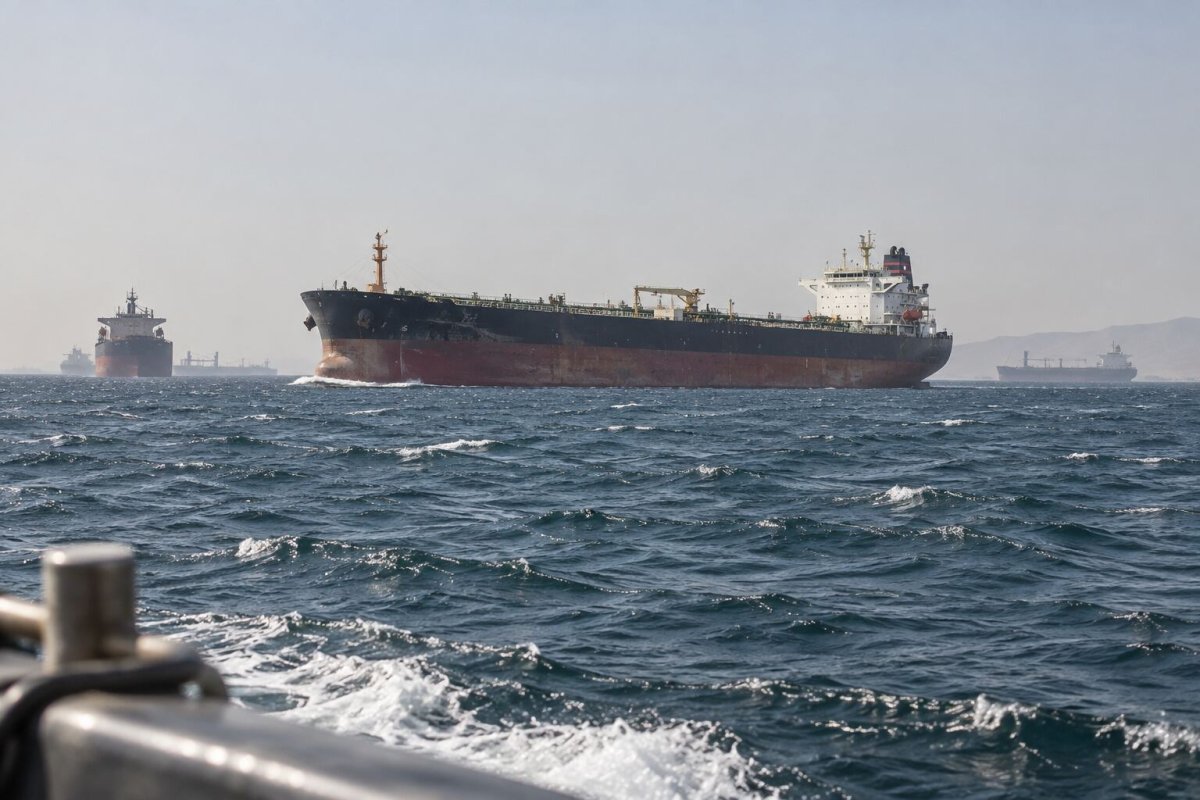
Brent crude futures climbed back above the $100 mark on Monday, reaching $101.23 per barrel as of 12:02 p.m. ET, a 3.38% increase from Tuesday's close of $97.92. West Texas Intermediate (WTI) also surged, trading at $96.37, up 3.59% from $93.03. This marks the first time Brent has exceeded $100 since July 24, signaling more than just a test of a psychological level—it reflects a repricing of two critical shipping routes simultaneously.
Geopolitical Escalation Drives Oil Prices
The immediate catalyst for the price surge is a new escalation in the Middle East. U.S. Central Command reported that American forces destroyed five Iranian crude carriers on September 8 following attempted attacks on a U.S. warship. Additionally, Iran-backed Houthis launched attacks that set Saudi energy facilities ablaze, according to a Reuters report. These incidents have heightened concerns about supply disruptions in one of the world's most vital oil-producing regions.
Strait of Hormuz and Red Sea Chokepoints Under Pressure
The geography of this escalation makes it particularly consequential. The Strait of Hormuz, through which roughly a fifth of global oil passes, is already severely constrained. The Red Sea and Bab el-Mandeb have served as an alternative route for Saudi barrels heading west via the East-West pipeline to Yanbu. However, attacks threatening both corridors undermine the effectiveness of rerouting. Avoiding Hormuz does not solve the problem if the alternative port or its onward sea lane is also at risk.
Reuters cited tanker-tracking estimates showing Hormuz flows have dropped below 2 million barrels per day recently, down from 8 to 9 million barrels before fighting resumed on August 30. Physical dated Brent—the benchmark for actual crude supply—has been above $100 since September 3, indicating that futures are catching up to a physical squeeze rather than leading it.
EIA Forecast: Average Despite Disruptions
The Energy Information Administration's (EIA) September 9 outlook provides a contrasting view. It estimates Middle Eastern production shut-ins averaged 6.7 million barrels per day in August, up from 5 million in July. The agency also projects global inventories will decline by 3 million barrels per day in the third quarter and another 1.7 million in the fourth quarter—both bullish signals.
Despite these figures, the EIA forecasts Brent to average about $90 in the second half of 2026, which is 12.5% below the current futures price. The agency's model assumes shippers will increasingly rely on pipelines, overland routes, ship-to-ship transfers, and longer voyages. Under this scenario, most production and trade flows return toward pre-conflict levels by the second quarter of 2027, taking Brent to an average of $77 in that quarter and $67 in the second half of next year.
The EIA is not predicting a quick resolution. It notes that Yanbu exports were about half of July's level in August and expects Middle Eastern flows to remain constrained through the fourth quarter. Therefore, the $90 call already incorporates a significant disruption. For Brent to sustain levels above $100, conditions would likely need to deteriorate faster than the agency's September 3 forecast cutoff assumed.
Implications for Investors and Sectors
For energy producers, sustained triple-digit Brent prices would provide a clear earnings tailwind, especially for companies with unhedged barrels and no direct exposure to the threatened routes. Refiners face a more complex situation: expensive crude raises feedstock costs, but tight diesel and gasoline supply could widen product margins. Conversely, airlines, trucking companies, chemicals producers, and fuel-sensitive consumers would absorb the negative impact.
The broader rate implications are also significant. Oil at $101 does not mechanically set core inflation, but it raises transport, freight, and household energy costs, complicating the case for central-bank easing. Bond investors should distinguish between a one-day geopolitical premium and a sustained rise in physical fuel prices. The latter could migrate into inflation expectations and corporate guidance.
What to Watch Next
The bull case now hinges on evidence that ship-to-ship transfers in the Gulf of Oman are declining, Yanbu disruptions are lasting, or additional production is being shut in. The bear case requires restored tanker traffic, credible protection for alternative routes, and signs that high prices are eroding demand. Until one side gains the upper hand, $100 is less a ceiling and more a daily referendum on whether the oil market's remaining workarounds still function.