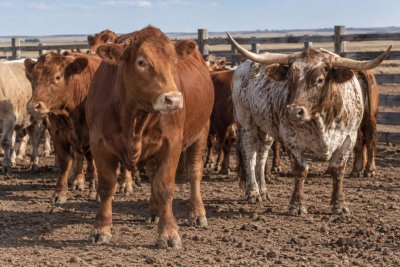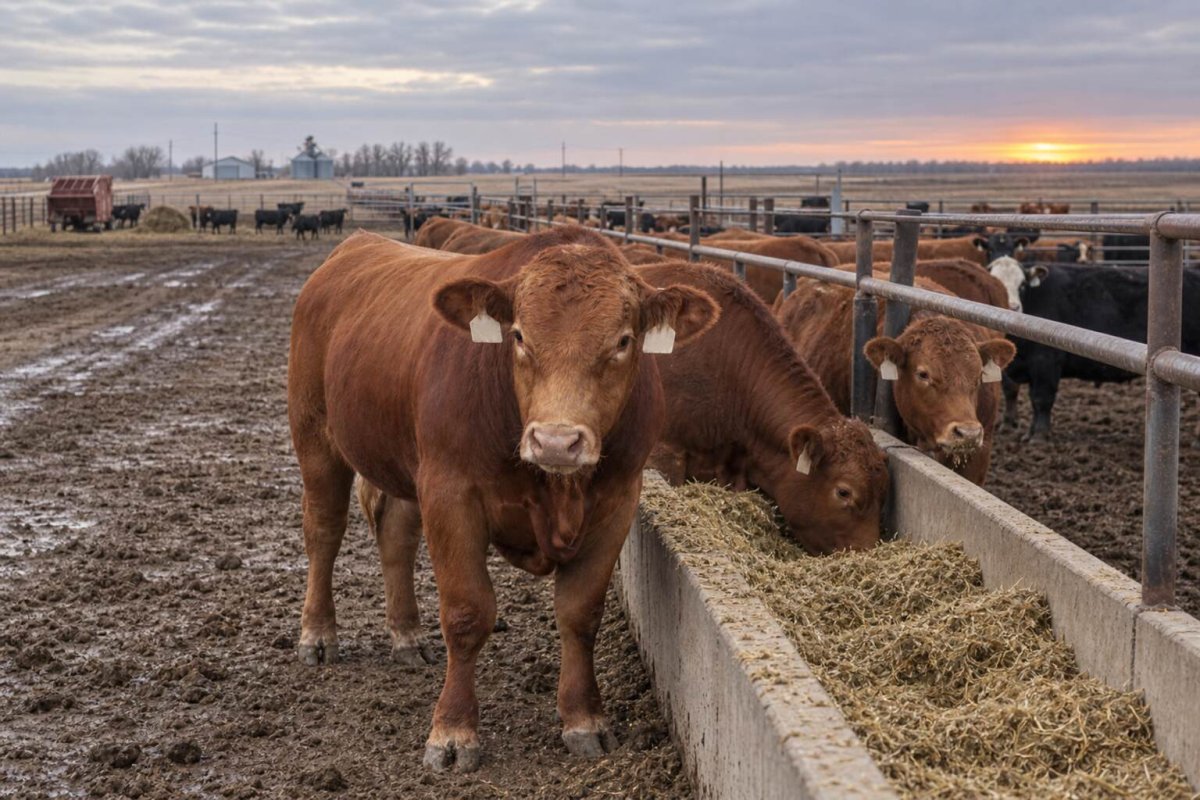
Wednesday's trading session saw cattle futures retreat from the previous day's sharp gains, as the market grappled with conflicting signals about the strength of the recent rebound. October live cattle futures were trading at 215.525 cents per pound by 12:26 p.m. ET, down 1.50 cents, or 0.7%, after Tuesday's surge of 4.075 cents. Similarly, October feeder cattle eased 0.85 cent to 324.60 cents per pound, following a 5.30-cent jump in the prior session.
Tuesday's rally, which lifted live cattle futures by about 1.9% and feeder cattle by 1.7%, was attributed to a burst of short covering, according to market participants. The move came after a period of sustained declines, with October live cattle futures having fallen nearly 24 cents from their late-June high through Monday, and October feeder cattle losing almost 43 cents over the same period. The swift reversal on Wednesday suggests that the rebound may not yet represent a fundamental shift in market dynamics.
Supply and Demand Tug-of-War
The latest USDA Cattle on Feed report highlights the tension in the market. Feedlots with at least 1,000 head capacity held 11.117 million cattle on August 1, up 2% from a year earlier, indicating a near-term oversupply. However, July placements fell 11% to 1.422 million head, the lowest July figure since the series began in 1996, while marketings dropped 7% to 1.620 million, also a July record low. This suggests that while current feedlot inventories are elevated, the pipeline of incoming cattle is thinning, pointing to tighter supplies in the months ahead.
The timing mismatch between current inventory and future availability is a key concern for traders. Those focusing solely on the placements decline may be positioning too early for a scarcity-driven rally, while those emphasizing the inventory increase may be underestimating the coming supply contraction. The market is essentially trying to reconcile the abundance available now with the much thinner pipeline expected later.
Imports and Demand Caps
Adding to the supply picture, the USDA reopened the Douglas, Arizona, port of entry to Mexican cattle on August 24, and its August outlook raised beef-import forecasts for 2026 and 2027. While imports cannot rebuild the U.S. herd, they can soften the near-term shortage and provide packers with an alternative source of supply.
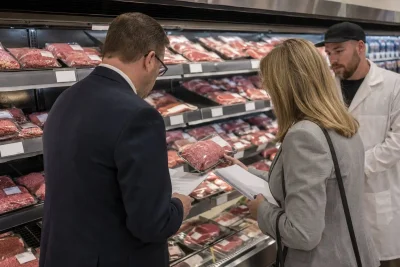
Demand is another limiting factor. The Labor Day holiday marks the end of the peak summer grilling season, and high retail beef prices may prompt consumers to switch to cheaper proteins. Tuesday's wholesale market showed mixed signals: USDA's Choice boxed-beef value slipped 73 cents to $376.17 per hundredweight, while Select rose $5.15 to $355.87. The lack of a uniform demand signal adds to the uncertainty.
The USDA projects U.S. beef production at 24.967 billion pounds in 2026 and 24.980 billion in 2027, essentially flat across the two years. The agency also cut its second-half 2026 cattle-price outlook after weaker price data, while still expecting tighter calf supplies to support prices in 2027. This paints a picture of a scarcity story, but not one that follows a straight upward trajectory.
Tyson Foods Highlights Margin Squeeze
High cattle prices are beneficial for producers but can pressure meatpackers when wholesale beef prices do not rise correspondingly. Tyson Foods (TSN) made this squeeze explicit on September 3, widening its forecast for fiscal-2026 adjusted Beef operating loss to $625 million-$775 million, citing margin compression, volatile cattle prices, and a severe cattle shortage. For Tyson investors, the ideal scenario is not simply falling futures prices, but an improvement in the spread between what the company pays for cattle and what it receives for beef, without destroying volume. A renewed cattle rally accompanied by stagnant boxed-beef values would worsen that spread, while firmer wholesale demand could mitigate the damage.
Signals to Watch
Traders will be watching several key indicators to determine whether the rebound is sustainable. These include whether cash cattle prices can hold near last week's mostly $222-$223 Southern trade, whether Choice beef strengthens after the holiday, and whether futures can retain Tuesday's gains without another positioning-driven surge. The next USDA Cattle on Feed report, due September 18, will also be crucial. Another weak placements number would strengthen the 2027 scarcity case, while a pickup in placements, softer cash bids, or weaker boxed beef would validate Wednesday's skepticism.
For now, the supply remains tight enough to support cattle prices, but the two-day tape has not confirmed a new bull leg. Tuesday paid the shorts, but Wednesday put the burden of proof back on demand. The market is in a holding pattern, awaiting clearer signals on whether the recent rebound is a genuine turning point or merely a temporary bounce in a longer-term downtrend.