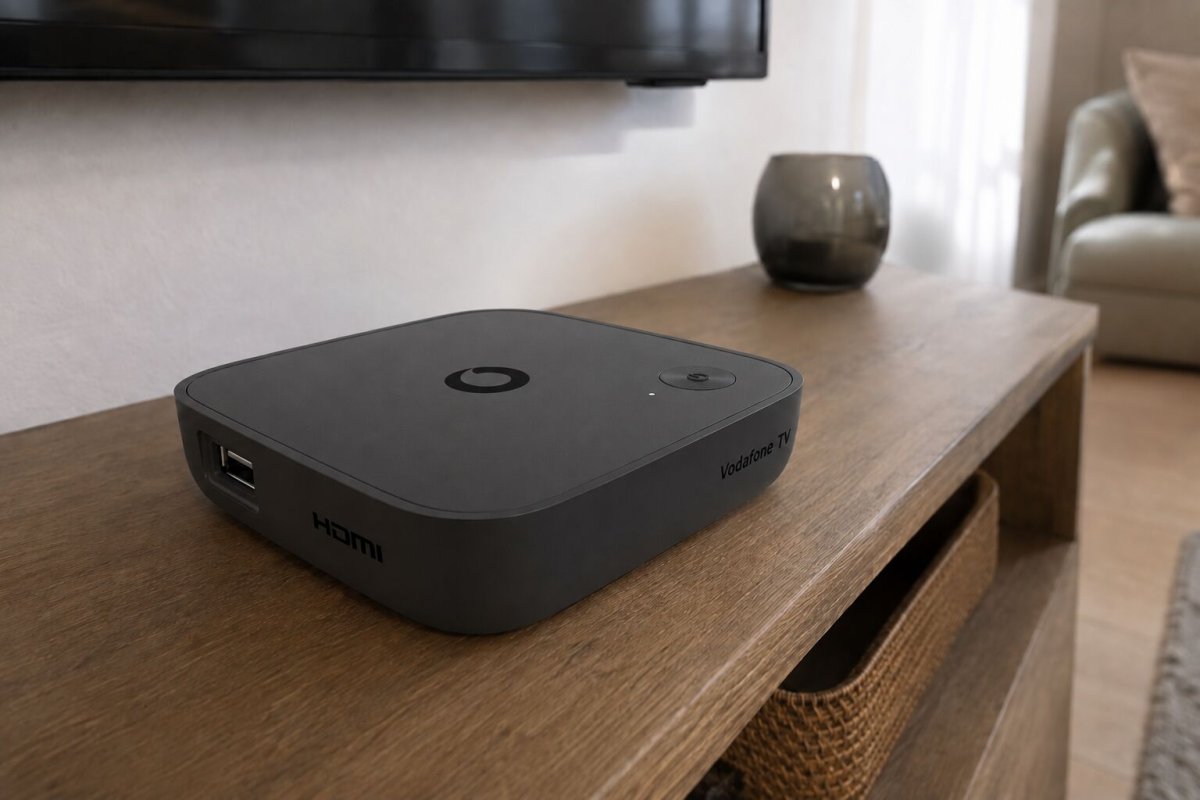
Vodafone Group (LON:VOD) announced the launch of a comprehensive television service on Thursday, a strategic move designed to counterbalance a recent decline in its UK mobile subscriber base. The company's shares responded positively, climbing 2.2% in early trading to 122.05 pence, up from the previous close of 119.40 pence. The stock opened at 120.25 pence and reached a high of 122.32 pence during the session.
The new offering, named Vodafone TV, is scheduled to debut in October and will provide customers with access to over 200 live channels, more than 300 cloud-based games, and a variety of streaming services. The platform will integrate popular apps such as Netflix (NASDAQ:NFLX) and HBO Max from Warner Bros. Discovery (NASDAQ:WBD). Vodafone has not yet disclosed the pricing structure for the bundle.
The launch comes in response to a challenging quarter for Vodafone's UK operations. In the first quarter of fiscal year 2027, the company reported a net loss of 73,000 mobile contract customers. However, broadband subscriptions increased by 34,000, and fixed wireless access (FWA) added 23,000 customers. This divergence highlights the need for Vodafone to strengthen its mobile offering and improve customer retention.
Rob Winterschladen, Vodafone's consumer director, described the service as "a family entertainment platform," emphasizing its broad appeal. Industry analyst Paolo Pescatore noted that the future of streaming lies in "aggregation, simplicity and discovery," suggesting that Vodafone's integrated approach could be a key differentiator in a crowded market.
The technical infrastructure for Vodafone TV will be managed by Netgem SA (EPA:ALNTG), a French technology company. Under a multiyear contract, Netgem will deliver and operate the platform, reducing the need for Vodafone to build its own television stack. This partnership is expected to accelerate time-to-market and streamline operational costs.
Vodafone's UK business remains a critical component of its overall performance, accounting for 23% of total group service revenue in Q1 FY27. Organic service revenue in the UK grew by 0.6%, supported by contributions from wholesale and fixed-line segments. However, mobile average revenue per user (ARPU) continued to face downward pressure, reflecting intense competition and changing consumer behavior.
The broader economic environment has been mixed. The UK economy slipped into negative growth in late FY26, with quarterly GDP growth falling from 1.2% in Q1 to -0.5% in Q4, before rebounding to 0.6% in the most recent quarter. Despite these fluctuations, Vodafone's group service revenue increased by 5.2% in Q1 FY27, and adjusted EBITDAaL rose 6.2%. The company maintains its full-year guidance of €13.0 billion to €13.3 billion in adjusted EBITDAaL, expecting to reach the top end of the range.
Investors will be watching closely as Vodafone prepares to hold an investor presentation in October, coinciding with the TV service launch. Key metrics to monitor include household churn rates, broadband subscriber growth, and UK revenue per account. These indicators will reveal whether Vodafone TV can effectively mitigate the mobile subscriber decline and contribute to long-term profitability.
Risks remain, including potential margin erosion from promotional pricing, rising content acquisition costs, and competitive pressure from rivals offering cheaper bundles. Nevertheless, the market's positive reaction suggests optimism that Vodafone's strategic pivot towards integrated entertainment could help stabilize its customer base and drive future growth.