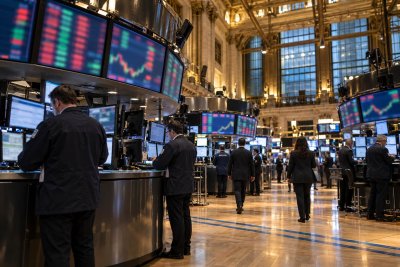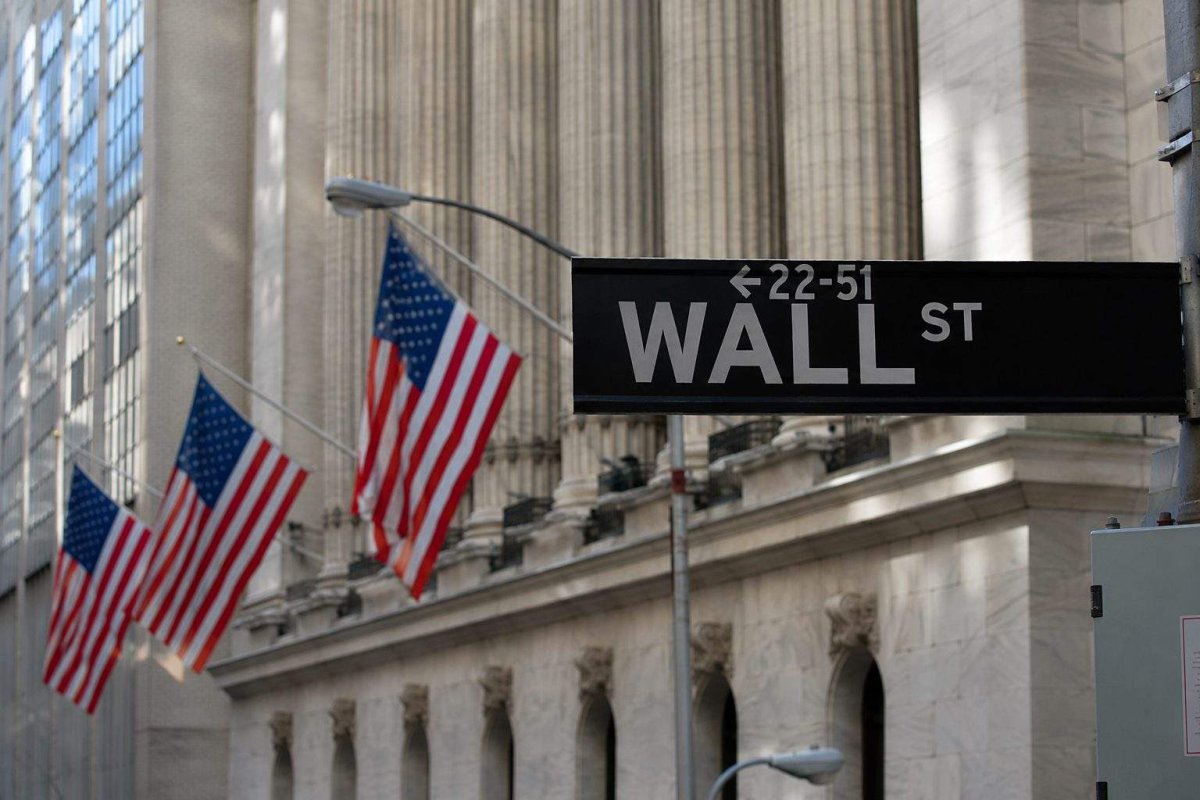
U.S. stock futures pointed to a mixed open on Monday, as a rebound in semiconductor shares helped the Nasdaq 100 recover some of Friday's steep losses, but surging oil prices and growing expectations of further Federal Reserve rate hikes kept broader market sentiment in check.
Dow Jones Industrial Average futures slipped 91 points, or 0.18%, to 50,845 shortly after 5:30 a.m. EDT. S&P 500 futures rose 22.75 points, or 0.31%, to 7,423.25, while Nasdaq 100 futures advanced 199.25 points, or 0.69%, to 29,225.75. Futures contracts move before the opening bell and can signal how stocks might open.
The Nasdaq's 4.2% plunge on Friday had hammered the market's top 2026 trade — artificial intelligence stocks — with the PHLX chip index suffering its worst single-day drop since March 2020, tumbling 10.3%. The selloff erased roughly $1.3 trillion in market value from U.S.-listed chipmakers, according to Reuters. Monday's premarket action saw a partial recovery, with Micron Technology trading up 3.81%, Nvidia gaining 1.44%, Broadcom rising 1.63%, and Advanced Micro Devices advancing 2.05% as of about 5:44 a.m. EDT. The Invesco QQQ Trust, which tracks the Nasdaq 100, also gained 0.76%.
However, the recovery faces significant headwinds. Oil prices surged again, with Brent crude jumping $4.42, or 4.47%, to $97.15 a barrel, while U.S. crude rose $4.07, or 4.50%, to $94.61. Renewed geopolitical tensions, including Israeli strikes on Iran and new attacks on Lebanon, stoked supply concerns. Rising oil prices typically fuel inflation fears and weigh on transport, retail, and consumer discretionary shares.
Adding to the pressure, traders now assign a probability above 70% to a December rate hike, according to CME FedWatch data. The Labor Department's report on Friday showed nonfarm payrolls rose by 172,000 in May, while the unemployment rate held steady at 4.3%, keeping the Fed on a hawkish footing. Goldman Sachs now expects the central bank to hold rates steady until at least 2027, according to Reuters.
Lars Skovgaard, senior investment strategist at Danske Bank, told Reuters, "The big surprise is not that we had a selloff, but that we didn't have it before." Marc Velan, who runs investments at Lucerne Asset Management, characterized the move as a "positioning and momentum unwind" rather than a fundamental shift in the long-term AI story.
Despite the recent turbulence, Wall Street strategy desks remain broadly supportive. Citigroup raised its S&P 500 price target for 2026 to 8,100 from 7,700, citing earnings and AI-driven gains, though it flagged questions about the sustainability of those trends beyond 2027. The bank's caution underscores a key concern: if oil continues to climb, Treasury yields move higher, or U.S. inflation data this week runs hot, investors could begin selling growth stocks that are priced on lofty future earnings expectations.
"Volatility into the Fed unless CPI comes in soft," warned Ohsung Kwon, chief equity strategist at Wells Fargo, in comments to Reuters. The Consumer Price Index, the key U.S. inflation measure, is due later this week and will be closely watched for signs of persistent price pressures.
For now, the market remains in a tug-of-war between the AI-driven optimism that powered the first half of 2026 and the macro headwinds of rising oil, higher rates, and geopolitical uncertainty. Monday's session will test whether the chip sector's bounce can hold or if the selloff has further to run.