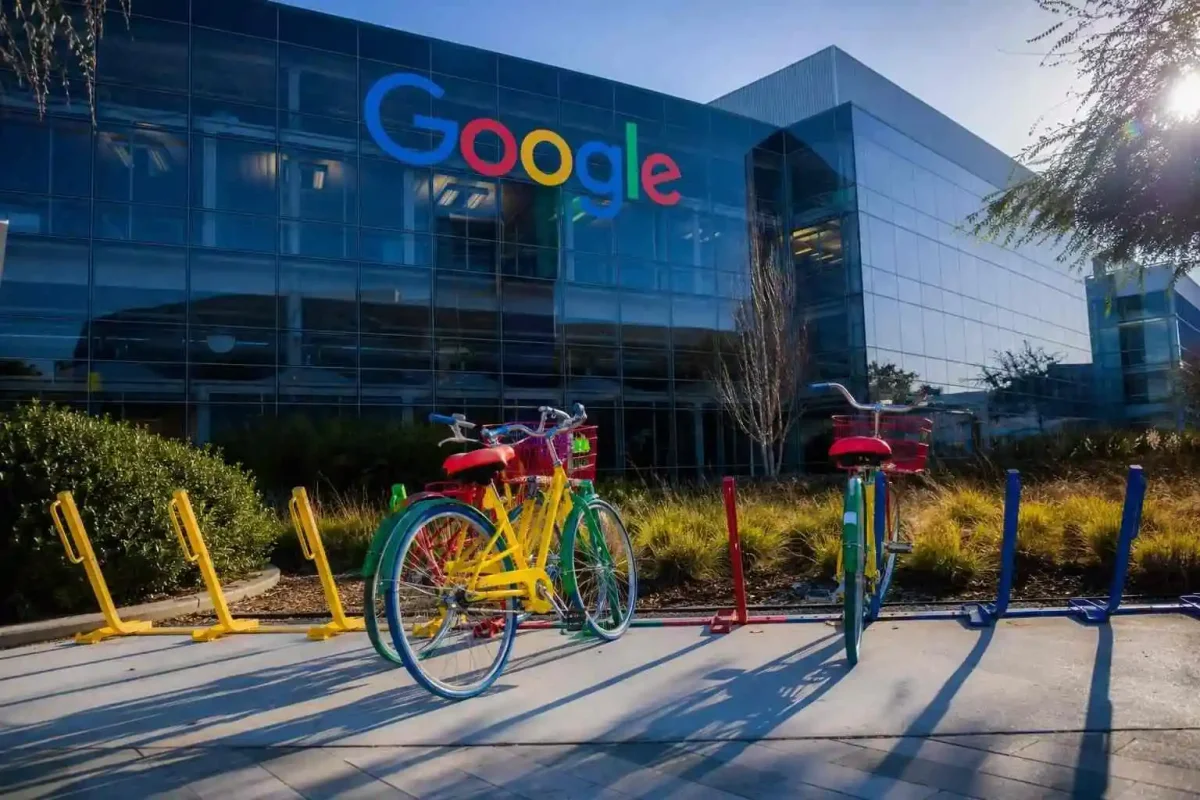
Alphabet Inc. (GOOGL) experienced a notable decline on Friday, closing at $380.34, a drop of 2.51% for the day. This underperformance came even as major U.S. stock indexes—the S&P 500, Nasdaq Composite, and Dow Jones Industrial Average—all closed at new record highs. The stock now sits roughly 0.7% below its May 22 close, dragging the S&P 500 communication services sector lower despite a strong showing from Microsoft, which surged 5.4% on the same day.
Google Cloud Fuels Optimism
Despite the stock's decline, Alphabet's cloud computing business continues to be a bright spot. Google Cloud reported first-quarter revenue of just over $20 billion, a 63% year-over-year increase, reaching that milestone for the first time. The company's backlog also swelled to more than $460 billion, nearly doubling from the previous quarter. CEO Sundar Pichai attributed this growth to Alphabet's aggressive investments in artificial intelligence (AI).
Strategic Partnership with EQT
Adding to the positive narrative, Google Cloud and EQT announced a partnership on Thursday to deliver Google's agentic AI platform, models, and architecture to over 300 EQT portfolio companies. Agentic AI refers to systems capable of performing multi-step tasks with minimal human input. Karthik Narain, chief product and business officer at Google Cloud, described agentic AI as "an important opportunity for businesses." This collaboration aims to help portfolio companies future-proof their operations by leveraging Google's AI capabilities.
Capital Expenditure Concerns
However, Alphabet's growth comes with a significant price tag. The company raised its 2026 capital expenditure (capex) outlook to between $180 billion and $190 billion, a figure that has become a focal point for investors. Thomas Monteiro, senior analyst at Investing.com, noted that while the target seems "well within the company's spending power" given its current revenue trajectory, it still raises questions about near-term profitability and cash flow allocation.
Regulatory and Macro Risks
Beyond financial metrics, Alphabet faces several headwinds. Reuters reported that the European Union is preparing a substantial fine against Google under the Digital Markets Act, potentially reaching triple-digit millions of euros. Additionally, Google is appealing a U.S. ruling that found it held illegal monopolies in online search and advertising. These legal challenges come at a time when markets are also focused on upcoming U.S. jobs data and bond yields, which could impact growth stocks like Alphabet.
Market Context and Outlook
The broader market context adds another layer of complexity. While AI-driven enthusiasm continues to support mega-cap tech stocks, Friday's trading showed that investors are not uniformly pushing all names higher. Alphabet's decline contrasted sharply with Microsoft's rally, highlighting selective positioning within the sector. Looking ahead, attention will be on the June 5 U.S. payrolls report and Broadcom's earnings, both of which could test the strength of the AI trade. Liz Ann Sonders, chief investment strategist at Schwab, cautioned that a strong jobs number and higher inflation could "change the outlook for Fed policy," potentially pressuring long-duration stocks like Alphabet.
In summary, Alphabet's mixed performance reflects a tug-of-war between robust cloud and AI growth on one side and rising capex, regulatory risks, and macro uncertainties on the other. The coming week will be crucial in determining whether Friday's drop was a temporary pause or a sign of deeper investor concerns about the company's valuation and strategic direction.