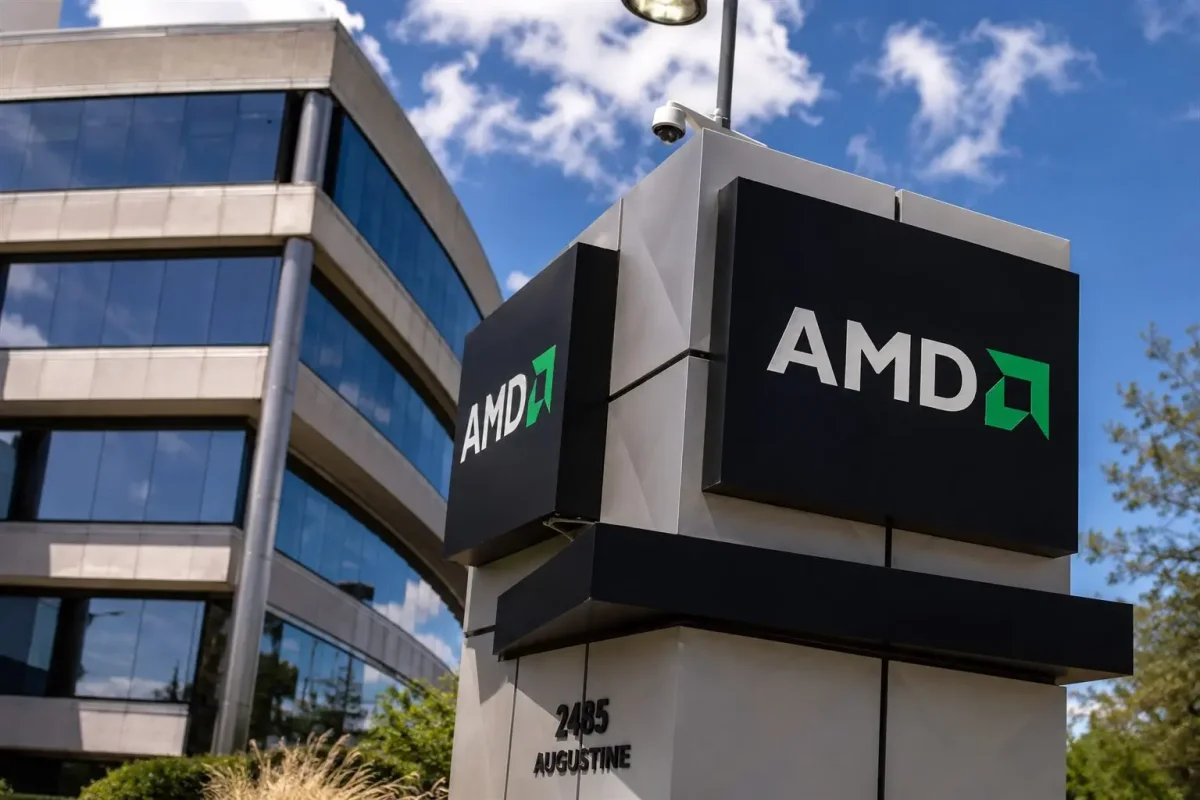
Advanced Micro Devices, Inc. (NASDAQ:AMD) ended regular trading on Wednesday virtually unchanged, dipping just 11 cents to close at $519.74, despite UBS raising its price target to $670 from $455. The new target implies a valuation of roughly $1.1 trillion for AMD, representing about $248 billion in upside from its current market cap of $857.6 billion. In after-hours trading, shares jumped 3.45% to $537.69, but the muted session reflected investor caution amid growing competition in the AI chip market.
The UBS upgrade, which maintains a Buy rating, is one of the most bullish on Wall Street, but the average analyst target is more tempered. According to MarketScreener, 51 analysts rate AMD a Buy, yet their consensus target sits at $500.40, roughly 3.74% below Wednesday's close. This divergence highlights the uncertainty surrounding AMD's valuation, which trades at about 21 times annualized first-quarter revenue and 37 times annualized data-center sales.
AMD's first-quarter revenue reached $10.3 billion, with data-center sales of $5.8 billion, up 57% year-over-year. The company expects second-quarter revenue of approximately $11.2 billion, plus or minus $300 million, with a non-GAAP gross margin near 56%. CEO Lisa Su has emphasized that data center is now the primary driver of revenue and profit growth, citing increasing demand for high-performance CPUs and accelerators as inferencing and agentic AI expand.
Rising Competition from Qualcomm
Investor hesitation also stems from Qualcomm Inc. (NASDAQ:QCOM) announcing ambitions to capture $15 billion in data-center chip sales by 2029, with $5 billion targeted by fiscal 2027. Microsoft Corp. (NASDAQ:MSFT) and Meta Platforms Inc. (NASDAQ:META) are among Qualcomm's AI-chip customers, and custom-chip revenue from two hyperscalers is expected to begin before year-end. Qualcomm's data-center head, Tony Pialis, noted that hyperscale customers are actively pulling Qualcomm in, rather than being pushed.
This development is significant for AMD because UBS's price target assumes investors will reward AMD for gaining server CPU share and AI workload traction beyond just GPUs. However, with Qualcomm entering inference chips, CPUs, and custom silicon, AMD's stock multiple could stall even as sales continue to climb.
Broader Tech Sector Pressure
The broader tech sector remained weak, with the Nasdaq Composite falling 0.43% and the S&P 500 slipping 0.10%. Concerns over valuations and debt-fueled spending by hyperscalers, combined with a hawkish Federal Reserve, wiped out over $1 trillion from the Nasdaq 100 earlier this week. The Philadelphia SE Semiconductor index dropped 7.9% on Tuesday, with chipmakers like AMD, Intel Corp. (NASDAQ:INTC), and Marvell Technology Inc. (NASDAQ:MRVL) each losing between 5.8% and 9.4%.
Thomas Martin, senior portfolio manager at Globalt, said all the recent AI news 'raises questions about all the spending.' Michael Monaghan, partner and portfolio manager at Founder ETFs, added that investors continue to favor beneficiaries of the spending, while stocks of companies making the outlays have come under pressure.
Market Implications
AMD's flat close despite a major price target upgrade underscores the market's skepticism about AI-chip valuations amid rising competition and macroeconomic headwinds. The stock's after-hours bounce suggests some optimism, but the path forward remains uncertain as hyperscalers diversify their chip suppliers and tech spending faces scrutiny.