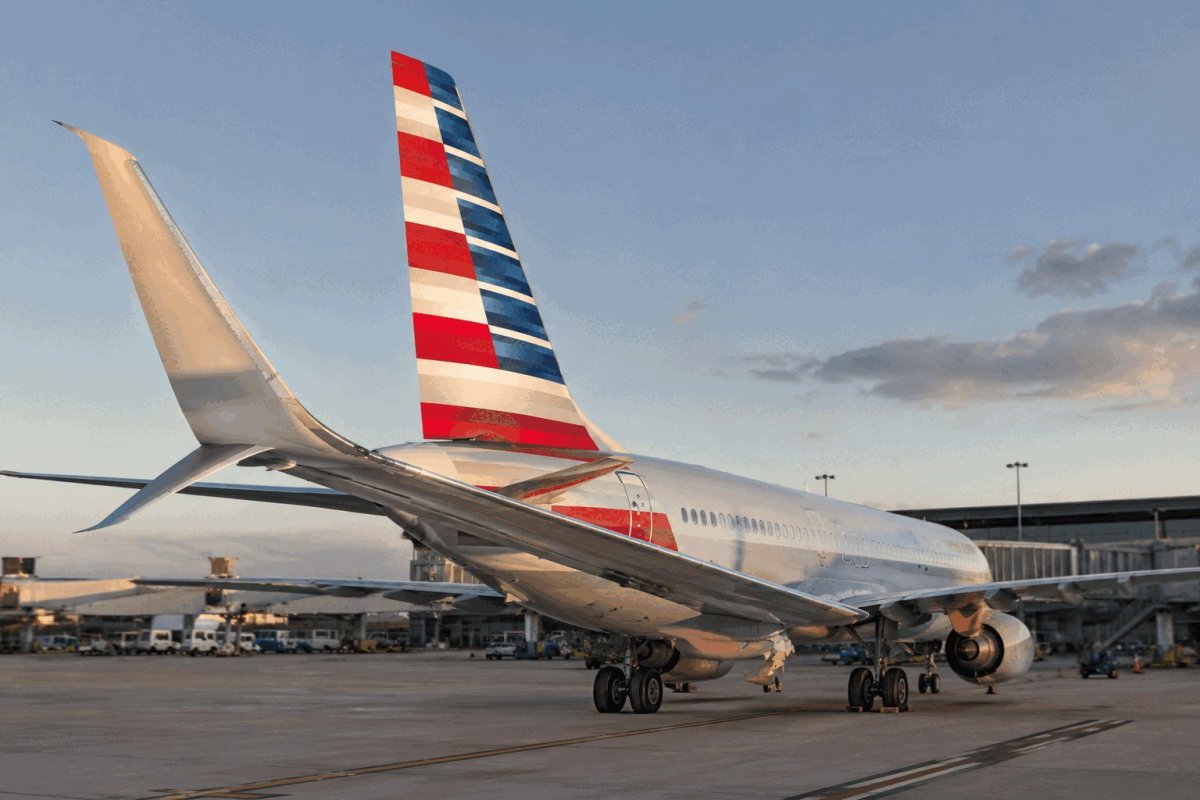
American Airlines Group Inc. (NASDAQ: AAL) is making a strategic push to expand its premium cabin offerings, aiming to increase premium seats to roughly 40% of its narrowbody fleet capacity, up from the current 25%. The move is part of a broader effort to close the profitability gap with competitors Delta Air Lines (NYSE: DAL) and United Airlines (NASDAQ: UAL), which have already invested heavily in premium cabins and amenities.
The airline's decision is driven by compelling revenue data from the second quarter of 2026. Premium passengers accounted for nearly half of ticket revenue, despite occupying only about 30% of available seats. This implies that each premium seat generates approximately 2.3 times more ticket revenue than a non-premium seat, a ratio that American believes can be leveraged further with a larger premium footprint.
According to company estimates, increasing the premium seat share from 25% to 40% on narrowbody aircraft could lift the premium revenue mix from an illustrative 43.7% to 60.9%, assuming the revenue density ratio remains unchanged. However, this calculation is purely illustrative and does not account for variations in route mix, load factors, or fare discounts, which could materially affect actual revenue outcomes.
The initiative also includes the reintroduction of seatback entertainment screens across its fleet of approximately 800 aircraft, a feature that has become a differentiator in the premium travel experience. The retrofit program, however, is not expected to begin until 2028 and will extend into the early 2030s, meaning the full benefits will take years to materialize.
American's financial results for the second quarter underscore the urgency of this strategy. While operating revenue grew 16.3% year-over-year to $16.74 billion, a surge in fuel costs (up 83.3% to $4.88 billion) weighed heavily on profitability. Operating income fell 60.7% to $446 million, and net income plummeted 88.2% to just $71 million. The company noted that higher fares offset nearly half of the fuel cost increase, highlighting the importance of premium pricing power in times of rising energy prices.
CEO Robert Isom emphasized the revenue growth, which exceeded initial forecasts, and pointed to a 26% increase in managed corporate revenue and total liquidity of $11.3 billion. However, the balance sheet remains a concern, with total debt of $28.57 billion as of June 30. The retrofit program's cost has not been disclosed, adding uncertainty to the investment outlook.
Market Reaction and Analyst Views
Shares of American Airlines closed at $13.52 on August 20, down 2.45%, as the broader airline sector declined. The stock underperformed the S&P 500, which fell 0.87%, but fared better than peers: Delta dropped 2.68%, United fell 3.52%, and Southwest (NYSE: LUV) declined 3.69%. Trading volume was about 54.6% of the average, indicating moderate activity.
Wall Street remains cautiously optimistic. According to MarketBeat, 21 analysts have a consensus rating of Hold, with an average price target of $19.03, implying a 40.8% upside from the current price. Targets range from a low of $12.50 to a high of $25.00. The mixed sentiment reflects both the potential of the premium strategy and the risks associated with execution and cost.
Risks and Outlook
The key challenge for American is whether it can convert a larger premium seat inventory into sustainable margin gains before retrofit costs peak. Premium unit revenue is currently growing faster than Main Cabin revenue, which is encouraging, but the implementation timeline is long, and fuel price volatility could erode pricing benefits. Additionally, aircraft taken out of service for retrofits may constrain capacity, and demand could soften before the first upgraded jets enter service in 2028.
American's strategy is a bold bet on the growing demand for premium travel, but it is not without risks. The company must navigate a high-debt environment and rising costs while executing a multi-year transformation. Investors will be watching closely to see if the premium push can deliver the profitability gains that have eluded the carrier in recent years.