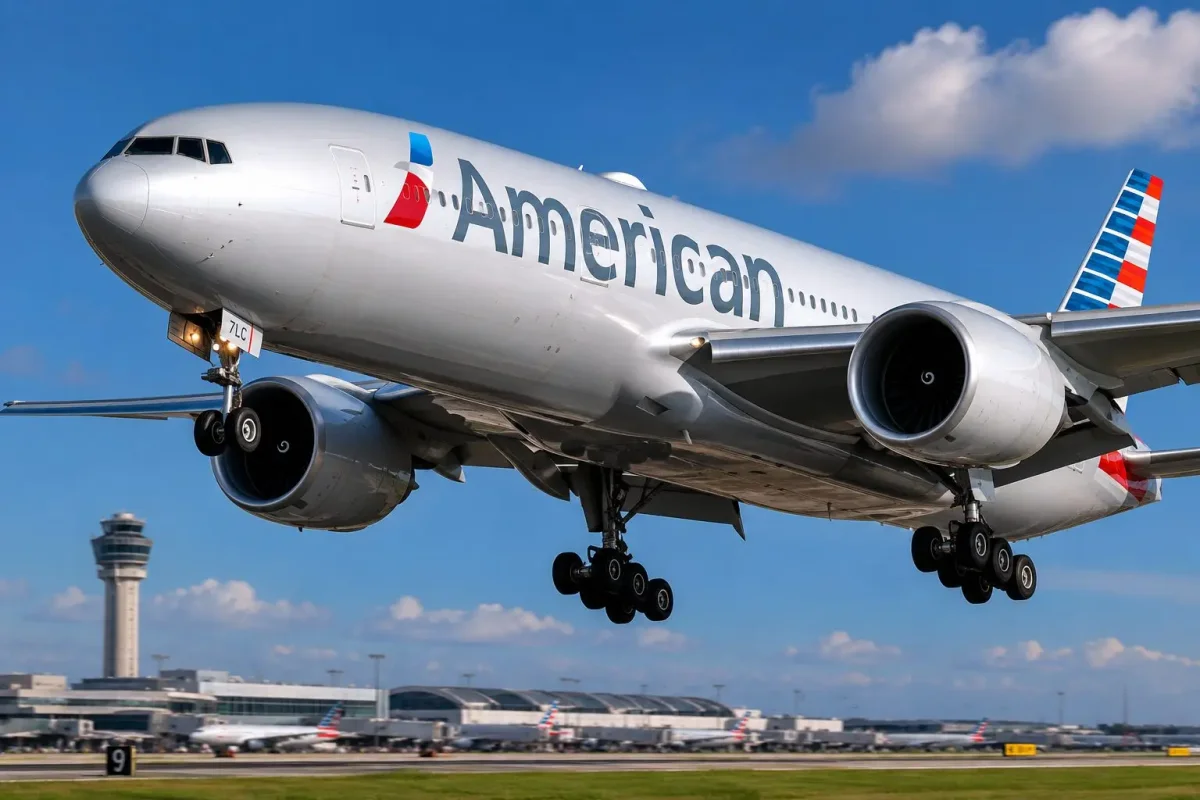
American Airlines Group Inc (AAL.O) enters the trading week with renewed focus on escalating fuel expenses and a diminished likelihood of a merger with United Airlines, leaving the stock subject to broader sector pressures rather than riding solely on summer travel optimism.
Shares of the carrier closed Friday at $13.50, a 1.5% increase on the day but a 5.9% decline from the previous Monday's close of $14.34, according to LSEG data. Trading volume picked up on Friday, with 106.1 million shares changing hands, marking the highest daily volume of the week.
The timing of these movements is notable. The stock traded before the regular Nasdaq session opened, with pre-market activity starting at 4 a.m. ET. Liquidity is typically thinner during these hours, which can amplify price swings with fewer participants.
United Airlines CEO Scott Kirby told Reuters on Sunday that the airline could still explore purchasing airport slots, gates, or other assets from weaker carriers if elevated fuel prices force them to divest. However, a full merger is off the table after American declined to engage in talks. "Consolidation is a low probability," Kirby stated, emphasizing that any deal requires "a willing partner." American CEO Robert Isom had previously dismissed a partnership with United as anti-competitive and detrimental to customers.
The fuel cost headwind remains severe. Brent crude futures surged $4.42, or 4.47%, to $97.15 a barrel by 0609 GMT Monday, driven by news of Israeli strikes on Iran and intensified attacks in Lebanon. For airlines, higher fuel prices directly erode margins unless fares rise or capacity is reduced.
American had already flagged these pressures during its April earnings call. CFO Devon May projected fuel costs would increase by more than $4 billion compared to last year, with second-quarter fuel expected around $4 per gallon. Adjusted earnings per share for the quarter are forecast to range between a loss of 20 cents and a profit of 20 cents.
The airline is actively working to recapture fuel costs through stronger revenue or by cutting unprofitable flights. May noted that after the summer, American will be "sharp with capacity," closely monitoring flight and seat deployment.
Demand remains a bright spot. In April, CEO Isom told investors that demand for American's product "continues to grow." The company reported a 10.8% increase in first-quarter revenue to a record $13.9 billion, though it still posted a GAAP net loss of $382 million. American is also touting its summer schedule, expecting to fly 75 million customers on 750,000 flights between May 21 and Sept. 8, its largest summer program ever.
However, the risks are clear. If oil prices sustain near $100 or jet fuel outpaces ticket price increases, American may need to reduce flights or accept narrower margins. The company's balance sheet remains stretched, with total debt of $34.7 billion at the end of the first quarter, although that is the lowest since mid-2015.
The pressure on the sector extends beyond American. Willie Walsh, director general of the International Air Transport Association, told Reuters on Saturday that high fuel costs could force some airlines out of business and potentially spur more consolidation. Rystad Energy analyst Jorge Leon noted that the latest OPEC+ production increase would have "almost zero physical effect" on supply. As American shares begin the week, the story remains one of strong travel demand, uncertain cost visibility, and no clear merger catalyst.