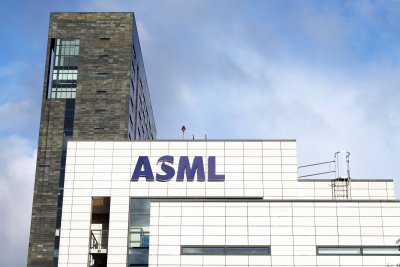
ASML Holding shares declined 0.6% in Amsterdam on Friday, settling at €1,666.00 after the Dutch chip-equipment leader denied shipping its cutting-edge extreme ultraviolet (EUV) lithography machines or related parts to China. The move came in response to a Bloomberg report highlighting U.S. export-control concerns, temporarily stalling a powerful AI-driven rally in semiconductor stocks.
The stock touched an intraday low of €1,631.40 before recovering slightly. ASML’s U.S.-listed shares were not trading due to the Juneteenth holiday closure of Nasdaq. Despite the dip, the stock remains near its 52-week high of €1,669, reflecting robust investor confidence in AI infrastructure spending.
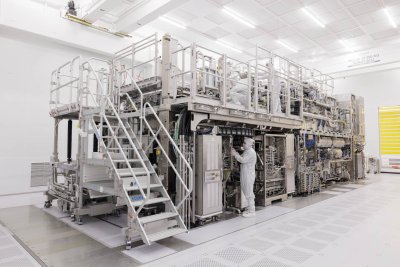
ASML holds a near-monopoly on EUV technology, which uses short-wavelength light to etch minuscule circuit patterns essential for advanced chips. The company stated it “never shipped an EUV machine to China” and also denied sending any components, modules, or equipment designed for EUV systems. The denial followed a Bloomberg report that U.S. Commerce Secretary Howard Lutnick had raised concerns with ASML executives about a possible machine reaching China, potentially violating U.S.-led export restrictions.
The geopolitical friction comes at a critical time for ASML. China accounted for 33% of ASML’s sales in 2025, but the company expects that share to drop to 20% in 2026 as export-control risks persist. The company has already incorporated “potential outcomes” from ongoing export-control negotiations into its guidance range.
ASML’s fundamentals remain solid. In the first quarter of 2026, the company reported net sales of €8.8 billion and net income of €2.8 billion, while forecasting full-year net sales between €36 billion and €40 billion. CEO Christophe Fouquet noted that “demand for chips is outpacing supply” and that customers are accelerating capacity expansion plans.
The broader chip-equipment sector showed resilience this week. Applied Materials, Lam Research, and KLA all gained after Citi analyst Atif Malik raised his wafer-fabrication equipment outlook, citing sustained AI demand. ASML’s decline appeared tied to policy concerns rather than a shift in underlying chipmaker demand.
Investors are currently separating the denied allegation from the larger AI spending theme. However, the situation remains fluid. A definitive U.S. ruling, changes to Dutch export rules, or signs of slowing tool orders could transform Friday’s modest drop into a more significant repricing of geopolitical risk. For now, the market appears to be taking a wait-and-see approach.