ASML Holdings (ASML) experienced a sharp decline in its U.S.-listed shares on Monday, falling 6.39% to $1,589.79 by 12:09 p.m. ET. The drop extended a global selloff in semiconductor and chip-equipment stocks, driven not by a company-specific profit warning but by a renewed industry debate over whether leading AI developers should intentionally slow the pace of frontier model development.
The selloff was widely attributed to discussions about AI safety and the potential for coordinated pacing mechanisms, as highlighted by outlets like Investing.com and Quartz. In Amsterdam, ASML shares were down approximately 4% to 5% in cash trading, while the Nasdaq-traded ADR showed a more pronounced decline. Despite the venue and timestamp differences, both listings reflected a common investor concern: that the assumption of uninterrupted growth in AI infrastructure spending may be at risk.
Safety Proposal vs. Capital Spending Reality
Anthropic, a key player in the AI space, clarified in an August 31 statement that its internal decisions prioritize safety over speed, but it does not advocate for industry-wide coordination to prevent a "race to the bottom." The company emphasized that any coordinated pacing mechanism must be lawful, verifiable, and effective. This nuanced stance is far from a signal to cancel chip orders, yet the market reacted as if it were.
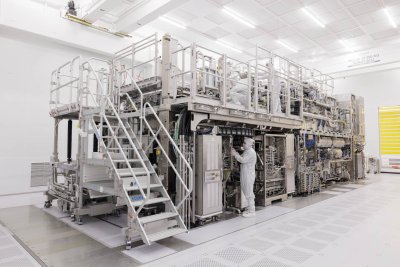
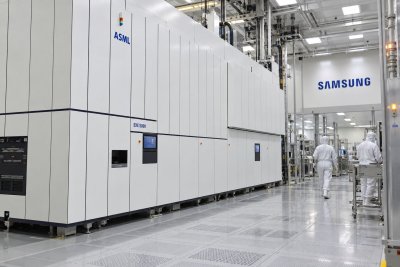
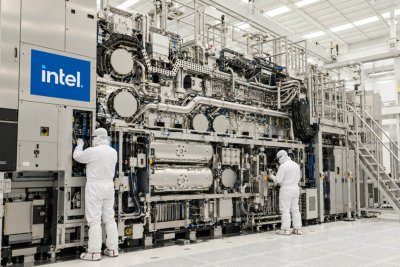
Investors have reason to be cautious. Frontier AI models consume vast amounts of advanced logic and memory, and the expectation of sustained AI investment is embedded in customer plans for new fabrication capacity. ASML supplies the lithography systems essential for manufacturing these chips. If model developers stretch their deployment timelines, cloud providers could eventually reassess data-center spending, chip designers might moderate orders, and foundries could delay tool deliveries. The chain of impact is indirect but places ASML at the most capital-intensive end of the equation.
Timing Uncertainty Remains Key
ASML sells to chip manufacturers, not AI laboratories, and customer commitments, construction schedules, and installed machines are not easily undone by a single policy proposal. The company's service business provides an additional buffer; Installed Base Management sales reached €2.76 billion in the second quarter, representing nearly 30% of quarterly revenue. Monday's decline, therefore, appears to price a potential change in the duration of the AI buildout rather than an immediate shortfall in current-quarter sales.
ASML's Disclosed Plan Points to Expansion
ASML's most recent earnings report contradicts the bearish sentiment. The company recorded second-quarter sales of €9.33 billion, a gross margin of 54%, and net income of €2.92 billion. It also raised its full-year sales outlook to €43 billion to €45 billion and its gross-margin range to 54% to 56%. Management noted that customer capacity plans had accelerated and that first-half order intake was "extremely strong."
Capacity decisions offer a more reliable test than daily share price movements. ASML plans to increase its 2026 low-NA EUV capacity by 30% for 2027, from about 65 systems to roughly 85. Similarly, it intends to raise DUV immersion capacity from about 130 systems to approximately 169. A further 30% expansion in 2028 remains under investigation rather than committed. Delays in these additions would be far more consequential than a one-day selloff.
On September 8, ASML broke ground on a 350,000-square-meter campus in Eindhoven, with the first phase scheduled for 2029 and expected to house at least 3,000 employees. This project can be phased, but it demonstrates that management has not yet translated the AI-pacing discussion into a reduced manufacturing footprint.
Three Checkpoints to Watch
Investors should monitor three key milestones to gauge the real impact of the AI safety debate:
- Third-Quarter Report: ASML has guided to sales of €11 billion to €12 billion and a gross margin of 55% to 57%. Order commentary will be more telling than the revenue figure.
- 2027 Production Plan: Supplier commitments and customer delivery schedules should reveal whether the planned 30% EUV and DUV capacity increases remain fully supported.
- Capital Markets Day (June 10, 2027): Management has promised to update its long-term outlook, providing a dated point to reconcile AI demand, export controls, and capacity plans.
The strongest counterargument to Monday's selling is that coordinated safety rules could lengthen development cycles without reducing total compute demand; in fact, more testing and security might require additional processing. The risk to ASML is not the language of "pacing" itself, but a measurable pullback in customer commitments before the company completes the production expansion embedded in its plan. Until then, the market may remain volatile, but the underlying fundamentals and order pipeline continue to support growth.