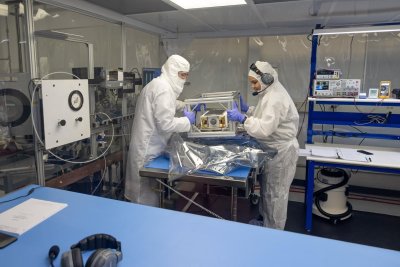
AST SpaceMobile has officially targeted April 10 for the launch of its BlueBird 7 satellite, a key component in building its direct-to-smartphone communications network. The mission, which will utilize Blue Origin's New Glenn-3 rocket, represents a slight delay from earlier timelines but marks continued progress for the Texas-based firm.
Rocket Lab Achieves ESA Launch Milestone
Separately, Rocket Lab announced the successful completion of its inaugural dedicated launch for the European Space Agency on March 28. The company's Electron rocket deployed the first two Celeste satellites into low Earth orbit, marking Rocket Lab's 85th overall mission and its sixth launch this year. CEO Peter Beck emphasized the critical importance of orbital accuracy for the nascent constellation, while ESA navigation head Francisco-Javier Benedicto Ruiz noted the effort enhances the resilience and robustness of Europe's system.
Financial Foundations and Market Context
The operational updates come as both companies demonstrate solid financial footing. AST SpaceMobile reported $70.9 million in revenue for 2025, alongside over $1.2 billion in contracted partner commitments. The company ended the year with more than $3.9 billion in cash and liquidity on a pro forma basis. Rocket Lab, meanwhile, holds a record backlog of $1.85 billion. For full-year 2025, Rocket Lab's revenue reached $602 million, a 38% year-over-year increase, with fourth-quarter non-GAAP gross margin at 44.3%. First-quarter guidance projects revenue between $185 million and $200 million.
Strategic Expansions and Partnerships
AST is aggressively expanding its direct-to-device network, aiming to scale from initial commercial activation toward broader service in 2026. The company has lined up launches every one to two months following BlueBird 7, targeting 45 to 60 satellites in orbit by the end of 2026. In a significant partnership move, European telecom operator Orange recently announced a collaboration with AST and Satellite Connect Europe to deliver satellite-to-smartphone connectivity, while also maintaining a multi-vendor strategy that includes Starlink, Eutelsat, and SES.
Rocket Lab's growth extends beyond launch services. The company secured an $816 million contract from the Space Development Agency to build 18 missile-warning and tracking satellites. It was also selected for Tranche 3 awards alongside defense giants Lockheed Martin, L3Harris, and Northrop Grumman, as reported by Reuters in December.
Challenges and Adjustments
Both companies face notable hurdles. AST reported fourth-quarter operating expenses of $126.6 million, and the shift of the BlueBird 7 launch from March to April underscores the inherent scheduling volatility in space missions. Rocket Lab encountered a setback with a stage 1 tank test failure, pushing the first flight of its larger Neutron rocket to the fourth quarter. The company maintains its forecast for an adjusted EBITDA loss between $21 million and $27 million for the current quarter.
Market Performance and Industry Sentiment
The announcements follow a period of heightened investor interest in space stocks, fueled partly by speculation around a potential SpaceX initial public offering. Reuters reported SpaceX could file its prospectus as early as this week or next, with Elon Musk considering allocating up to 30% of the offering to retail investors. Rocket Lab's stock surged 10.3% on March 25 amid this buzz, with AST and other sector peers also trading higher. By mid-morning on March 30, however, AST shares had declined 2.6% to $76.62, while Rocket Lab slipped 3.5% to $58.78.
As the industry's focus shifts from speculation to execution, the coming weeks will be critical. The scheduled April 10 launch for AST's BlueBird 7 will be a tangible test of near-term progress, while Rocket Lab's growing launch cadence and contract backlog demonstrate its evolving role as a key infrastructure provider in the new space economy.