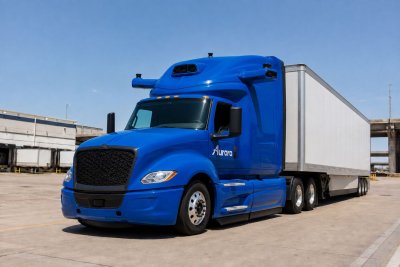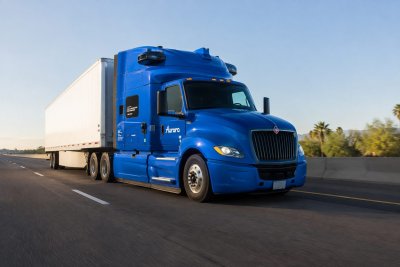
Aurora Innovation Inc. (AUR) experienced a volatile week, with shares closing at $7.71 on Friday, a decline of 5.75% from the previous session. Despite the drop, the stock remains approximately 10% above its closing price from the prior Friday, following a midweek surge that saw it reach a 52-week high of $8.565. The pullback reflects profit-taking ahead of the weekend, as broader market sentiment turned cautious.
Market Context and Broader Decline
The decline in Aurora shares occurred against a backdrop of broad market weakness. The Nasdaq Composite fell 1.54%, the S&P 500 dropped 1.24%, and the Dow Jones Industrial Average shed 1.07%. Rising oil prices and a jump in Treasury yields dampened risk appetite, with analysts noting that the recent rally in artificial-intelligence-related stocks had become overextended. “The market had gotten way ahead of itself,” said Kenny Polcari, chief market strategist at Slatestone Wealth, in comments to Reuters.
Operational Milestones and Partnerships
Aurora continues to advance its autonomous trucking operations. The company announced plans to have over 200 driverless trucks on the road by the end of 2026, with CEO Chris Urmson stating the company is “on track to put hundreds of driverless trucks on the road this year.” Early adopter Hirschbach is reportedly considering 500 trucks equipped with the Aurora Driver.
Recent partnerships underscore Aurora’s progress. On May 13, Volvo Autonomous Solutions and DSV began autonomous freight operations in Texas using the Volvo VNL Autonomous truck integrated with the Aurora Driver, though a safety driver remains onboard initially. Additionally, Aurora and McLane, a subsidiary of Berkshire Hathaway, announced plans to launch driverless truck hauls in Texas, building on a pilot that covered over 280,000 miles and delivered 1,400 loads.
Financial Performance and Cash Position
In its first quarter, Aurora reported revenue of $1 million and a net loss of $223 million, or 11 cents per share. Operating loss stood at $244 million, with research and development costs rising to $195 million. The company held $273 million in cash and cash equivalents and $1.004 billion in total investments as of March 31. Cash burn from operations was $159 million, up from $142 million a year ago, while capital expenditures totaled $25 million.
Valuation and Analyst Sentiment
Aurora’s valuation hinges on its “Driver as a Service” (DaaS) model, where fleet owners purchase and operate trucks while Aurora charges per mile for its technology. This model allows for rapid scaling without significant capital deployment. Wall Street remains divided: Needham & Co. maintains a Buy rating with a $13 price target, while the consensus rating is Hold, with an average price target of $10.54, according to MarketBeat. The company’s market capitalization stands at approximately $15.0 billion.
Late Friday, entities affiliated with Greylock filed Form 144 notices for approximately 5.5 million shares, valued at around $42.9 million, signaling potential sales by affiliates. However, the filings do not confirm actual sales, and each noted no sales in the prior three months.
Upcoming Annual Meeting and Key Catalysts
Aurora’s virtual annual meeting is scheduled for May 21 at 1 p.m. Eastern. Investors will be watching for updates on the company’s target for fully driverless operations without an observer in the second quarter, customer deals, and expansion plans in Texas and the Sun Belt. The autonomous vehicle sector remains competitive, with players like Waymo, Zoox, and Waabi also active, but Aurora is positioned as a central player in the space.
Risks and Outlook
Key risks include potential delays in achieving driverless milestones, increased regulatory scrutiny, slower customer adoption, and sustained cash burn. Aurora has cautioned that it only recently began booking revenue and does not expect significant revenue until commercial scale is reached. The company may need to raise additional capital and relies on suppliers such as AUMOVIO for future hardware.