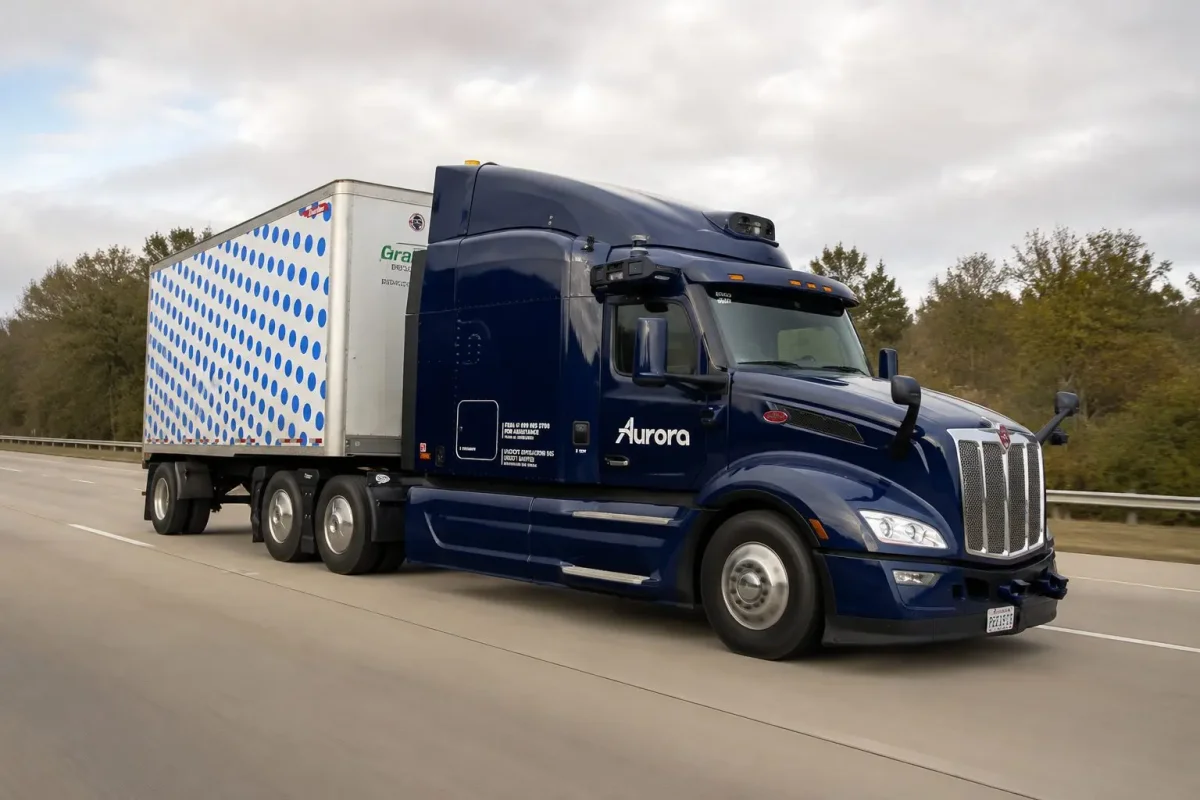
The autonomous trucking industry is moving beyond demonstration phases and into measurable, revenue-generating operations, drawing increased attention from Wall Street investors who are now scrutinizing the economics of scale. Companies like Aurora Innovation, Kodiak AI, and newcomer Waabi are reporting concrete metrics—such as truck counts, route miles, and paid operating hours—signaling a shift from pilot programs to commercial viability.
Key Metrics and Financials
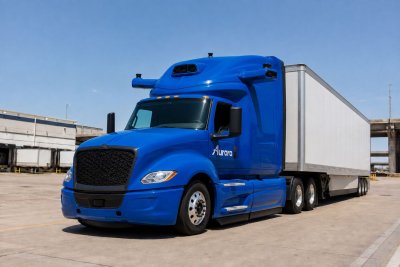
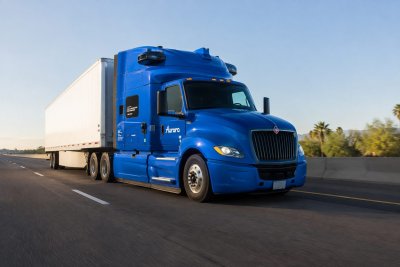
Aurora Innovation, based in Pittsburgh, has been running commercial driverless trucking on the Dallas-to-Houston route since May 2025, with no human in the cab. The company reported that it plans to deploy over 200 driverless trucks by the end of 2026. Kodiak AI, headquartered in Mountain View, California, finished the first quarter with 28 customer-owned driverless vehicles and logged more than 23,500 paid driverless operating hours. Kodiak also reported first-quarter revenue of $1.8 million, a 74% sequential increase, and secured a $100 million private investment in public equity (PIPE) to fund expansion.
Waabi, a Toronto-based startup founded in 2021, raised $750 million in a Series C round in January, with additional milestone-based funding from Uber that brings the total package to $1 billion. The company claims its “Physical AI” can power both autonomous trucks and robotaxis, using a single AI model to handle both highway and surface-street driving. This capability, Waabi says, allows trucks to run directly from shippers to customers without hub stops, addressing the fact that over 40% of U.S. tractor-trailer trips occur on surface streets, according to federal data.
Investor Focus on Scalability
The central question for investors is whether autonomous freight can reduce cost per mile—the key metric in trucking economics. Seeking Alpha analyst Michael McGrath noted that Aurora has logged 12 million self-driving miles, while Kodiak’s customer fleet has reached 28 trucks. He emphasized that the focus now is on deployment and scaling, not just proving the technology. Aurora CEO Chris Urmson stated that the company is “on the cusp of launching a new platform” and that early customers like Hirschbach are preparing to deploy 500 trucks equipped with the Aurora Driver system. Aurora has also begun driverless shipments for McLane, a Berkshire Hathaway subsidiary.
Kodiak CEO Don Burnette confirmed the company is sticking with its plan for a “long-haul driverless launch targeted for late 2026.” The company’s strategy involves selling its Kodiak Driver technology for customer-owned trucks, a business model that differs from Aurora’s service-for-carriers approach and Waabi’s direct AI sales model.
Market Reaction and Risks
Despite the progress, investors are not treating the sector as risk-free. Aurora shares traded at $7.035 on the Nasdaq in the afternoon, while Kodiak shares were at $7.95. Both companies face risks related to rollout timing, capital requirements, supply chain gaps, and rapid technological changes. Aurora noted that customer intentions, such as Hirschbach’s plan, are not yet binding orders. Regulation, safety data, and public trust will be critical as fleets expand beyond restricted pilot programs.
The broader market context includes a warning from analysts that charging shippers per mile for self-driving freight could hurt human drivers if technology costs decrease and truck utilization increases. However, the sector’s shift to paid operations marks a significant milestone, and the competition among Aurora, Kodiak, and Waabi is driving innovation in different business models.
Outlook
Texas remains a central hub for autonomous freight testing and deployment. As the industry moves from demos to real-world operations, the ability to keep trucks on the road at the right price, with sufficient uptime and safety, will determine which companies succeed. The next few years will be critical as the sector scales and seeks to prove that autonomous trucking can deliver on its promise of lower costs and higher efficiency.