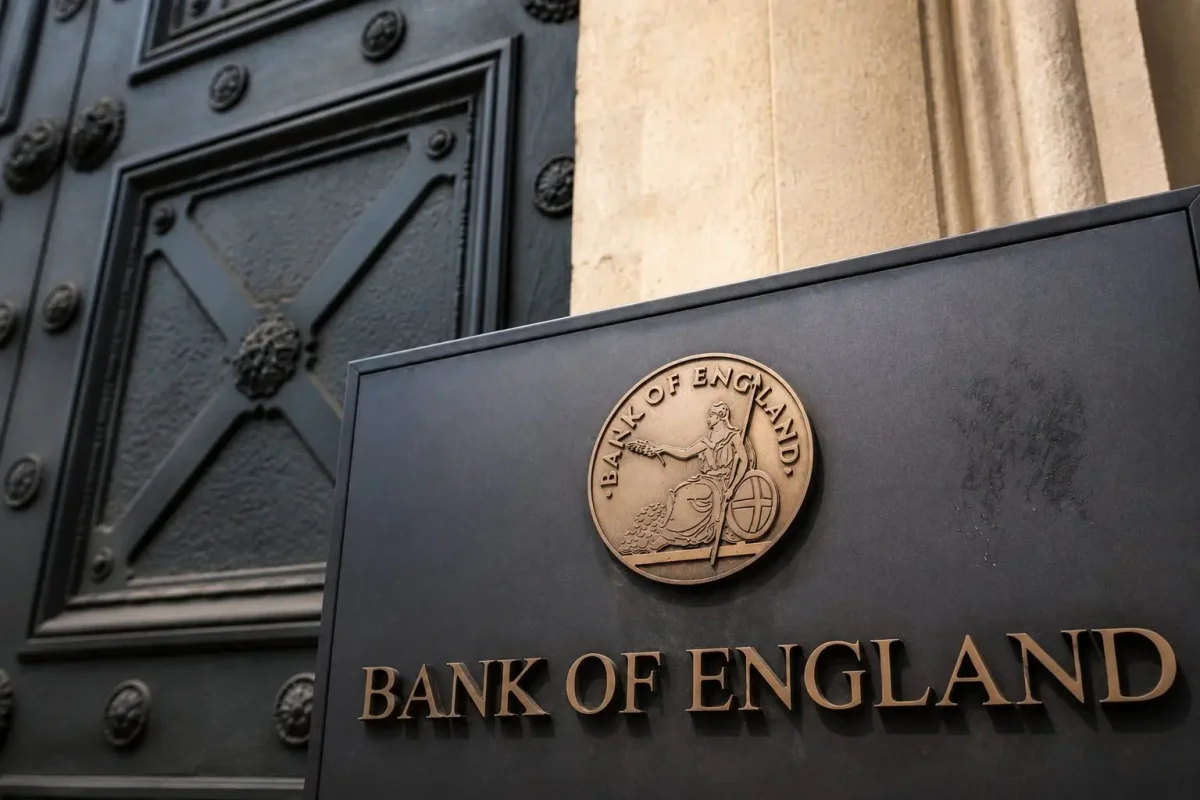
The Bank of England (BoE) decided to maintain its key interest rate at 3.75% during its June meeting, a move that was widely anticipated by financial markets. The decision, carried by a 7-2 vote, reflects the central bank's cautious stance as it navigates the lingering effects of an energy-driven inflation shock that shows signs of easing but remains a threat.
The two dissenting votes came from Monetary Policy Committee (MPC) members Megan Greene and Huw Pill, who advocated for a quarter-point increase to 4%. They argued that a preemptive move would help anchor inflation expectations and limit second-round effects, where higher energy costs could feed into wage demands and broader price increases.
Governor Andrew Bailey expressed optimism about the recent U.S.-Iran truce, which has helped stabilize global energy markets. However, he cautioned that earlier energy price spikes have already built inflationary pressure into the pipeline. The BoE now projects that inflation will rise above 3.25% in the fourth quarter, up from 2.8% in May, though this is lower than the 3.6%-3.7% peaks it had forecast under earlier scenarios.
The majority of the MPC, including Bailey, Sarah Breeden, Swati Dhingra, Clare Lombardelli, Catherine Mann, Dave Ramsden, and Alan Taylor, voted to hold rates steady. They cited softening demand and a weakening labor market as reasons to wait. Mann acknowledged higher inflation risks but believed the BoE could act quickly if needed.
Recent economic data provided some cover for the hold. The Office for National Statistics reported that the Consumer Prices Index rose 2.8% year-on-year in May, unchanged from April, with food inflation easing and services inflation picking up. Meanwhile, the unemployment rate edged up to 4.9%, and vacancies fell to 707,000 in the March-to-May period, below pre-pandemic levels, suggesting a looser labor market that could temper wage growth.
Financial markets reacted to the decision with a sell-off in sterling, which fell 0.6% to around $1.3212, while the FTSE 100 index dropped 1%. The two-year gilt yield, sensitive to rate expectations, hovered near 4.2%. Analysts interpreted the pause as a delay rather than a dovish turn. George Brown of Schroders noted that the bar for further hikes remains high, but the BoE cannot afford complacency if inflation expectations drift higher.
J.P. Morgan pushed back its forecast for the next rate rise to November from July, citing a potential recovery in growth and the labor market that could strengthen pass-through into wages and core prices. The bank also noted that if other central banks tighten further, the BoE may find it difficult to simply hold rates.
The BoE's decision contrasts with actions by other major central banks. The European Central Bank raised its deposit rate to 2.25% last week, and the Bank of Japan lifted its short-term policy rate to 1%, the highest since 1995. The Federal Reserve held rates steady this week but noted that U.S. inflation remains elevated.
On the consumer front, British retail sales rose 1.2% in May, supported by warm weather and stronger online and clothing sales. However, households remain cautious about big-ticket purchases, and major retailers like Tesco and Morrisons have seen sales growth slow since the conflict began. The risk remains that if energy flows through the Strait of Hormuz face disruptions or if households and firms start expecting persistent 3%-plus inflation, the BoE's pause could prove late rather than prudent. Conversely, if energy prices continue to ease, the next move could be a cut, possibly as early as December.