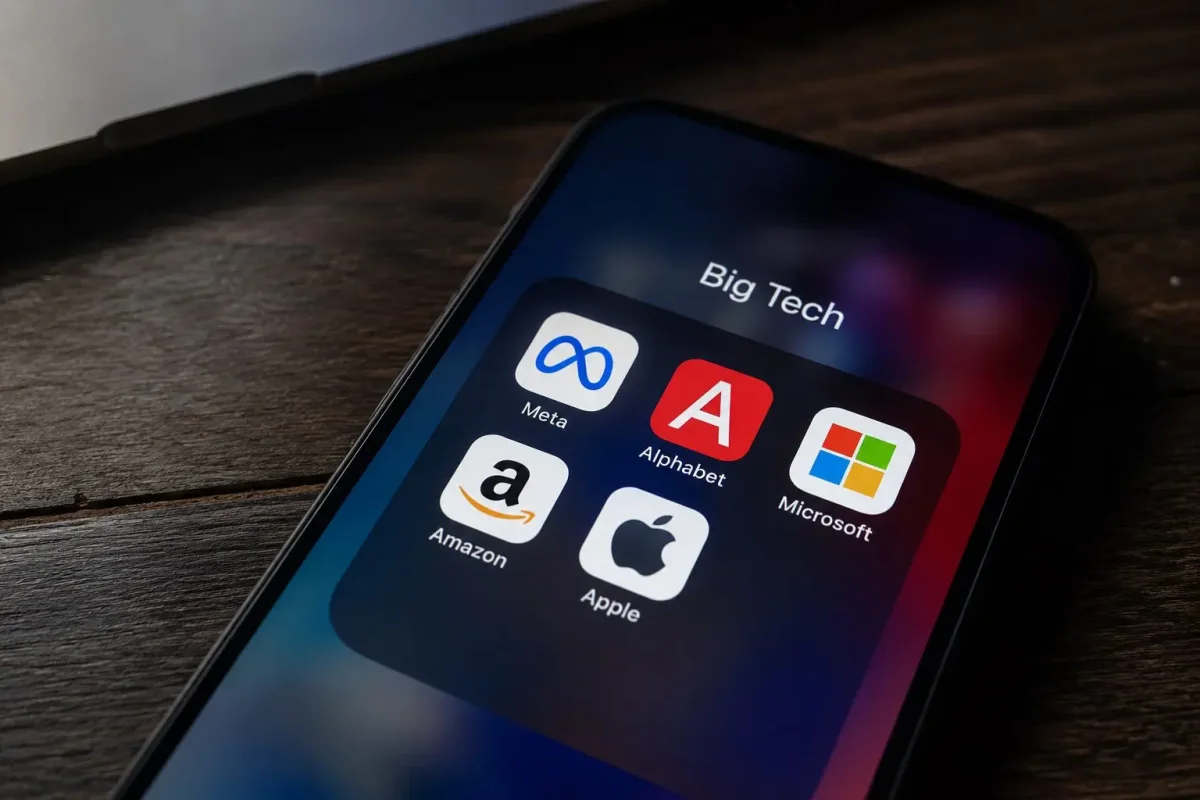
NEW YORK, July 20, 2026 – The massive capital expenditure plans of Alphabet (GOOGL), Amazon (AMZN), Microsoft (MSFT), and Meta Platforms (META) are under the microscope as their combined spending could reach $725 billion in 2026, a figure that represents 118% of their trailing 12-month operating cash flow. This cash-intensity metric is not a solvency warning but a crucial test of how well these companies can convert their AI investments into cash generation.
The scale of the buildout is unprecedented. The combined capex of these four hyperscalers now nearly matches the cash their core operations produce. For chip suppliers, the equation is inverted: slower spending would preserve cash for the tech giants but shorten the growth runway for hardware vendors like those in the iShares Semiconductor ETF (SOXX).
Semiconductor Rebound
Wall Street opened higher on Monday, with the Nasdaq Composite gaining 0.79% and SOXX rising 2.1% by 10 a.m. EDT. The rebound follows a 20% decline from the fund's June 22 record through last Friday. “I think what we’re seeing now is a correction,” said John Roque of 22V Research.
Cash Flow Scrutiny by Company
Alphabet offers the first clean test when it reports on Wednesday, July 22. First-quarter Google Cloud revenue surged 63% to $20.0 billion, but quarterly free cash flow was just $10.1 billion after $35.7 billion in capex. Investors will watch cloud margins, backlog conversion, and any spending changes. A pullback could create “ripple effects across the entire AI ecosystem,” warned Kevin Mahn of Hennion & Walsh.
Amazon shows the sharpest cash squeeze. Trailing free cash flow fell to $1.2 billion from $25.9 billion, driven by higher AI-linked equipment purchases. CEO Andy Jassy said Amazon is not spending $200 billion “on a hunch.”
Microsoft has the clearest disclosed AI revenue counterweight. Its AI business reached a $37 billion annual run rate, and Azure grew 40%. However, Microsoft Cloud gross margin fell to 66% as AI costs rose.
Meta lacks a cloud-rental business. Its case rests mainly on ad yield. First-quarter revenue rose 33%, while average price per ad increased 12%. Its high-end capex plan equals about 117% of trailing operating cash flow.
Market Dynamics and Risks
The China catalyst cuts both ways. Moonshot AI paused new Kimi K3 subscriptions after requests strained compute capacity within 48 hours. Cheaper models may expand usage before they cut hardware demand. Citrini Research said open-source competition did not fully explain the selloff, pointing instead to a leverage-fueled unwind in crowded themes. Retail options and leveraged ETFs amplified chip volatility.
The earnings bar remains high. Consensus estimates put second-quarter semiconductor profit growth at 133%, with the group providing 44% of overall S&P 500 earnings growth. Strong numbers may not be enough.
Risks include faster cloud growth validating current spending and squeezing chip shorts, or a capex cut hitting suppliers harder than hyperscalers. Alphabet’s report will test more than one stock: a capex cut could deepen the rotation away from chips, while unchanged spending without better cash conversion would shift pressure back to Big Tech.