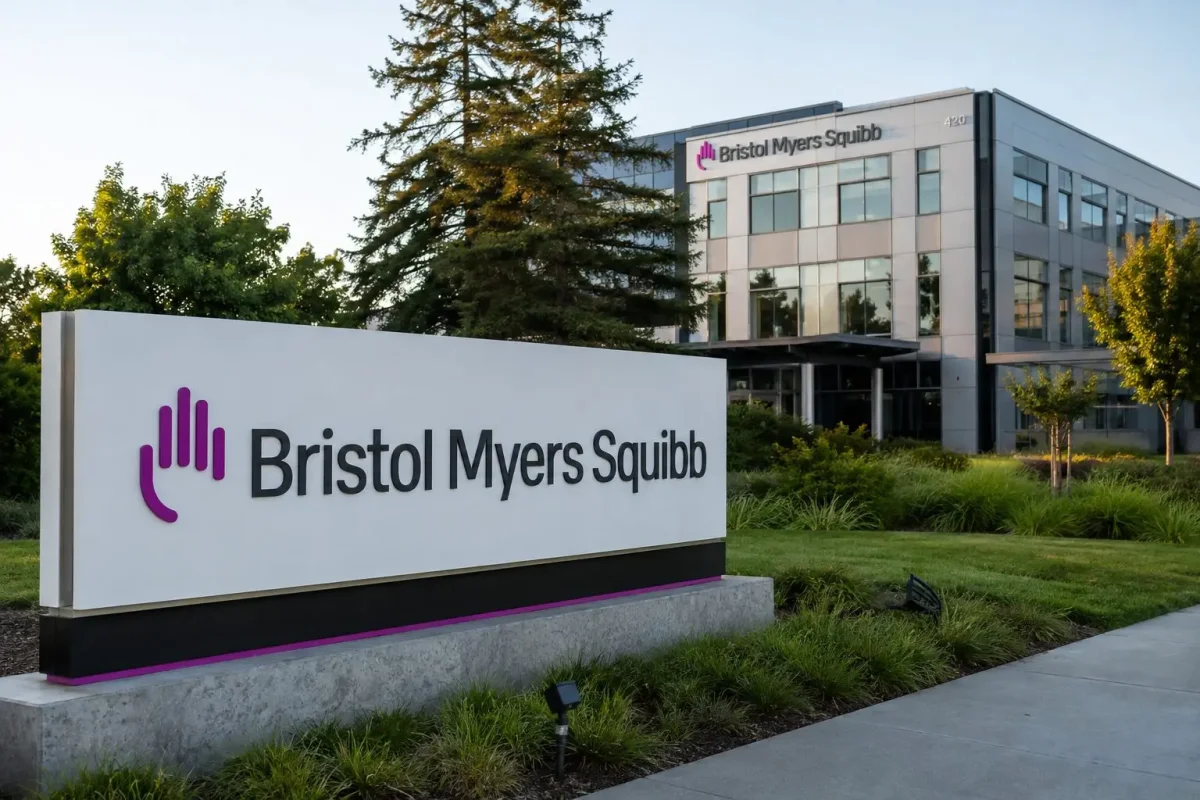
Bristol Myers Squibb (NYSE:BMY) saw its shares climb approximately 8% in premarket trading on Monday, following reports of preliminary merger discussions with AstraZeneca (NASDAQ:AZN). The news ignited speculation about a potential transformative deal in the pharmaceutical sector, yet early market reactions suggest investors are approaching the prospect with caution.
While Bristol's stock surged, AstraZeneca's shares listed in London slid 6.4%. A closer look at market capitalization shifts reveals a more nuanced picture. Based on Friday's closing values, Bristol Myers added roughly $10.7 billion in market value, while AstraZeneca lost an estimated $16.9 billion. The combined net effect was a reduction of $6.2 billion in the total market capitalization of the two firms—an indication that the market's enthusiasm is far from unanimous.
The initial stock reaction underscores optimism for Bristol Myers as an independent entity, rather than confidence in a deal's completion. Reuters could not confirm whether talks are ongoing, with AstraZeneca declining to comment and Bristol Myers not responding to requests. No deal terms have been disclosed.
Bristol Myers entered the week with a strong standalone narrative. The company's shares closed Friday at $65.31, just shy of a 52-week high of $65.66. Second-quarter revenue rose 6% year-over-year to $12.97 billion, while adjusted earnings jumped 40% to $2.04 per share. Both figures surpassed LSEG analyst expectations, prompting the company to raise its full-year 2026 guidance. The revenue outlook midpoint increased 5.9% to a range of $49.0-$50.0 billion, and adjusted EPS guidance climbed 10.9% to $6.75-$7.00 per share.
The improving sales mix is a key driver of this optimism. Management highlighted that nine products are now growing at double-digit rates, with these medicines still in the early stages of their commercial lifecycles. Growth products accounted for 58.3% of quarterly revenue, up $964 million from the prior year, while legacy products saw a $251 million decline. Eliquis remained the largest contributor, with revenue up 22% to $4.48 billion, while Revlimid sales dropped 49% to $425 million. Camzyos, Breyanzi, and Reblozyl posted gains of 60%, 41%, and 29%, respectively.
For AstraZeneca, the strategic rationale is less clear-cut. The British-Swedish pharma giant already has a robust oncology franchise, with first-half oncology revenue up 15% to $14.1 billion. Both companies are heavily focused on cancer treatments, which could offer scale benefits but also raise regulatory red flags. Sean Conroy, an analyst at Shore Capital, noted that a deal might benefit AstraZeneca post-2030, but investors are "not often fans of mega mergers of this ilk." Antitrust attorney Andre Barlow added that significant overlap in checkpoint inhibitors like Opdivo and Imfinzi could necessitate "meaningful divestitures."
Investors are now awaiting confirmation, deal details, and board approvals. No official timeline has been provided. The next scheduled milestone for Bristol Myers is the FDA's target decision on iberdomide, set for August 17. However, risks abound: negotiations could stall or collapse, and any agreement would face antitrust, financing, and integration hurdles. Bristol Myers must also navigate patent expirations for Eliquis and Opdivo by 2028.
Monday's premium for Bristol Myers reflects two factors: standalone value backed by earnings momentum, and speculative takeover interest that remains unverified. As the market digests the news, the gap between optimism and reality may widen.