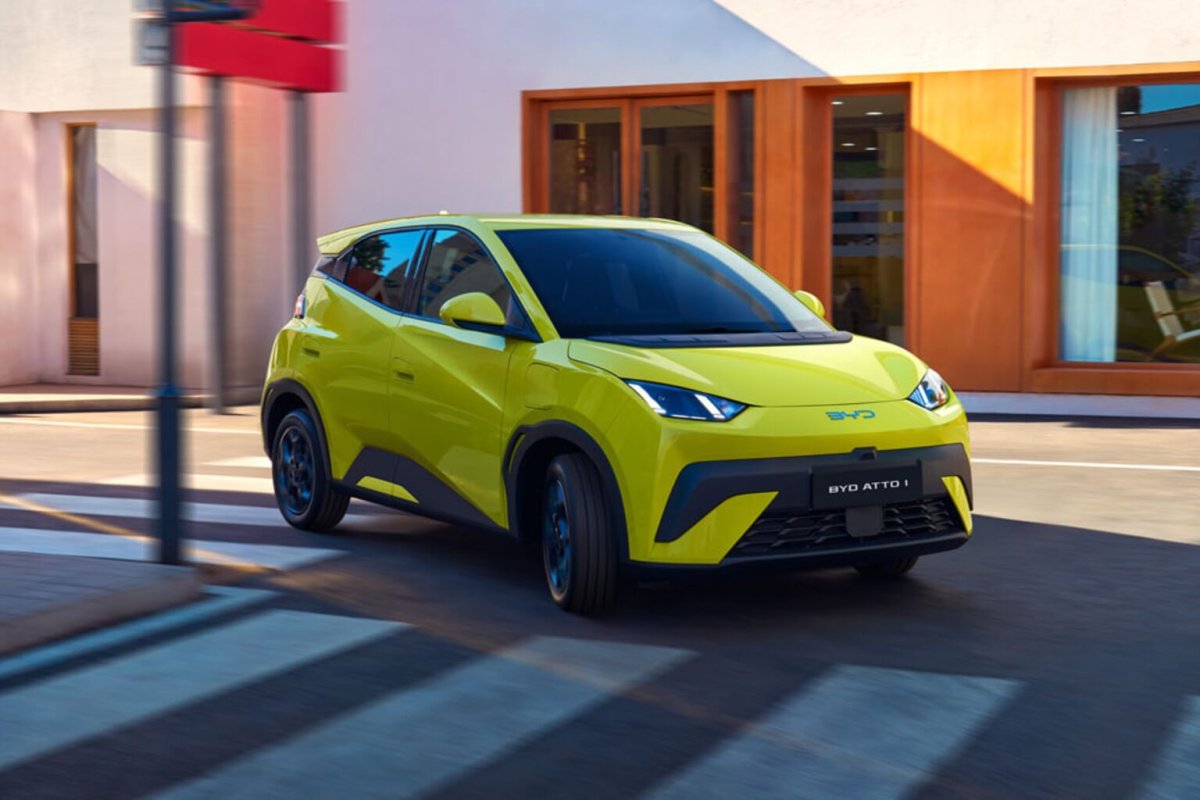
BYD has ignited the Australian entry-level EV market by pricing its Atto 1 Essential at A$19,990 drive-away, a reduction of at least A$4,000 from the previous A$23,990 (before on-road costs). The promotional campaign, dated September 15, 2026, makes the electric crossover the first EV in the country to dip below the A$20,000 threshold, but it now shares the title of Australia's cheapest new vehicle with the petrol-powered MG3 Vibe, which is also advertised at A$19,990 drive-away after a September promotion.
The headline discount understates the true savings. The old price excluded registration, stamp duty, and other on-road charges, while the new drive-away price includes them. This means the effective price cut is deeper than the A$4,000 gap suggests. However, BYD has not declared a permanent reduction to the recommended retail price; the offer is part of a time-limited campaign.
The Atto 1 Essential is the shorter-range variant, equipped with a 30 kWh Blade Battery, offering 220 kilometres of WLTP range, a 65 kW front motor, and seating for four. The Premium version extends range to 310 kilometres and power to 115 kW. The low price clearly targets urban commuters and second-car households rather than long-distance drivers.
Volume vs. Incentive Cost: The Shareholder Test
For BYD's shareholders in Hong Kong and Shenzhen, a single Australian model won't move group earnings on its own. Yet the campaign serves as a live experiment for the company's overseas expansion strategy: use aggressive pricing and a broad model lineup to gain market share while domestic Chinese competition remains fierce.
Australia is already responding. The Australian Automotive Dealer Association reported BYD as the country's second-best-selling brand in August, behind Toyota. Battery-electric vehicle sales surpassed 27,000 units in that month, the first time the powertrain outsold every other type. VFACTS data showed BYD at 8,231 units, a 68.8% jump from August 2025.
A simple calculation illustrates the challenge: a 16.7% price cut from A$23,990 to A$19,990 requires roughly 20% more unit sales to keep revenue flat, before factoring in on-road costs. That's an illustration, not BYD's actual transaction economics—the company doesn't disclose Australian dealer support, logistics expenses, or per-model profitability. The drive-away structure makes the true incentive even larger than the headline reduction.
Margin Pressures from a Weaker First Half
This aggressive pricing arrives after a softer first half. BYD's 2026 interim filing showed revenue of 344.82 billion yuan, down 7.1%, and profit attributable to shareholders of 12.33 billion yuan, down 20.5%. Gross profit fell a smaller 2.8% to 64.99 billion yuan. Dividing gross profit by revenue yields an implied group gross margin of 18.85%, up from 18.01% a year earlier, though the calculation covers the entire group, including electronics, and cannot be assigned to the Atto 1.
The strongest counterargument is that BYD may be clearing a limited pool of base-trim inventory rather than resetting overseas prices. The Essential's modest 220-kilometre range caps its addressable market, and MG's matching promotion reduces the chance that price alone wins every budget buyer.
What to Watch
Investors can judge the campaign's success from three later disclosures: Australian Atto 1 registrations after September 15, BYD's overseas sales mix, and automotive gross margin. A volume jump without another decline in profit per vehicle would support the expansion thesis. A broader round of discounts without a comparable delivery gain would point to share being purchased at an increasingly visible cost.
BYD's Hong Kong H shares closed September 14 at HK$80.20, up 0.4% for the session, according to historical market data. The Australian campaign appeared after that close, so the quoted move does not represent a market reaction to the new price.