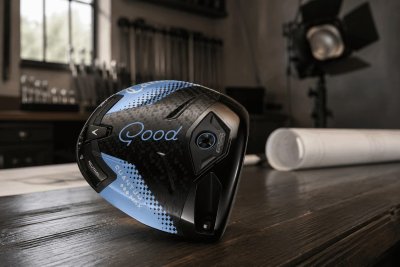
Callaway Golf Company (NYSE:CALY) is navigating a brand management challenge after a promotional video for its co-branded Quantum driver sparked public backlash, forcing the company and its partner Good Good to pull the content. The episode comes at a delicate time as the company's core equipment business shows signs of recovery, with second-quarter sales climbing 4.5% year-over-year.
The controversy erupted on August 21 when Good Good, a popular golf content creator with over two million YouTube subscribers, released an advertisement featuring a male creator pushing a female colleague. The video drew immediate criticism on social media, prompting both companies to remove it and issue statements. Callaway expressed disappointment over the content and pledged to work with Good Good to foster a more inclusive environment in golf. A product listing for the collaboration, aimed at retailers, was also taken down.
Despite the negative publicity, the market reaction was relatively subdued. Callaway shares closed Monday at $15.79, down 0.63%, while the S&P 500 fell 0.28%. Trading volume was notably light, at approximately 1.16 million shares—roughly half the three-month average. This suggests investors are treating the incident as a lapse in oversight rather than a fundamental business issue.
The financial backdrop adds context to the pressure. In the second quarter, Callaway reported net sales of $612.2 million, up 2.0% year-over-year. Golf equipment sales specifically rose 4.5% to $430.3 million, while golf ball sales surged 14.8% to $113.8 million. Adjusted gross margin expanded by 460 basis points to 48.5%, and adjusted EBITDA jumped 35.8% to $124.9 million.
Management also raised its full-year 2026 adjusted EBITDA guidance to a range of $246 million to $260 million, up from a previous $211 million to $233 million. The revised midpoint represents a roughly 14% increase, supported by favorable pricing, cost initiatives, and lower-than-expected tariff expenses.
The partnership with Good Good is part of a broader strategy to engage younger audiences and drive customer acquisition. Good Good is scheduled to sponsor a PGA Tour event in November, making the ad controversy a test of the company's approval processes for influencer partnerships. The episode raises questions about how carefully such collaborations are vetted, especially as Callaway seeks to expand its reach.
Wall Street remains cautiously optimistic. Analysts at B. Riley, KeyBanc, and Truist maintain Buy ratings with price targets ranging from $19 to $23. Goldman Sachs and JPMorgan are more neutral, with targets of $19 and $18, respectively. The consensus rating among eleven analysts polled by S&P Global is Buy, with an average price target of $20.50, implying roughly 30% upside from Monday's close.
However, the stock has fallen 19.3% since early August, even after the earnings beat and guidance raise. This suggests lingering concerns about demand strength and product launch timing in the second half. The ad controversy adds another layer of uncertainty, though its financial impact is likely to be minimal if sales and retailer orders remain stable.
Investors should monitor whether the co-branded driver returns to market, how retailers respond, and any changes to the November PGA Tour sponsorship. The company's next earnings report is expected in early November, which will provide further clarity. As long as the issue remains reputational rather than operational, the current low-volume trading suggests the market is not overly concerned.