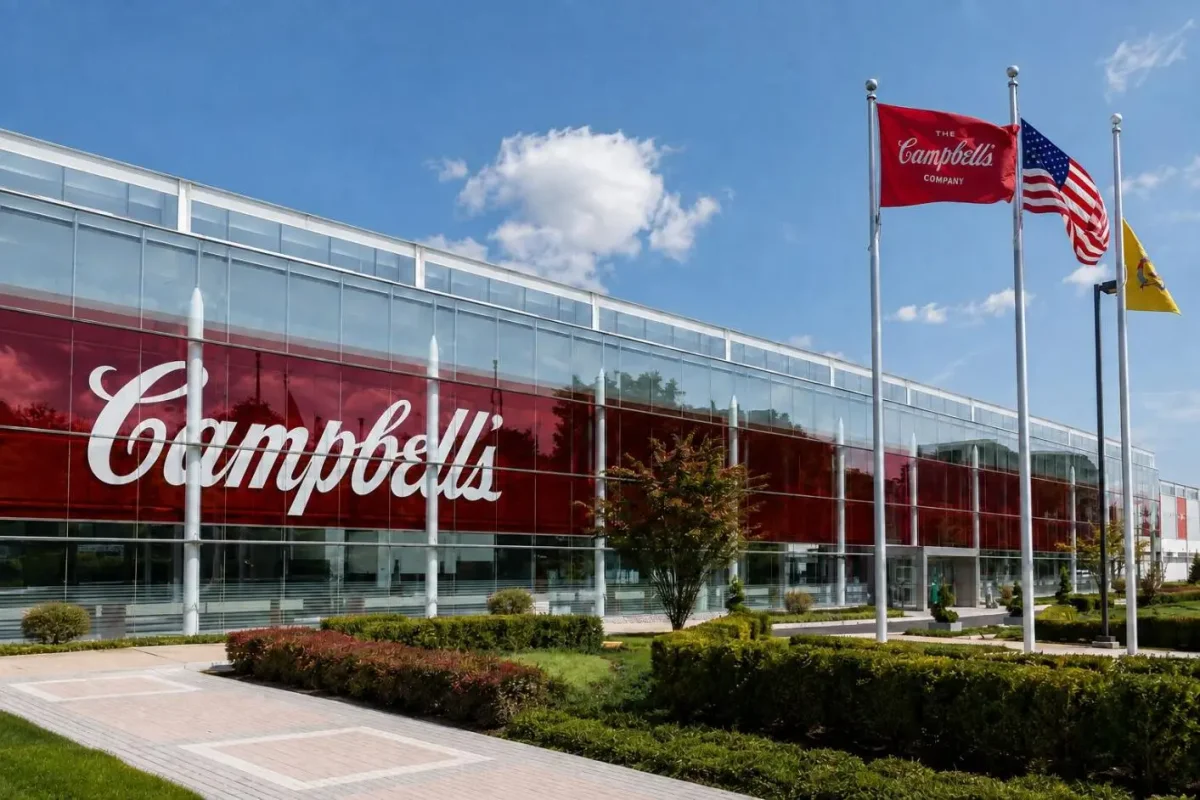
Campbell's Company (NASDAQ: CPB) saw its shares plummet 10% in early trading on Thursday after the food manufacturer announced a significant dividend reduction and issued a downbeat outlook for fiscal 2027. The stock dropped to $21.40 by 09:49 EDT, down from Wednesday's close of $23.78.
The company slashed its quarterly dividend by 36% to $0.25 per share, a move that will retain approximately $167 million annually. Based on the weighted average share count of 298 million, this cash preservation strategy is aimed at reducing the company's debt burden. The retained amount covers about half of the projected adjusted net interest expense for fiscal 2026.
Dividend Cut Details
The new annual dividend rate of $1.00 per share, down from $1.56, represents a 36% reduction. This move is part of management's broader effort to strengthen the balance sheet amid challenging market conditions. CEO Mick Beekhuizen acknowledged that performance was "not where it needs to be."
The company's fiscal 2026 fourth-quarter results showed a decline in net sales by 8% to $2.14 billion, with organic sales down 1%. Adjusted EBIT fell 25% to $242 million. Gross margin contracted by 310 basis points to 27.3%, pressured by inflation, tariffs, and supply-chain costs that outpaced productivity gains.
Segment Performance
Snacks, a key segment, continued to struggle, with organic sales dropping 6% and operating profit falling 34%. In contrast, Meals & Beverages saw organic sales growth of 3%, though operating profit still declined 12%. The company's focus on cost savings, targeting $500 million by fiscal 2030, will involve plant closures, workforce reductions, and tighter spending controls.
Balance Sheet and Cash Flow
At year-end, Campbell's held $394 million in cash against total borrowings of $7.14 billion, resulting in net debt of $6.74 billion. While the dividend cut provides some relief, it is not a game-changer for the overall debt position. Operating cash flow for fiscal 2026 was $1.0 billion, with capital expenditures of $361 million. The company had previously distributed $496 million to shareholders, primarily through dividends.
Fiscal 2027 Guidance
Looking ahead, Campbell's expects organic sales to decline between 2% and 4% in fiscal 2027. Adjusted earnings per share are projected to be in the range of $1.65 to $1.80, representing a drop of 17% to 24% from the prior year. Adjusted EBIT is also expected to fall by 7% to 12%.
The company's adjusted quarterly earnings per share came in at $0.39, in line with consensus estimates. However, the market reaction was driven by the dividend cut and the weak forward outlook rather than a miss on headline earnings.
At the current share price, the new dividend yields approximately 4.7%. Shares are trading at about 12.4 times the midpoint of adjusted EPS guidance, a multiple that has increased despite the stock price decline due to the anticipated earnings contraction.
Investors will be watching for the dividend record date on October 1, with the payment scheduled for November 2. Key metrics to monitor include snack volumes and net debt reduction progress. Risks include faster-than-expected cost savings or stronger demand for at-home food products, which could boost margins. Conversely, persistent inflation, declining snack volumes, or higher execution costs could impede debt reduction efforts.
The dividend cut, while painful for income investors, underscores management's commitment to financial stability and long-term growth. The company's ability to execute its cost-saving initiatives and stabilize its snack segment will be critical in the coming quarters.