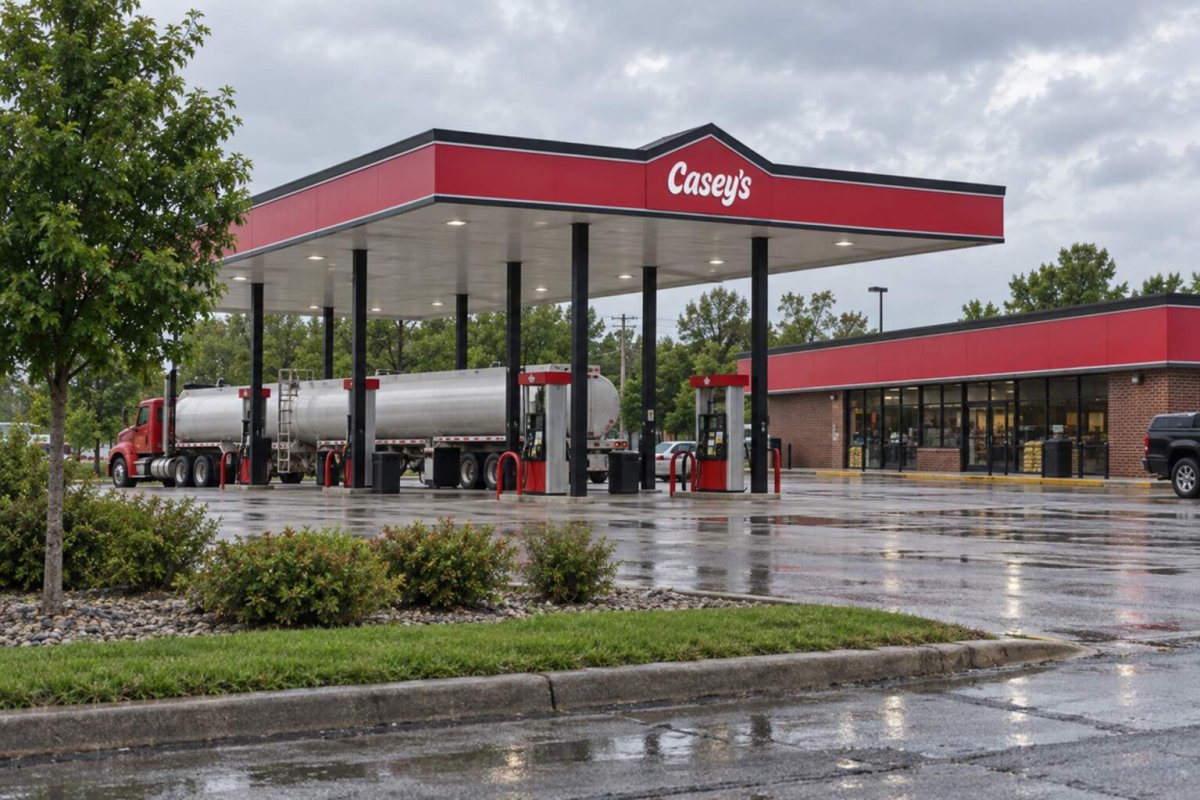
Casey's General Stores (NASDAQ: CASY) saw its stock plunge approximately 10% in after-hours trading on Tuesday, despite delivering a robust fiscal first-quarter earnings report that exceeded Wall Street's expectations. The sharp selloff, which pushed shares to around $660 after closing at $733.49, highlights a growing disconnect between headline numbers and investor sentiment.
The company reported diluted earnings per share (EPS) of $7.37 for the quarter ended July 31, a 27.7% surge from $5.77 in the year-ago period. Net income climbed 27.1% to $273.7 million, while EBITDA rose 17.1% to $485.1 million. Revenue jumped 24.3% to $5.68 billion, comfortably beating the consensus estimate of $5.57 billion. The EPS also topped the $6.68 analyst forecast by a wide margin.
Yet, the market's reaction was decidedly negative. The stock had already fallen 2.99% during regular trading on September 8, and the after-hours decline suggested investors were recalibrating their expectations. The primary culprit: a slowdown in same-store sales growth. Inside same-store sales rose just 3.2%, down from 4.3% a year earlier and 5.5% in the previous quarter. Prepared food and dispensed beverage comps grew 4.8% (versus 5.6% last year), while grocery and general merchandise comps increased 2.7% (down from 3.8%).
Despite the deceleration, margins improved. Inside gross margin expanded 30 basis points to 42.2%, with prepared-food margins rising to 59.3% from 58.0%. However, same-store operating expenses (excluding credit-card fees) grew 5.0% versus 3.0% a year ago, and total operating expenses rose 8.0%. This cost pressure, combined with slower sales growth, is a concern for investors who have come to expect efficiency gains.
Fuel was a bright spot, contributing significantly to earnings. Same-store gallons slipped 0.3%, but the fuel margin jumped to 47.8 cents per gallon from 41.0 cents, driving total fuel gross profit up 19.6% to $446.9 million. While this is profitable, fuel margins are notoriously volatile, and investors typically assign a lower valuation to such gains compared to sustainable in-store growth. Credit-card fees also rose 19.5% to $85.7 million, reflecting higher retail fuel prices.
The valuation context is crucial. At the regular close, Casey's traded at roughly 35.3 times trailing twelve-month earnings (using GAAP EPS of $20.76). Even after the after-hours drop to $660, the multiple would be about 31.8 times—still a premium. The company's record fiscal 2026, with EPS growth of 30.9%, set a high bar, and the unchanged fiscal 2027 guidance did little to reassure investors.
Management maintained its outlook for 2% to 5% inside same-store sales growth, inside margin above 42%, and EBITDA growth of 8% to 10%. They also plan to open at least 120 new stores and spend $800 million on capital expenditures. While the balance sheet remains strong with $1.4 billion in liquidity and $973 million in buyback authorization, the market's complaint is that a strong quarter didn't translate into a raised annual forecast.
The upcoming conference call at 7:30 a.m. Central time on September 9 will be critical. Investors will seek clarity on whether the 3.2% comp is a result of value pricing, tougher comparisons, or a more persistent slowdown. They'll also want updates on the Fikes acquisition integration and whether the 47.8-cent fuel margin is sustainable.
The bull case remains intact: margins are improving, prepared food is growing faster than grocery, and the company has ample capital for growth. If comps reaccelerate and margins hold, today's selloff could be an overreaction. However, if fuel margins normalize and costs keep rising faster than sales, the stock could face further pressure as the market adjusts to a slower growth trajectory.