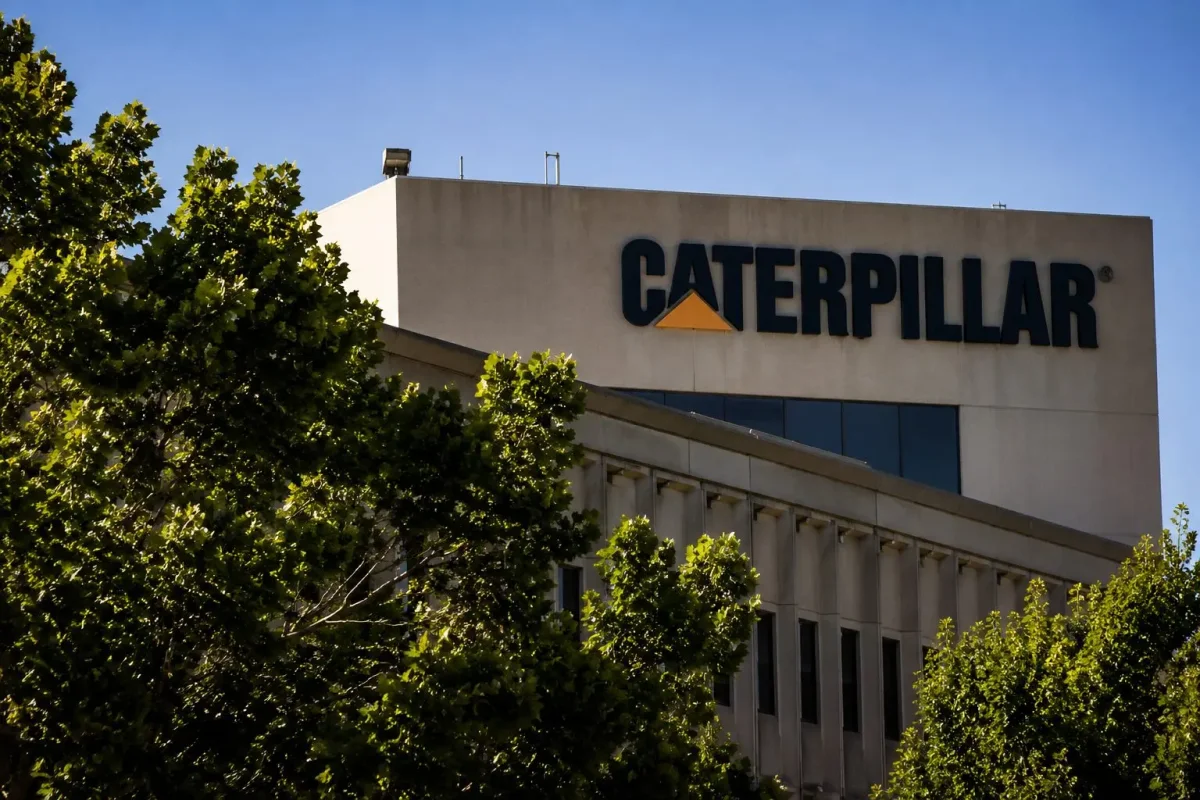
Caterpillar Inc. (CAT) saw its shares drop sharply on Wednesday, falling 6.2% to approximately $858.12, as the stock retreated from near-record highs. The decline exerted significant downward pressure on the Dow Jones Industrial Average, given the index's price-weighted structure where higher-priced stocks have a greater impact.
The sell-off was part of a broader market downturn, with the S&P 500, Dow, and Nasdaq all trading in negative territory. Reuters reported that rising U.S.-Iran tensions and a May Consumer Price Index showing inflation at 4.2% year-over-year fueled risk aversion. The S&P 500 industrials sector fell 2.4%, indicating a broad shift away from cyclical stocks.
Caterpillar has recently been viewed as more than just a construction and mining equipment maker. Its Power & Energy unit, which produces engines and turbines, has gained exposure to the artificial intelligence infrastructure boom, as data centers require reliable, large-scale electricity. In the first quarter, Power Generation sales surged 41%, driven largely by data center demand, according to the company's filings.
The stock had climbed on this AI narrative, but Wednesday's drop highlights growing caution. Higher interest rates reduce the present value of future earnings, while inflation pressures equipment buyers and raises costs for manufacturers. Tariffs remain a key concern, with Caterpillar forecasting about $700 million in tariff costs for the second quarter and $2.2 billion to $2.4 billion for the full year.
CEO Joe Creed emphasized the company's strong foundation during the April earnings call, pointing to a record backlog of $62.7 billion, up $27.7 billion from the prior year. However, the market is now questioning whether that backlog and AI demand can offset rising tariff costs and a potential slowdown in dealer orders.
First-quarter results showed sales and revenue of $17.4 billion, up 22% year-over-year, with adjusted earnings per share of $5.54. Yet, the sell-off suggests investors are pricing in headwinds. Dealer inventory restocking boosted Q1 sales, but such gains can reverse if orders weaken. The company's retail-sales filings caution that global economics, commodity prices, and trade policy could drive results away from forecasts.
Other industrial stocks also suffered, with Cummins falling about 4.8%, Paccar down 3.4%, and Deere slipping less than 1%. The sector-wide risk-off mood was evident, but Caterpillar's larger decline reflected its recent run-up and heightened sensitivity to macro risks.
All eyes are now on Caterpillar's second-quarter earnings, scheduled for August 4. Investors will be watching closely to see if data-center power demand and the record backlog can withstand tariff pressures, inflation, and potential slowing in dealer orders.